UPS Route Savings Calculator
How ORION Saves You Money
UPS's ORION system avoids left turns by up to 80% on delivery routes. This reduces fuel consumption, time, and environmental impact. Calculate your potential savings!
Enter your delivery data to see ORION savings
UPS doesn’t just move packages-it moves over 25 million packages every day. That’s more than 9 billion packages a year. To handle that kind of volume, they don’t rely on spreadsheets or basic route planners. They use a custom-built, AI-powered logistics software ecosystem that’s been years in the making. If you’ve ever tracked a UPS package and seen the exact minute it’ll arrive, you’ve seen their software in action. But what’s actually running behind the scenes?
ORION: The Brain Behind Every Delivery Route
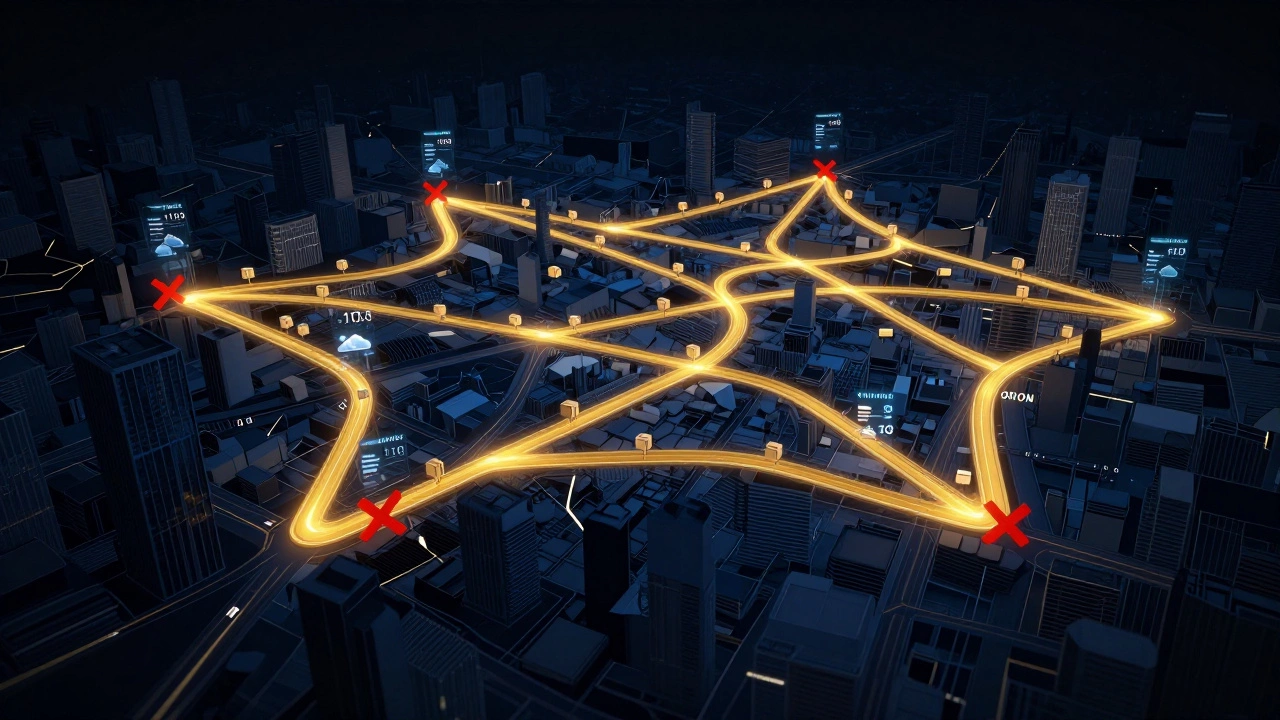
The most famous piece of UPS software is ORION, which stands for On-Road Integrated Optimization and Navigation. It’s not just a GPS app. It’s a mathematical engine that calculates the most efficient route for every driver, every single day. ORION doesn’t just avoid traffic-it avoids left turns. Why? Because left turns cost time and fuel. In the U.S., a left turn means waiting at an intersection, idling, and risking accidents. ORION’s algorithms minimize those turns by up to 80% on some routes.
ORION was launched in 2009 and has since saved UPS over 100 million miles and 10 million gallons of fuel. That’s the equivalent of taking 100,000 cars off the road annually. The system uses real-time data from traffic sensors, weather reports, package volume, and even historical delivery patterns. Each driver’s route is recalculated daily based on new pickups, missed deliveries, and last-minute changes. And it doesn’t just work in cities-it’s optimized for rural roads, high-rise buildings, and gated communities too.
DIAD: The Device in Every Driver’s Hand
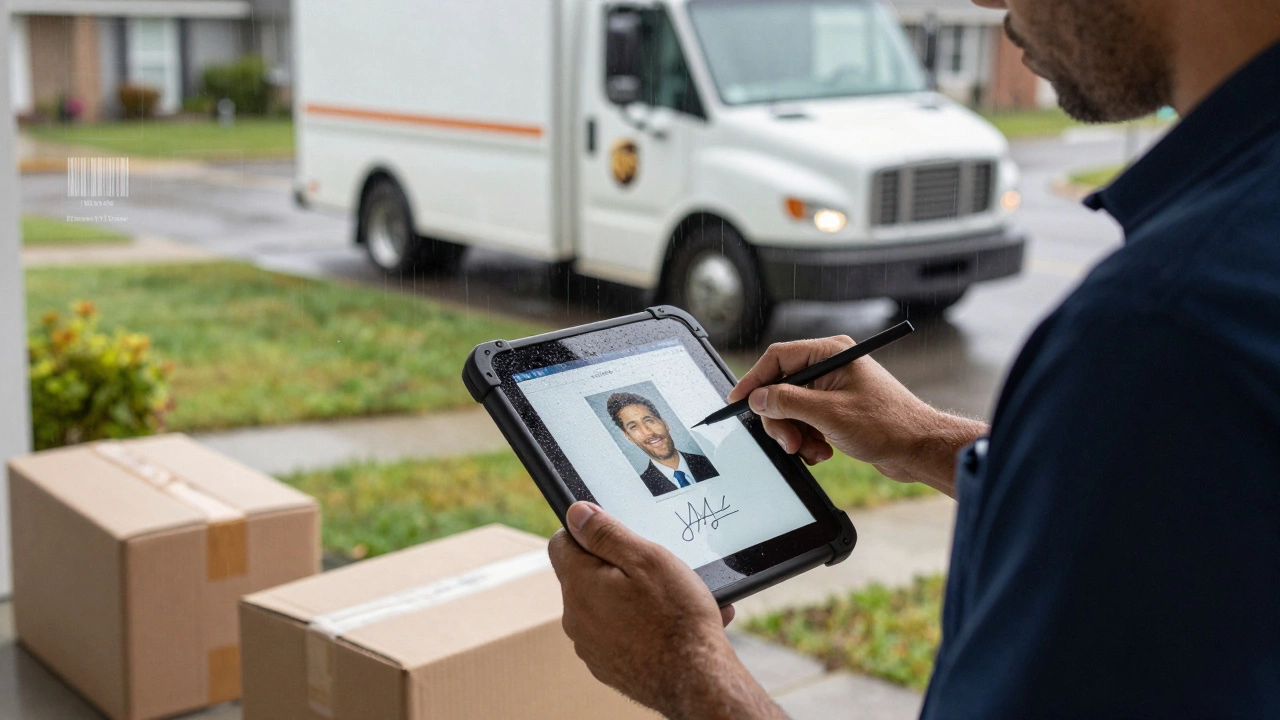
Every UPS driver carries a device called DIAD-short for Delivery Information Acquisition Device. The current version, DIAD V, is a rugged, handheld tablet with a built-in barcode scanner, cellular connection, and GPS. It’s not a consumer tablet. It’s built to survive drops, rain, dust, and extreme temperatures. When a driver scans a package, DIAD instantly uploads the data to UPS’s central system. That’s how you get real-time tracking updates on your phone.
DIAD also collects electronic signatures, captures delivery photos, and records delivery notes. If a package is left at a door, the driver takes a photo. If the recipient isn’t home, DIAD prompts the driver to leave a notice or schedule a redelivery. All this data flows into UPS’s central logistics platform in seconds. No delays. No paperwork. No lost records.
The Central Platform: UPS WorldShip and UPS Fusion
Behind ORION and DIAD is a massive internal platform called UPS Fusion. Think of it as the nervous system of the entire operation. Fusion connects every system-warehouses, airports, sorting centers, drivers, customer portals, and third-party carriers. It’s built on a hybrid cloud architecture that handles over 200 million data transactions every day.
For businesses that ship with UPS, the main interface is WorldShip. It’s a desktop application that lets companies print labels, schedule pickups, track shipments, and generate reports. WorldShip integrates directly with Fusion, so when a business prints a label, the system automatically assigns the package to the best route, vehicle, and driver based on location, delivery window, and priority.
UPS also uses Fusion to manage its global air network. When a package lands at a hub in Louisville, Fusion instantly determines whether it needs to go to a regional center, another country, or if it can be sorted for same-day delivery. It even predicts delays before they happen-like if a storm is coming to Atlanta, Fusion reroutes flights hours in advance.
AI and Machine Learning: Predicting What Happens Next
UPS doesn’t just react to events-it predicts them. Their AI models analyze decades of delivery data to forecast delays, package damage risks, and even driver fatigue patterns. For example, if a driver has had three late deliveries in a row due to traffic, the system might adjust their next route to start earlier. Or if a neighborhood has a high rate of failed deliveries, UPS might add a second delivery attempt or suggest a locker pickup.
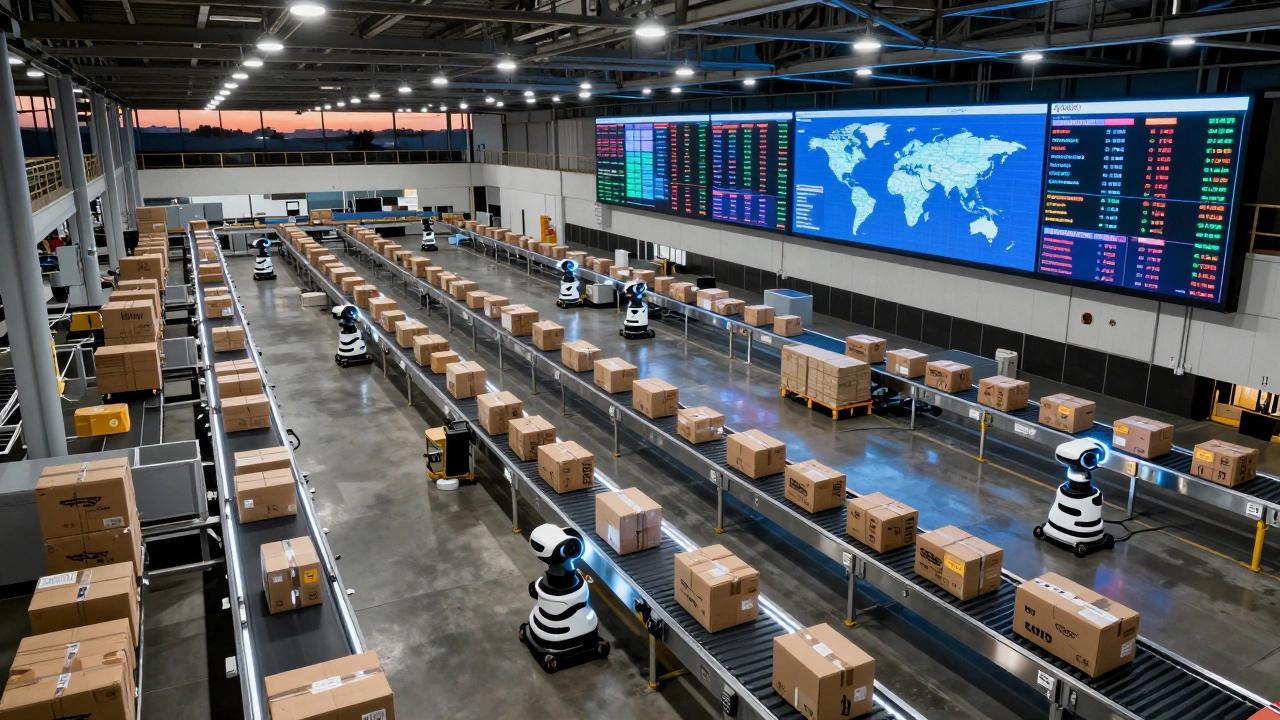
They also use machine learning to optimize warehouse sorting. In their largest hubs, robots move packages across conveyor belts, but the AI decides the order in which they’re sorted. It’s not just by destination-it’s by delivery time, package size, and whether it’s a premium service. This reduces handling time and cuts down on damage.
What UPS Doesn’t Use
Many people assume UPS uses off-the-shelf software like SAP or Oracle. They don’t. While they do use some third-party tools for accounting and HR, their core logistics systems are all proprietary. Why? Because no commercial software can handle the scale, complexity, and real-time demands of UPS’s network.
They also don’t rely on consumer mapping apps like Google Maps. ORION uses custom geographic data that includes things like driveway widths, parking restrictions, and even the height of overhead wires. Google Maps doesn’t know that a certain apartment complex requires a flatbed truck, or that a specific street in Chicago is closed on Tuesdays for street cleaning. UPS’s systems do.
How This Affects You as a Customer
When you ship with UPS, you’re not just getting a delivery service-you’re getting the benefit of one of the most advanced logistics networks on the planet. Your package moves through a system that’s been fine-tuned for over 100 years. The accuracy of delivery windows? That’s ORION. The ability to change your delivery date online? That’s Fusion. The fact that your signature is stored securely? That’s DIAD.
Even small businesses benefit. With WorldShip, a local bakery can print a shipping label, schedule a pickup, and know their cakes will arrive fresh because the system prioritizes perishables. A medical supplier can track temperature-sensitive shipments in real time because Fusion monitors environmental conditions inside the truck.
What’s Next for UPS Logistics Software?
UPS is already testing autonomous delivery vehicles in select cities. Their software is being updated to handle communication between human drivers and robots. They’re also expanding their use of drones for rural deliveries and testing battery-powered delivery vans with integrated route optimization.
One of the biggest upcoming upgrades is predictive customer interaction. Soon, if your package is running late, UPS’s system might text you before you even check your tracking page. It’s not magic-it’s data. Millions of data points. A billion calculations. And one simple goal: get the package there on time, every time.
Does UPS use SAP or Oracle for logistics?
No, UPS does not use SAP or Oracle for its core logistics operations. While they use these platforms for finance and human resources, their delivery routing, tracking, and warehouse systems are all custom-built. Commercial software can’t handle the scale or real-time complexity of UPS’s daily operations, which involve billions of data points and millions of route changes.
Is ORION the same as Google Maps?
No, ORION is not like Google Maps. While Google Maps shows you the shortest path between two points, ORION calculates the most efficient route for hundreds of stops per day, considering traffic, weather, left-turn restrictions, package priority, and even local regulations like street cleaning schedules. ORION’s data includes proprietary details like driveway widths and parking rules that public maps don’t have.
Can small businesses access UPS’s logistics software?
Yes, through WorldShip, a free desktop application available to all UPS shippers. WorldShip connects directly to UPS’s Fusion platform, letting small businesses print labels, schedule pickups, track shipments, and manage delivery preferences. It’s the same system used by Fortune 500 companies, just simplified for everyday use.
How does UPS track packages in real time?
Every package is scanned at every stop-pickup, sorting, loading, delivery. These scans are sent instantly via DIAD devices to UPS’s central system. GPS data from drivers’ vehicles and automated sorting machines update the location every few minutes. This creates a live feed that shows you exactly where your package is, down to the minute.
Does UPS use AI to prevent delivery delays?
Yes. UPS’s AI analyzes historical and real-time data to predict delays before they happen. If a storm is coming, traffic is heavy, or a warehouse is backed up, the system reroutes packages, adjusts driver schedules, or notifies customers proactively. This reduces missed deliveries by over 20% in high-risk areas.
UPS didn’t become the world’s largest package delivery company by accident. Their software isn’t just a tool-it’s the foundation of their entire business. Every scan, every route, every delivery time is the result of decades of engineering, data, and relentless optimization. If you’ve ever wondered how a package from New York ends up in Auckland in three days, the answer isn’t just planes and trucks. It’s software-smart, fast, and always learning.