Logistics Career ROI Calculator
Your Inputs
Results Summary
Enter your details and click Calculate to see your projected return on investment.
You stare at the tuition bill. It’s steep. You look at the job posting for a Supply Chain Coordinator. It asks for a bachelor’s degree in Logistics or Business Administration. The question isn’t just academic; it’s financial survival. Is getting a logistics degree actually worth the investment in 2026, or are you better off starting on the warehouse floor and working your way up?
The short answer is yes, but with caveats. The landscape has shifted dramatically since the pandemic exposed global supply chain fragilities. Companies are no longer treating logistics as a back-office cost center. They view it as a strategic advantage. However, the path to that advantage depends entirely on your career goals, financial situation, and willingness to embrace technology.
The Real Value of a Logistics Degree
A university degree provides more than just a piece of paper. It gives you a structured understanding of the entire supply chain ecosystem. You learn about procurement, inventory control, transportation modes, and customs regulations. Without this foundational knowledge, climbing the corporate ladder can feel like trying to solve a puzzle without seeing the picture on the box.
Employers use degrees as a filter. When a large multinational corporation posts a role for a Junior Planner, they might receive hundreds of applications. A degree signals that you have the discipline to complete long-term projects and the analytical skills to handle data. It doesn't guarantee you'll be good at the job, but it gets your resume past the initial screening software.
Furthermore, higher-level roles almost always require formal education. If you want to become a Director of Operations or a Chief Supply Chain Officer, you will likely hit a ceiling without a bachelor’s or master’s degree. The degree opens doors that remain locked to those who only have operational experience.
Salary Expectations and Return on Investment
Let’s talk money, because that’s usually the deciding factor. According to data from the Bureau of Labor Statistics and industry reports from 2025-2026, entry-level positions in logistics, such as Logistics Analyst or Supply Chain Coordinator, typically start between $55,000 and $70,000 annually in major markets. This is significantly higher than many other entry-level business roles.
As you gain experience, the trajectory is steep. Mid-level managers earn between $80,000 and $110,000. Senior directors and VPs often command salaries exceeding $150,000, plus bonuses and equity. Compare this to the average national wage, and the ROI becomes clearer. If your tuition costs $40,000 to $60,000, you could recoup that investment within three to five years of working full-time.
However, location matters. Salaries in hubs like Chicago, Los Angeles, Rotterdam, or Singapore are higher due to the concentration of logistics companies and the cost of living. If you plan to work in a rural area with limited industrial activity, the salary premium may not be as pronounced.
| Role | Entry Level (0-2 years) | Mid-Level (3-7 years) | Senior Level (8+ years) |
|---|---|---|---|
| Logistics Analyst | $55,000 - $65,000 | $70,000 - $90,000 | $95,000 - $120,000 |
| Supply Chain Manager | $60,000 - $75,000 | $85,000 - $110,000 | $130,000 - $160,000 |
| Procurement Specialist | $50,000 - $60,000 | $70,000 - $95,000 | $110,000 - $140,000 |
| Warehouse Supervisor | $45,000 - $55,000 | $60,000 - $80,000 | $90,000 - $115,000 |
Job Growth and Industry Stability
One of the strongest arguments for a logistics degree is job security. Goods need to move. Always. Whether it’s medical supplies, consumer electronics, or raw materials, the physical movement of products is essential to the global economy. While some industries fluctuate, logistics remains relatively stable.
The demand for skilled professionals is outpacing supply. Automation and AI are changing the nature of the work, but they aren’t replacing the need for human strategists. Instead, they are creating new roles that require both technical literacy and logistical expertise. For example, companies need people who understand how to integrate Warehouse Management Systems (WMS) with real-time tracking data.
E-commerce continues to drive growth. The expectation for next-day or same-day delivery has forced companies to build complex distribution networks. These networks require planners, analysts, and managers who can optimize routes, manage inventory levels, and negotiate carrier contracts. A degree prepares you for these specific challenges.

The Rise of Technology in Logistics Education
If you are considering a degree today, make sure the curriculum includes modern technology. Old-school logistics programs focused heavily on paperwork and basic transportation laws. That’s outdated. Today’s programs must include modules on:
- Data Analytics: Using tools like SQL, Python, or Power BI to interpret supply chain data.
- ERP Systems: Familiarity with platforms like SAP, Oracle, or Microsoft Dynamics.
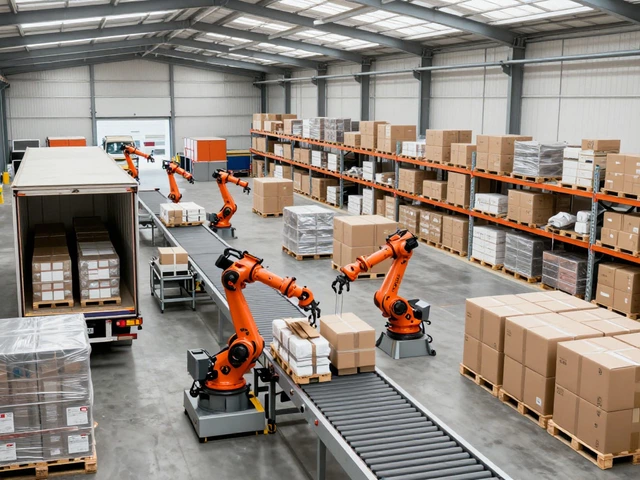
- Automation & Robotics: Understanding how automated guided vehicles (AGVs) and robotic picking systems impact workflow.
- Sustainability: Learning how to reduce carbon footprints through route optimization and green packaging.
Employers are looking for hybrid candidates-people who understand the physical movement of goods and the digital systems that track them. If your degree program lacks these components, you may need to supplement your education with online certifications or self-study.
Alternatives to a Traditional Degree
Not everyone needs or wants a four-year degree. There are viable paths into the industry that offer faster entry and lower upfront costs. Here are the most common alternatives:
- Certifications: Organizations like APICS (now ASCM) offer certifications such as the Certified Supply Chain Professional (CSCP). These are respected in the industry and can sometimes substitute for a degree, especially if you have prior work experience.
- Associate Degrees: A two-year associate degree in Logistics or Supply Chain Management can qualify you for entry-level roles like inventory clerk or dispatcher. It’s cheaper and faster, allowing you to start earning sooner.
- On-the-Job Training: Many logistics companies hire high school graduates for warehouse roles and promote from within. If you demonstrate reliability and leadership, you can move into supervisory roles without a degree. However, breaking into corporate planning roles this way is harder.
- Bootcamps and Online Courses: Short-term intensive courses in data analytics or project management can give you the hard skills employers want. Pairing these with a general business degree can be a powerful combination.
The trade-off is clear: certifications and experience get you in the door faster, but a degree offers broader career flexibility and higher long-term earning potential. If you are unsure, consider starting with an associate degree or certification while working part-time in the industry.

Who Should Get a Logistics Degree?
This degree is not for everyone. It suits individuals who enjoy problem-solving, data analysis, and process improvement. If you prefer creative, unstructured work, logistics might feel restrictive. The field is highly structured and metric-driven.
It is ideal for:
- People who like organizing complex systems.
- Those comfortable with numbers and spreadsheets.
- Individuals who thrive under pressure and tight deadlines.
- Students interested in international trade and global economics.
If you are passionate about sustainability, logistics offers a unique avenue to make an impact. Optimizing routes reduces fuel consumption. Efficient inventory management reduces waste. Your work directly contributes to environmental goals.
Final Verdict: Is It Worth It?
For most people aiming for management or strategic roles, a logistics degree is absolutely worth it. The salary premiums, job stability, and career progression opportunities justify the time and financial investment. The key is to choose a program that emphasizes technology and analytics, ensuring you graduate with skills that are relevant in 2026 and beyond.
If you are budget-conscious or already have industry experience, consider starting with certifications or an associate degree. You can always pursue a bachelor’s later, often with credits transferred. The important thing is to enter the field with a clear plan and a willingness to adapt to rapid technological changes.
How long does it take to get a logistics degree?
A bachelor’s degree in logistics or supply chain management typically takes four years of full-time study. Associate degrees take two years. Part-time programs may extend these timelines to six or eight years depending on course load.
Can I get a job in logistics without a degree?
Yes, you can start in entry-level roles like warehouse associate, freight dispatcher, or inventory clerk without a degree. However, advancing to managerial or strategic planning roles usually requires a bachelor’s degree or significant professional certifications like CSCP.
What is the difference between logistics and supply chain management?
Logistics is a subset of supply chain management. Logistics focuses specifically on the movement and storage of goods. Supply chain management encompasses the entire process, including sourcing raw materials, manufacturing, logistics, and distribution to the end customer.
Are there internships available for logistics students?
Many universities offer internship programs with major logistics companies. Internships provide valuable hands-on experience and often lead to full-time job offers after graduation. Look for roles in procurement, planning, or operations during your junior or senior year.
Is a master’s degree in logistics necessary?
A master’s degree is not necessary for most entry or mid-level roles. It becomes beneficial for senior executive positions or specialized fields like global trade compliance. An MBA with a focus on supply chain is also a popular alternative for career advancement.