Want to work in logistics but not sure where to start? You’re not alone. Every year, thousands of people ask the same question: What degree is needed to work in logistics? The truth? You don’t always need a degree at all. But if you want to move up fast, avoid dead-end jobs, and earn more than minimum wage, the right education makes a huge difference.
Logistics Jobs Don’t All Need a Degree
Start with this: not every job in logistics requires a college degree. Warehouse pickers, forklift operators, delivery drivers, and inventory clerks often get hired based on experience, certifications, or just showing up on time. Companies like NZ Post, FedEx, and local freight firms hire people without degrees every day. You can start earning $22-$28 an hour in Auckland just by learning how to operate equipment or use warehouse software.But here’s the catch: those roles rarely lead to management. If you want to become a logistics coordinator, operations manager, or supply chain analyst, you’ll hit a ceiling without formal training. Employers start asking for degrees at the mid-level. And if you’re aiming for corporate roles in global firms like DHL or Maersk, a degree isn’t optional-it’s the entry ticket.
What Degrees Actually Help? (And Which Ones Don’t)
Not all degrees are created equal when it comes to logistics. A degree in English or Philosophy won’t help you manage a warehouse. But these four types of degrees open real doors:- Supply Chain Management - This is the gold standard. Programs cover procurement, inventory control, transportation, and demand forecasting. Universities like AUT and Waikato offer bachelor’s degrees that include real-world case studies from New Zealand’s export-heavy economy.
- Business Administration with a Logistics Focus - A broader option that still gives you core logistics skills. You’ll learn budgeting, project management, and how to lead teams-useful if you want to run a distribution center.
- Industrial Engineering - If you like solving puzzles and optimizing systems, this degree teaches you how to reduce waste, cut delivery times, and design better warehouse layouts. Many logistics tech firms hire industrial engineers to improve automation.
- Transportation and Logistics - Less common in New Zealand, but some polytechnics offer diplomas and degrees specifically in this area. It’s practical, hands-on, and often includes internships with local freight companies.
What about degrees in IT, finance, or data science? They can work too-if you pair them with logistics experience. For example, a data analyst with a finance degree who learns how to read shipment tracking systems can land a job in logistics analytics. Companies are hiring people who can turn warehouse data into cost savings.
Can You Skip College Altogether?
Yes. But you’ll need to replace a degree with something else: certifications, experience, and a clear plan.Here’s how people without degrees break into logistics in New Zealand:
- Get certified in forklift operation (WorkSafe-approved courses take 2-3 days and cost under $500).
- Apply for entry-level roles at warehouse operators like Warehousing Plus or Toll Group.
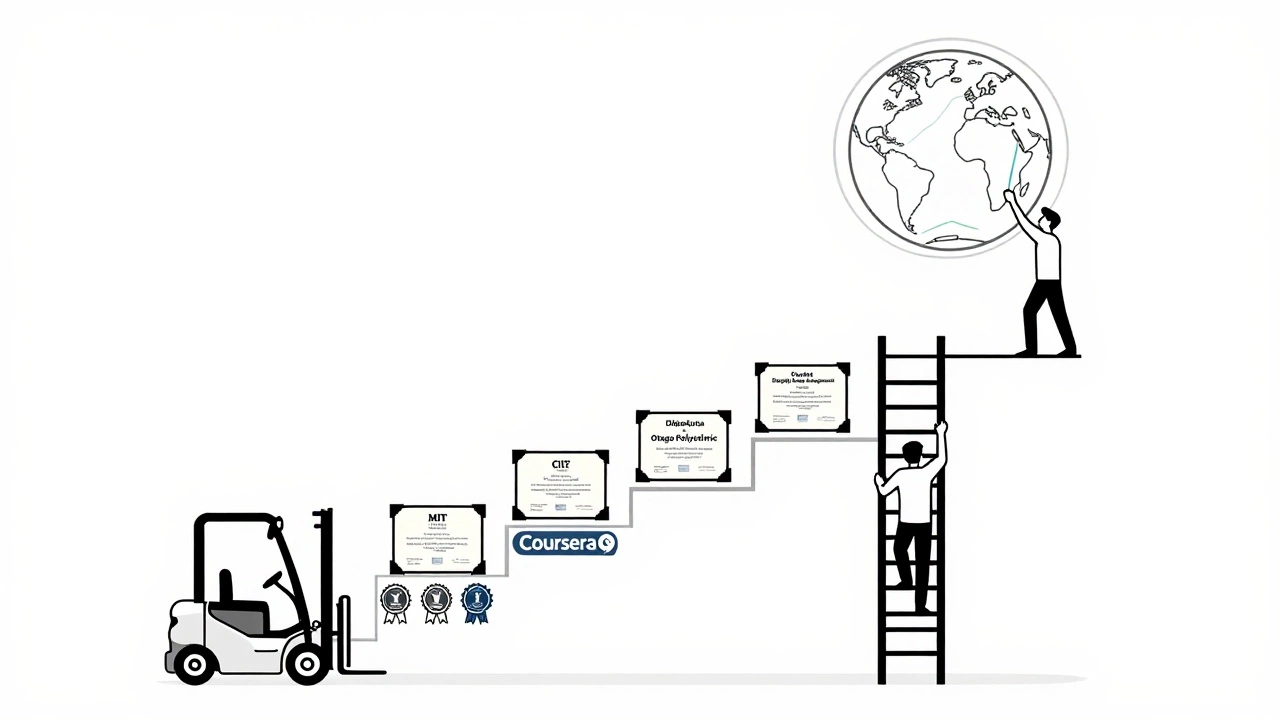
- Take free online courses from platforms like Coursera or FutureLearn on supply chain basics.
- Shadow a logistics coordinator for a week-ask if you can sit in on planning meetings.
- After 12-18 months, apply for supervisory roles. Many companies promote from within.
One person I know started as a warehouse assistant at a Auckland dairy exporter. He got his forklift ticket, learned SAP inventory software on the job, and within two years was managing the whole outbound team. He never went to university.
What Employers Really Look For
When hiring for logistics roles, companies care more about what you can do than what’s on your diploma. Here’s what actually gets you hired:- Knowledge of logistics software: SAP, Oracle, JDA, or even Microsoft Excel with advanced formulas.
- Understanding of freight documentation: bills of lading, customs forms, import/export codes.
- Ability to solve problems under pressure: a shipment delayed? A truck broke down? Can you find a backup plan fast?
- Attention to detail: one wrong code on a pallet can hold up an entire container.
- Communication skills: you’ll need to talk to drivers, warehouse staff, customs agents, and clients.
Even if you have a degree, if you can’t read a shipping manifest or explain why a delivery is late, you won’t last long. Employers test for these skills in interviews. They’ll ask: “How would you handle a missed delivery deadline?” or “What’s the most efficient way to pack 500 boxes into a 40-foot container?”
Short-Term Paths to Higher Pay
If you’re not ready to spend three years on a degree, here are faster ways to climb the ladder:- Diploma in Logistics (Level 5 or 6) - Offered by polytechnics like MIT or Otago Polytechnic. Takes 1-2 years. Costs about $8,000-$12,000 total. Many are part-time or online.
- Chartered Institute of Logistics and Transport (CILT) certifications - Global recognition. The Level 4 Certificate in Logistics and Transport is popular in New Zealand. It’s not a degree, but it’s respected by employers.
- Apprenticeships - Some large logistics firms offer structured training programs. You earn while you learn. Check with companies like BNS or Mainfreight.
One person I spoke to in Christchurch got her CILT Level 4 certificate while working nights at a warehouse. Within 18 months, she was promoted to logistics planner. Her salary jumped from $48,000 to $72,000.

Is a Master’s Degree Worth It?
For most people, no. A master’s in supply chain management costs $30,000-$45,000 and takes 1-2 years. Unless you’re aiming for executive roles like Director of Logistics or Supply Chain Strategist at a multinational, it’s overkill.But if you’re already working in logistics and want to move into corporate strategy, consulting, or international operations, a master’s can help. Universities like the University of Auckland offer part-time MBA programs with logistics specializations. These are designed for working professionals.
For everyone else? Focus on experience, certifications, and learning software. The ROI is much higher.
Where to Start Today
If you’re serious about building a career in logistics, here’s your 30-day plan:- Visit CILT New Zealand and download their free career guide.
- Go to a local warehouse or distribution center and ask if you can shadow someone for a day.
- Sign up for a free 7-day trial on Coursera and take “Supply Chain Fundamentals” by Rutgers University.
- Update your LinkedIn profile with keywords: logistics coordinator, inventory control, freight documentation.
- Apply to 5 entry-level jobs-even if you don’t meet all the requirements. Many companies train on the job.
Logistics isn’t glamorous. But it’s essential. Every product you buy-your coffee, your phone, your winter coat-moved through a complex network of people, trucks, ships, and software. Someone has to manage that. And right now, New Zealand needs more skilled people to do it.
Do you need a degree to be a logistics coordinator?
Not always. Many logistics coordinators start with a diploma or certification and gain experience on the job. But most mid- to senior-level roles now require at least a bachelor’s degree in supply chain, logistics, or business. Employers see a degree as proof you understand systems, data, and process improvement-not just how to load a truck.
Can you work in logistics with a trade qualification?
Yes, but your options are limited to hands-on roles. Forklift operators, truck drivers, warehouse technicians, and maintenance staff often come from trade backgrounds. These are vital jobs, and they pay well. But if you want to plan routes, manage inventory systems, or lead teams, you’ll need to add logistics-specific training later.
What’s the fastest way to get into logistics?
Get a forklift license and apply for warehouse jobs. Most companies hire immediately. Then, take a short online course in supply chain basics. Within 6-12 months, you can move into scheduling or inventory roles. Many people skip degrees entirely and still earn $60,000+ by their third year.
Are logistics jobs in demand in New Zealand?
Yes, especially in Auckland, Wellington, and Christchurch. E-commerce growth, export demand (like dairy and meat), and infrastructure projects are creating more roles. The government’s Logistics Sector Strategy lists skills shortages in planning, technology, and operations. If you have the right skills, you’ll find work.
What’s the average salary for someone with a logistics degree?
Entry-level logistics graduates in New Zealand earn between $55,000 and $65,000 a year. With 3-5 years of experience, salaries jump to $75,000-$95,000. Managers and specialists in high-demand areas like international freight or warehouse automation can earn $110,000+.
Final Thought: It’s Not About the Paper, It’s About the Skills
A degree gives you structure, credibility, and access to better jobs. But what keeps you in the game is your ability to solve real problems-on time, under pressure, with limited resources. The best logistics professionals aren’t the ones with the fanciest diplomas. They’re the ones who know how to make a shipment move when everything goes wrong.Start where you are. Learn what matters. Build your skills one step at a time. The logistics industry doesn’t need more people with degrees. It needs more people who can get the job done.