When you’re sending a package overseas, the last thing you want is to get hit with a surprise bill. But choosing between USPS and UPS isn’t as simple as picking the brand you recognize. In 2026, the real cost difference between these two giants comes down to weight, destination, speed, and what you’re actually shipping. Let’s cut through the marketing noise and show you exactly where each one saves - or costs - you money.
USPS: The budget option with limits
USPS is still the go-to for small, lightweight packages heading abroad. If you’re shipping a 1-pound package to Germany, USPS Priority Mail International usually costs around $42. That’s often half what UPS charges for the same thing. Why? Because USPS uses a global network of partner postal services for the final leg of delivery. They don’t handle the whole journey themselves, which cuts overhead.
But here’s the catch: USPS has strict size and weight rules. No package over 20 pounds can go out via Priority Mail International. And if you’re sending something bulky - say, a box of winter gear to Australia - you’ll hit that wall fast. Their Global Express Guaranteed service can handle heavier items (up to 70 lbs), but the price jumps to $145+ for a 10-pound package to Japan. That’s not a bargain anymore.
Another downside? Tracking. USPS offers basic tracking, but once your package leaves the U.S., it often disappears into another country’s postal system. You might see updates like “Arrived at destination country,” then nothing for three days. If you’re shipping something valuable, that’s a risk.
UPS: More control, higher price
UPS doesn’t play around. It handles every step of the journey itself - from pickup to delivery. That means better tracking, tighter delivery windows, and more reliability. If you’re shipping a 15-pound package to Brazil, UPS Worldwide Saver runs about $110. Compare that to USPS Global Express Guaranteed at $135 for the same weight. UPS wins on price for medium-heavy items.
UPS also has clear customs handling. Their system auto-fills commercial invoices, flags restricted items, and even pre-pays duties in many countries. That’s huge if you’re sending business goods. With USPS, you fill out Form 2976 by hand. One typo, and your package gets held for days.
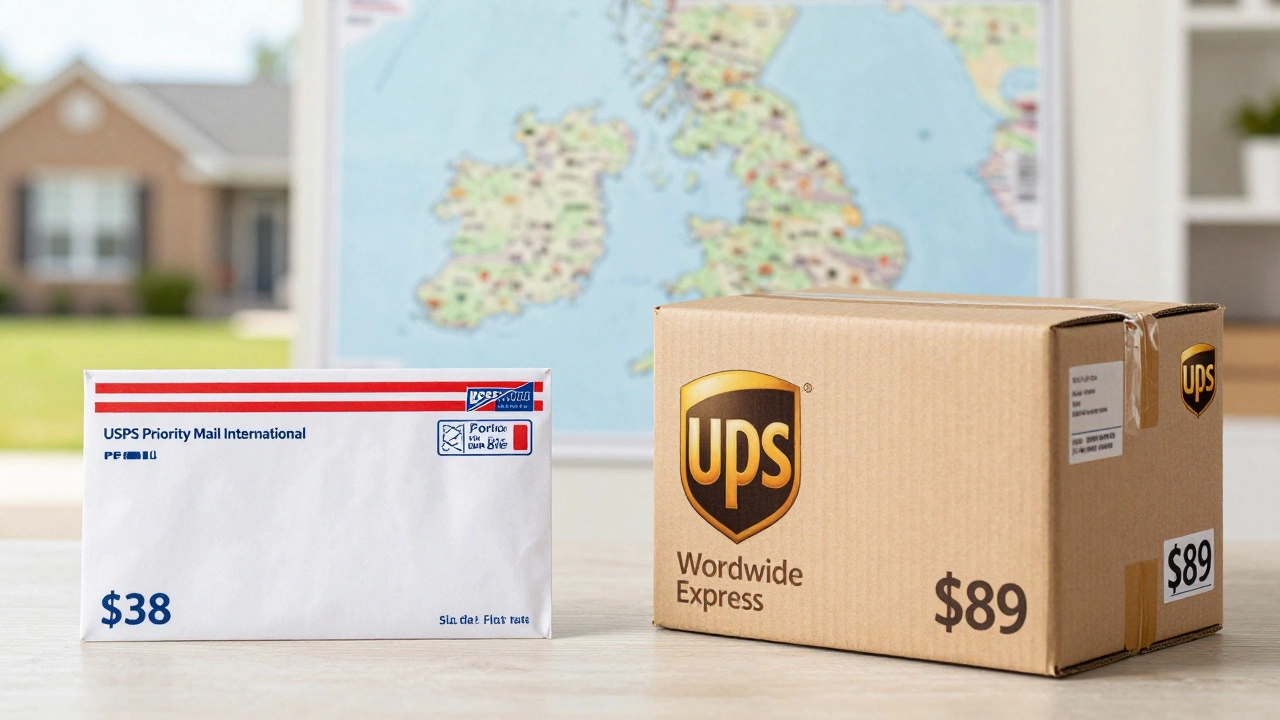
But UPS isn’t cheap for light stuff. A 6-ounce jewelry box to the UK? USPS Priority Mail International: $38. UPS Worldwide Express: $89. That’s more than double. And if you’re not a business account holder, you’ll pay retail rates - no discounts.
Speed matters more than you think
USPS Priority Mail International takes 6-10 business days to most places. UPS Worldwide Saver? 4-7 days. That’s not just faster - it’s often more valuable. If you’re shipping replacement parts for a client’s machine, a 3-day difference could mean the difference between keeping a job running or losing a contract.
But if speed isn’t critical, USPS gives you breathing room. A 30-day delivery window to rural Indonesia? That’s normal for USPS. UPS won’t even offer that. They’ll charge extra for slower options, but they rarely have them.
What you’re shipping changes everything
Not all packages are equal. If you’re sending documents, USPS Flat Rate envelopes are unbeatable. A legal-sized envelope to Canada? $28. UPS charges $52 for the same thing. But if you’re shipping electronics, batteries, or alcohol? UPS wins. USPS bans most lithium batteries outright. UPS has clear, safe procedures for shipping them.
Books? USPS has a special “Media Mail” rate for international shipments - but only if you’re sending them as part of a commercial bulk shipment. For individuals? No discount. UPS treats books like regular packages. No savings.
And here’s a hidden cost: duties and taxes. Both services estimate them, but UPS collects them upfront. USPS leaves it to the recipient. That means your recipient might get hit with a surprise $40 tax bill. They’ll hate you. UPS? You pay it at checkout. Cleaner. Less drama.
Real-world cost comparison table
| Package Details | USPS Service | USPS Cost | UPS Service | UPS Cost |
|---|---|---|---|---|
| 1 lb, to Germany | Priority Mail International | $42 | Worldwide Express Saver | $92 |
| 5 lbs, to Japan | Priority Mail International | $76 | Worldwide Saver | $105 |
| 10 lbs, to Brazil | Global Express Guaranteed | $135 | Worldwide Saver | $110 |
| 15 lbs, to Australia | Global Express Guaranteed | $165 | Worldwide Express | $140 |
| 6 oz, to UK (documents) | Priority Mail International Flat Rate | $38 | Worldwide Express | $89 |
When to choose USPS
- You’re shipping under 20 pounds
- Your item is non-urgent (10+ days is fine)
- You’re sending documents, books, or small gifts
- You don’t need advanced tracking or customs help
- You’re on a tight budget and can’t afford $50+ extra
When to choose UPS
- You’re shipping 5+ pounds
- Speed matters - 3-7 days is critical
- You’re sending electronics, batteries, or commercial goods
- You want full tracking and guaranteed delivery
- You’re tired of recipients getting hit with surprise taxes

Pro tip: Try both for small test shipments
Don’t just guess. Send two identical 2-pound packages - one with USPS, one with UPS - to the same address. Track them. See which one delivers faster. See which one has better updates. See how much the recipient complains (or doesn’t). That’s the real test. Costs change. Rules change. Your best option today might not be best next month.
What about other carriers?
Don’t forget DHL Express. For packages over 5 pounds going to Europe or Asia, DHL often undercuts UPS by 15-20%. FedEx International Economy is another contender - especially if you need a 5-day delivery window. But neither offers the flat-rate envelopes or low-cost document shipping that USPS does. So unless you’re shipping heavier items, USPS and UPS still cover 90% of needs.
Final answer: It depends - but here’s the rule
For packages under 5 pounds: USPS is almost always cheaper. For packages over 5 pounds: UPS usually wins on price and reliability. And if you’re shipping anything sensitive, risky, or time-sensitive - skip the guesswork. Go with UPS.
Can USPS ship packages over 20 pounds internationally?
No. USPS Priority Mail International has a 20-pound weight limit. For heavier items, you must use Global Express Guaranteed, which maxes out at 70 pounds but costs significantly more. If you’re shipping over 20 pounds, UPS, DHL, or FedEx will almost always be more practical.
Does UPS charge more for residential deliveries?
Yes. UPS adds a $5.50 residential surcharge for deliveries to homes (not businesses) in most countries. USPS doesn’t charge extra for residential addresses. If you’re shipping to a home, this can make UPS noticeably more expensive - especially on lighter packages.
Which service has better tracking for international packages?
UPS. It provides end-to-end tracking with real-time updates, including customs clearance status and estimated delivery times. USPS offers tracking only until the package leaves the U.S. After that, updates are limited to scans by foreign postal services - which may not happen at all in some countries.
Can I ship lithium batteries internationally with USPS?
No. USPS strictly prohibits shipping lithium batteries (even in devices like phones or laptops) via international mail. UPS allows them with proper labeling and packaging, following IATA regulations. If you’re shipping electronics with batteries, UPS (or DHL) is your only option.
Do I have to pay customs duties upfront with UPS?
Yes. UPS calculates and collects duties and taxes at checkout, so the recipient doesn’t get surprised. USPS doesn’t collect them - the recipient pays upon delivery. This often causes delays and complaints. If you want to avoid hassle, pay upfront with UPS.