E-Commerce Shipping Cost Calculator
Package Details
Destination & Carrier
When you click "Buy Now" on your favorite online store, you might think the product magically appears at your door. But behind that simple action is a complex machine called e-commerce logistics. It’s not just about shipping boxes. It’s a chain of coordinated steps that turns a digital click into a physical package - and it’s running 24/7, all over the world.
How It Starts: The Order Hits the System
The moment you complete your purchase, your order gets sent to the seller’s order management system. This isn’t just a receipt. It’s a live instruction for the entire logistics network. The system checks inventory, confirms payment, and instantly assigns your order to the nearest warehouse that has the item in stock. If the product is out of stock at one location, the system might pull it from another warehouse, a third-party fulfillment center, or even a retail store that doubles as a distribution point.For big brands like Amazon or Zara, this happens in milliseconds. For smaller sellers using platforms like Shopify or Etsy, it’s often handled by third-party logistics providers (3PLs) who manage storage, packing, and shipping on their behalf. These 3PLs are the hidden engines of modern e-commerce. Without them, most small businesses couldn’t scale beyond local deliveries.
Where It Goes: The Warehouse Shuffle
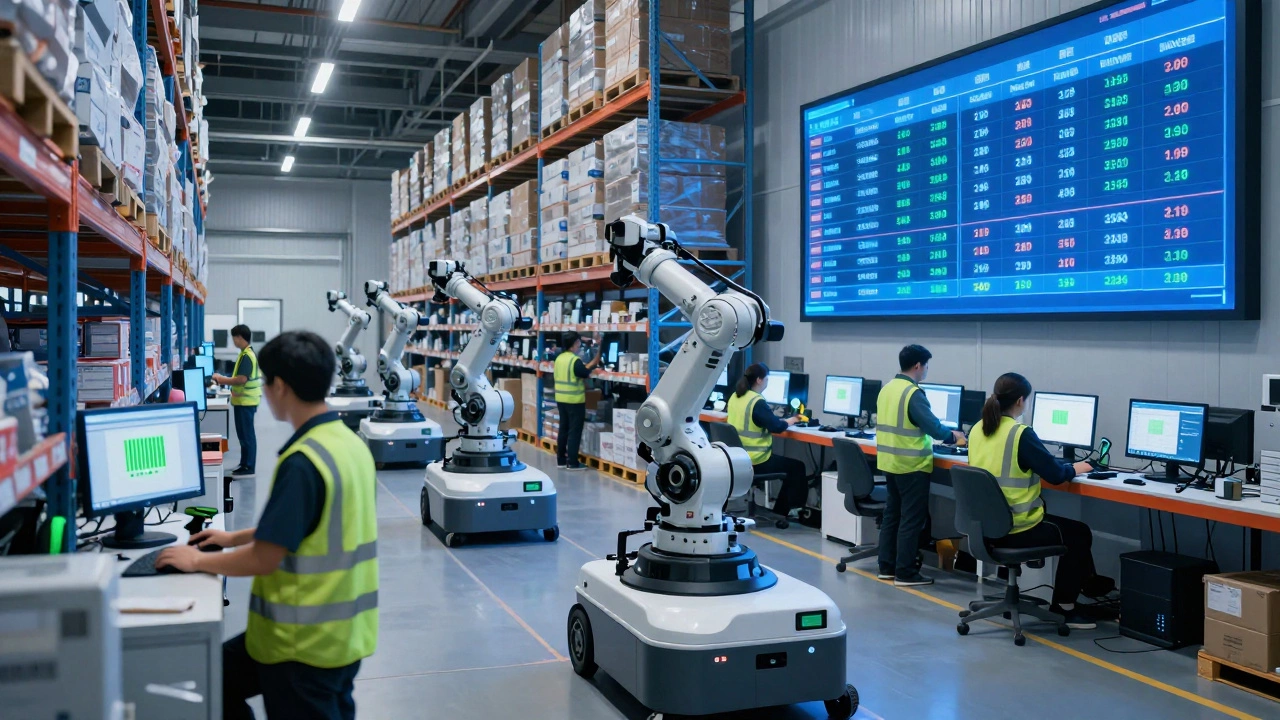
Once the order is confirmed, the warehouse kicks into gear. Workers - or robots - pick the item from shelves. In modern fulfillment centers, you’ll find automated guided vehicles (AGVs) zipping through aisles, picking up bins of products. Barcode scanners confirm every item. Some warehouses use AI to predict which items sell fastest and place them closer to packing stations. This reduces picking time by up to 40%.Packing isn’t just throwing a product into a box. It’s about choosing the right packaging to prevent damage, reduce shipping weight, and minimize plastic waste. Many companies now use on-demand packaging machines that cut corrugated cardboard to fit the item perfectly. This cuts material use by 30% and lowers shipping costs because you’re not paying to move empty space.
How It Moves: The Carrier Network
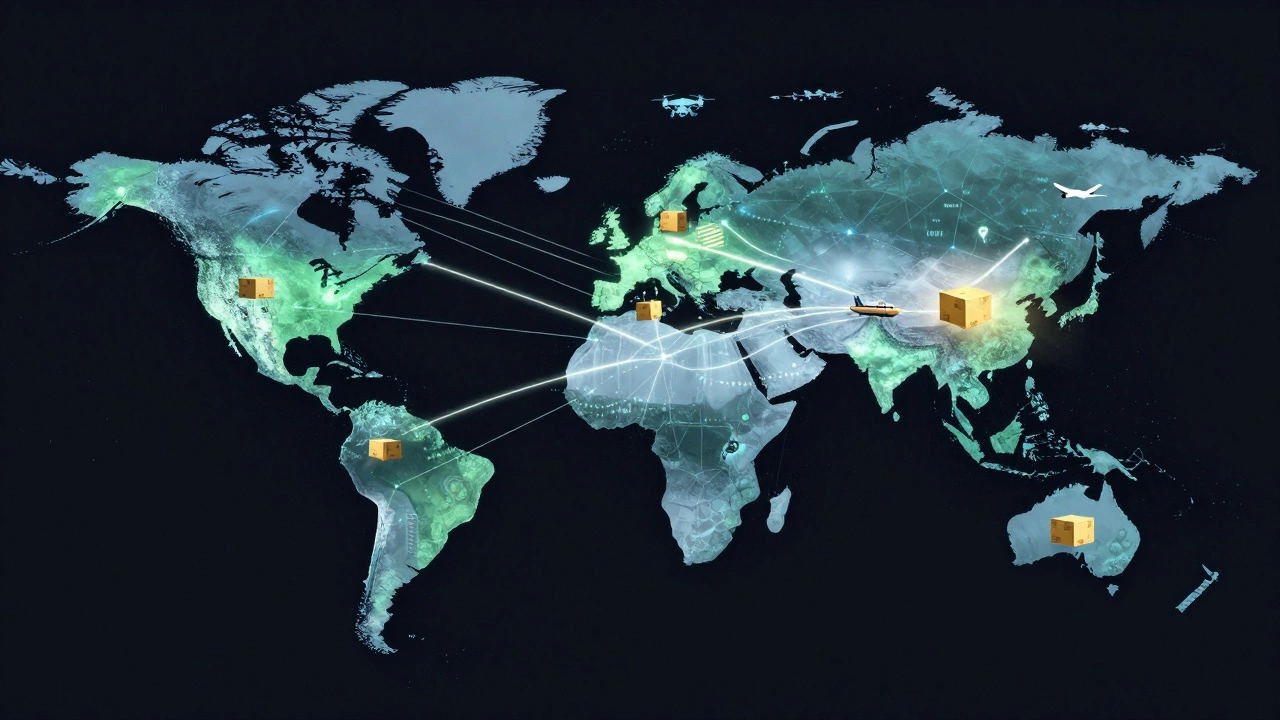
After packing, the package is labeled with a tracking number and handed off to a carrier. This is where the network gets complicated. A single order might pass through multiple carriers before reaching you.For domestic deliveries in the U.S., FedEx, UPS, or USPS handle most shipments. In Europe, DHL and Royal Mail dominate. In Australia, Australia Post and StarTrack are key players. But here’s the twist: many e-commerce sellers don’t contract directly with these giants. Instead, they use shipping aggregators like Shippo, Shippit, or Easyship. These platforms compare real-time rates across multiple carriers and choose the cheapest, fastest option for each package.
International orders add another layer. Customs clearance, import duties, and local regulations vary by country. A package from China to Germany might go through a customs broker in Amsterdam before being handed to Deutsche Post. If the seller hasn’t pre-paid duties, the recipient gets a bill - which is why more brands now offer DDU (Delivery Duty Unpaid) or DDP (Delivery Duty Paid) options at checkout.
The Last Mile: Where Most Failures Happen
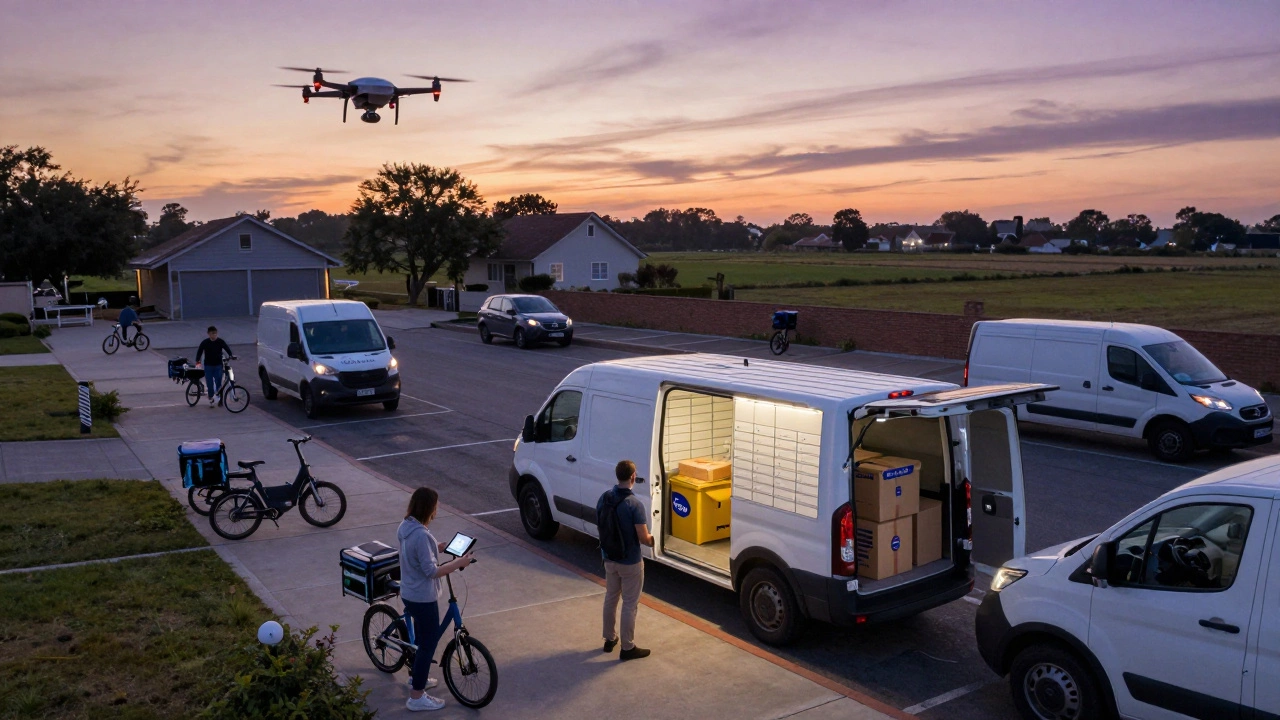
The final leg - from the local delivery hub to your doorstep - is called the last mile. It’s the most expensive part of the whole process, costing up to 53% of total shipping expenses. And it’s where delays, lost packages, and failed deliveries pile up.Why? Because it’s not just about driving a truck. It’s about timing. Customers expect deliveries between 9 a.m. and 8 p.m., and many want to choose their exact delivery window. To meet this demand, companies are testing everything from locker systems (like Amazon Locker or Parcelforce Pickup Points) to autonomous delivery robots. In Auckland, some startups are using electric scooters and bikes for urban deliveries, cutting emissions and avoiding traffic.
Failed deliveries happen when no one’s home. To fix this, many carriers now send a text with a link to reschedule, redirect to a neighbor, or leave the package in a safe spot. Some even use smart locks that let delivery drivers drop packages inside a porch or garage - with permission.
Tracking, Returns, and Returns Again
Tracking isn’t just a nice feature - it’s a necessity. Customers want to know where their package is at every step. That’s why every carrier now uses real-time GPS and scan points: picked up, sorted, departed, arrived, out for delivery, delivered.But returns are where logistics gets even trickier. About 30% of online orders get returned - compared to just 8% in physical stores. That means warehouses need return processing centers. Items are inspected, cleaned, repackaged, or sent to liquidation markets. Some returns are refurbished and sold as "open-box" deals. Others are recycled. A well-run e-commerce logistics system doesn’t treat returns as a cost - it treats them as a data source. Why are people returning this shirt? Was the sizing wrong? Was the color inaccurate? That feedback feeds back into product design and inventory planning.
Technology Is the Backbone
None of this works without software. E-commerce logistics relies on a stack of integrated tools:- Warehouse Management Systems (WMS) - track inventory in real time across multiple locations
- Transportation Management Systems (TMS) - optimize routes, compare carrier rates, and schedule pickups
- Order Management Systems (OMS) - unify sales channels (website, Amazon, eBay, Instagram) into one workflow
- API integrations - connect Shopify, WooCommerce, or Magento directly to FedEx, DHL, or local couriers
Top companies use AI to predict demand spikes. If a viral TikTok video suddenly makes a product popular, the system can auto-allocate stock to warehouses near high-demand areas before the rush hits. This is called demand sensing - and it’s turning logistics from reactive to proactive.
What’s Changing Right Now
In 2026, e-commerce logistics is evolving fast. Here’s what’s new:- Same-day delivery in suburbs - not just cities. Companies like Kiwi Logistics in New Zealand now offer same-day delivery to 80% of households within 20 km of major centers.
- Carbon-neutral shipping options - customers can choose to pay a small fee to offset emissions. Many now select this by default.
- Blockchain for customs - some international shipments now use blockchain to share customs documents securely between countries, cutting clearance time from days to hours.
- Drone delivery trials - in Auckland, trials are underway for drone deliveries to rural homes and islands where road access is slow.
The goal isn’t just speed anymore. It’s reliability, sustainability, and control. Customers don’t just want their package fast - they want to know how it got there, who handled it, and what it cost the planet.
Why It Matters
E-commerce logistics isn’t just about moving boxes. It’s the reason small businesses can compete with giants. It’s why someone in Rotorua can get a handcrafted candle from a studio in Lisbon in three days. It’s why returns don’t ruin a brand - they improve it.If you run an online store, your logistics partner is your silent co-founder. Choose poorly, and your customers get frustrated. Choose well, and you turn delivery into a brand experience.
What’s the difference between e-commerce logistics and regular shipping?
Regular shipping usually means one package going from point A to point B - like a letter or a single box. E-commerce logistics is a full system: it includes inventory management, warehouse picking, multi-carrier routing, returns processing, real-time tracking, and integration with online stores. It’s not just moving things - it’s managing the entire flow of goods for thousands of daily orders.
Can small businesses handle e-commerce logistics on their own?
Yes, but it’s hard. Handling storage, packing, labeling, and carrier contracts takes time and expertise. Most small businesses use third-party logistics providers (3PLs) like ShipBob, Fulfillment by Amazon, or local partners. These companies offer warehouse space, software, and shipping discounts that a small business couldn’t get alone. Trying to do it all in your garage might work for 10 orders a week - but not 100.
How do returns affect e-commerce logistics?
Returns are a huge part of e-commerce logistics. About 30% of online orders are returned, compared to 8% in stores. This means warehouses need dedicated return centers to inspect, restock, or dispose of items. Poor return handling leads to lost inventory, angry customers, and higher costs. Smart brands treat returns as feedback - they analyze why items are returned and fix product descriptions, sizing, or quality before the next batch ships.
Why is last-mile delivery so expensive?
Last-mile delivery is expensive because it’s inefficient. A delivery truck might make 20 stops in a single neighborhood, but each stop only delivers one package. Fuel, labor, and time add up. In rural or low-density areas, the cost per package can jump fivefold. That’s why companies are testing lockers, drones, bike couriers, and neighborhood pickup points - to consolidate deliveries and reduce the number of individual trips.
Do I need special software for e-commerce logistics?
You don’t need fancy software to start, but you’ll hit limits fast. If you’re selling on Shopify or Etsy, you can use built-in shipping tools. But once you hit 50+ orders a day, you’ll need a Warehouse Management System (WMS) and a Transportation Management System (TMS) to track inventory, automate labels, and compare carrier rates. Tools like Shippit, Ordoro, or NetSuite can integrate with your store and cut manual work by 70%.