Courier Earnings & Role Finder
Select your profile options and click "Find Best Role" to see which courier niche matches your skills and what you could potentially earn per week.
You see vans buzzing around your neighborhood every day. You might assume everyone behind the wheel earns roughly the same amount. That assumption misses a massive gap in the industry. Some couriers barely cover their fuel costs after taxes. Others pull in six figures annually without ever setting foot in an office. The difference isn't luck or who you know. It comes down to specialization, risk, and what exactly you are transporting.
If you're looking to switch careers or start a side hustle, knowing what is the highest paid courier role saves you months of trial and error. We aren't just talking about package delivery for Amazon or FedEx. We're digging into niche sectors where time sensitivity and liability drive up wages significantly. Let's break down who actually makes the big money on the road in 2026.
The Short Answer: Medical and Legal Couriers Lead the Pack
Before we get into the weeds, here’s the quick takeaway. If you want the highest hourly rate as a solo driver, look at medical courier services. If you want the highest total annual income with potential for business growth, look at specialized legal document delivery or high-end luxury goods transport. Standard parcel delivery sits firmly in the middle-to-low tier.
- Medical Couriers: Often earn $25-$45 per hour due to strict regulatory compliance and urgency.
- Legal Process Servers/Couriers: Can charge premium flat rates ($100+ per drop) for difficult deliveries.
- Hazmat Drivers: Earn more than standard drivers but require heavy licensing.
- Luxury Goods Specialists: High tips and base pay for handling watches, jewelry, or art.
Why Specialization Pays More Than Volume
Think about why a doctor gets paid more than a retail pharmacist. It’s not just knowledge; it’s liability and precision. The same logic applies to logistics. A standard courier drops off a box of shoes. If it arrives late, the customer complains. If a medical courier delivers a blood sample to a hospital lab and it arrives late, a patient’s diagnosis could be delayed, or the sample could spoil. That stakes money on every mile.
Companies paying for these services know that speed and care are non-negotiable. They don’t haggle over a few dollars per stop. They pay for reliability. This creates a natural barrier to entry. You can’t just buy a van and start hauling organs. You need certifications, clean driving records, and often specific equipment like temperature-controlled boxes. Because fewer people qualify for these roles, supply stays low while demand remains high. Basic economics dictates that wages rise when skilled labor is scarce.
Medical Couriers: The Gold Standard for Solo Drivers
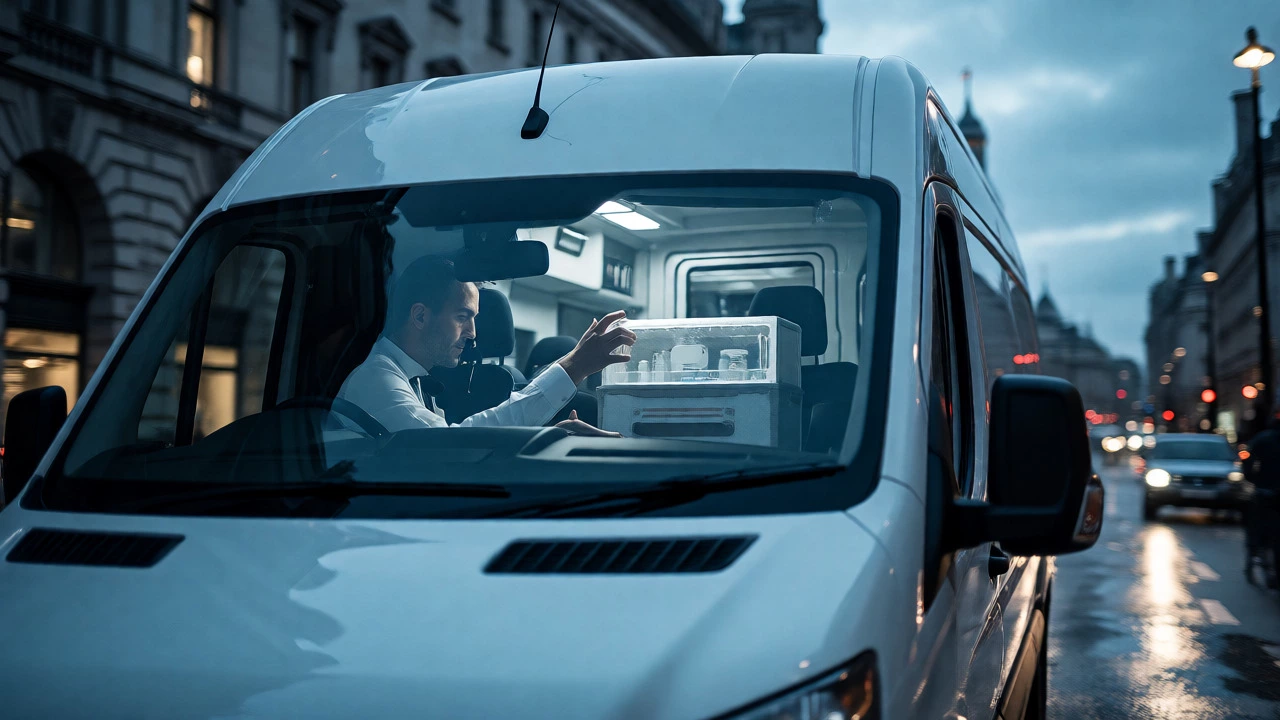
Medical Courier Services represent one of the most lucrative niches in last-mile delivery. These drivers transport pharmaceuticals, laboratory samples, medical devices, and even human organs between hospitals, clinics, pharmacies, and labs.
In major metropolitan areas like Auckland, Sydney, or London, medical couriers can command rates between $30 and $50 per hour. Why so high? Three reasons dominate the pricing model:
- Time Sensitivity: Many medical deliveries are STAT (immediate). A driver might make only 10 stops a day compared to 100 for a pizza delivery person, but each stop pays significantly more.
- Compliance Requirements: Handling controlled substances or biohazardous materials requires adherence to strict health regulations. Mistakes lead to fines, so companies pay for trained professionals.
- Equipment Needs: You often need insulated containers or secure lockboxes. This investment filters out casual drivers, reducing competition.
For those willing to invest in training, this sector offers stability. Hospitals run 24/7. Pharmacies open early and close late. There is always a need to move something from point A to point B before it expires or becomes critical.
Legal Couriers and Process Servers: High Risk, High Reward
While medical couriers offer steady hourly work, Legal Couriers often operate on a fee-per-service model that can yield higher daily earnings if you are efficient. Their job involves delivering subpoenas, court filings, and sensitive contracts to law firms, courts, and government offices.
This role differs from typical delivery because of the "proof of service" requirement. You aren't just leaving a package; you are legally attesting that a specific person received a document. In some jurisdictions, failing to serve papers correctly can delay a lawsuit by months. Law firms pay premiums for guaranteed, trackable delivery.
Independent legal couriers in busy cities often charge flat fees ranging from $50 to $150 per delivery, depending on the difficulty of locating the recipient. If you handle four complex deliveries in a day, you’re making $200-$600 gross. Compare that to a gig-economy driver doing $15/hour, and the math favors the specialist. However, this path requires strong interpersonal skills. You might face angry recipients or hostile environments. It’s not for the faint-hearted.

Hazmat Drivers: The Heavy Hitters of Freight
If you prefer larger vehicles and longer distances, Hazardous Materials (Hazmat) transportation offers some of the highest salaries in the trucking world. While technically distinct from small-package courier work, many independent operators bridge this gap using medium-duty trucks.
| Courier Type | Avg Hourly Rate (USD) | Barrier to Entry | Primary Stress Factor |
|---|---|---|---|
| Standard Parcel (Amazon/FedEx) | $18 - $24 | Low | Volume & Quotas |
| Food/Gig Economy | $15 - $22 | Very Low | Traffic & Tips |
| Medical Courier | $25 - $45 | Moderate (Certifications) | Regulatory Compliance |
| Legal Courier | $30 - $60 (effective) | Moderate (Local Knowledge) | Recipient Interaction |
| Hazmat Driver | $35 - $55 | High (Licensing & Safety) | Safety & Liability |
Hazmat drivers transport chemicals, fuels, and industrial gases. The pay reflects the danger. One spill can shut down a highway or cause environmental disasters. Consequently, these drivers need specialized endorsements on their licenses and undergo rigorous safety training. For those with a Commercial Driver’s License (CDL), adding a Hazmat endorsement boosts earning potential by 10-20% immediately. It’s hard work, but the financial ceiling is much higher than standard courier gigs.
Luxury Goods and Art Transporters: The Niche Elite
Not all high-paying couriers haul boxes. Some handle million-dollar paintings, rare watches, or bespoke jewelry. Companies like Brink’s or specialized art logistics firms hire couriers who act as both drivers and security guards.
In this sector, trust outweighs speed. A client doesn’t care if the Rolex arrives in 2 hours or 4 hours; they care that it doesn’t disappear. Couriers in this space often receive substantial tips and bonuses for perfect condition deliveries. Base pay might look similar to medical couriers, but the additional perks and lower physical strain (fewer heavy lifts) make it attractive. To break into this field, you typically need a clean criminal background check and experience in white-glove service. It’s less about driving fast and more about presenting professionalism.
How Location Impacts Your Paycheck
Geography plays a huge role in determining what is the highest paid courier opportunity for you. Rural areas rarely support high-value niches. You won’t find many law firms needing urgent document delivery in a town of 500 people. Conversely, global financial hubs like New York, London, Singapore, and Auckland have dense concentrations of hospitals, courts, and luxury retailers.
In New Zealand, for instance, medical courier work is robust due to the public health system’s reliance on private contractors for inter-hospital transfers. Meanwhile, legal courier work spikes during election years or major litigation cycles. Always research local demand before investing in equipment. A medical courier license is useless if there are no labs nearby requiring rush samples.

Employee vs. Contractor: Who Keeps More?
Most high-earning couriers are independent contractors rather than employees. This distinction matters for your net income. As an employee, you get benefits but a fixed wage. As a contractor, you keep the full fee per delivery but cover your own fuel, insurance, vehicle maintenance, and taxes.
Here’s the trap many new couriers fall into: they calculate gross revenue and ignore expenses. If you charge $40/hour but spend $15/hour on gas and wear-and-tear, your real wage is $25. However, contractors can deduct these expenses come tax time. Furthermore, successful contractors build their own client lists. Once you establish reliability with three major hospitals, you can negotiate better rates than a company driver who has no leverage. The highest earners are almost always business owners running their own courier fleet, even if it’s just one van.
Steps to Break Into the Highest-Paid Tiers
You don’t need a university degree to start, but you do need a plan. Here is how to pivot from generic delivery to high-income courier work:
- Assess Your Assets: Do you have a reliable vehicle? Medical work needs a clean car or van. Hazmat needs a truck. Match your vehicle to the niche.
- Get Certified: Look for courses in HIPAA (for US medical privacy) or general Good Distribution Practice (GDP). These certificates cost little but signal professionalism to employers.
- Start Subcontracting: Don’t quit your day job yet. Sign up with platforms that specialize in medical or legal delivery. Test the waters on weekends.
- Build Reliability Metrics: Track your on-time percentage. When negotiating with direct clients later, showing a 99% on-time record is worth more than any resume.
- Niche Down: Once you have cash flow, specialize. Stop taking random parcels. Focus entirely on pharmacy runs or court filings. Marketing yourself as a specialist allows you to raise prices.
Pitfalls to Avoid in High-End Delivery
High pay comes with high pressure. If you miss a window for a surgical organ transplant, you might lose the contract permanently. Insurance is also critical. Standard auto insurance often excludes commercial use or hazardous materials. You must purchase specific commercial policies. Skipping this step can bankrupt you after one accident involving expensive cargo.
Another common mistake is underpricing. New entrants often undercut established players to get work. In niche markets, price signals quality. If you charge too little, clients may doubt your ability to handle delicate or urgent tasks. Price yourself confidently based on the value you provide, not just the miles you drive.
Is medical courier work harder than standard delivery?
Physically, it is often easier because you carry smaller, lighter packages. Mentally, it is more demanding due to strict time windows and regulatory paperwork. You cannot leave a package at the door; it usually requires a signature from authorized personnel.
Do I need a special license to be a medical courier?
You generally do not need a CDL unless you are driving large trucks. However, you often need background checks, drug testing, and sometimes specific certifications in safe handling of biological specimens or pharmaceuticals, depending on local laws.
Can I make six figures as a solo courier?
Yes, but it is rare for solo drivers. Most six-figure earners own multiple vehicles or hire subcontractors. A solo driver in a high-demand niche like legal or hazmat can reach $80k-$100k with long hours and efficient routing, but exceeding that usually requires scaling the business.
Which city pays couriers the most?
Major financial and medical hubs like New York, San Francisco, London, and Zurich tend to pay the highest rates due to the concentration of high-value industries and high cost of living. However, remote areas with scarce drivers can also offer premium rates for urgent runs.
Is gig economy app work worth it for high pay?
Generally, no. Apps like UberEats or DoorDash saturate the market with drivers, keeping wages low. High pay comes from direct contracts with businesses (B2B) rather than consumer apps (B2C). Use apps to fill gaps, but aim for direct contracts for primary income.