Shipping Cost Comparison Calculator
Enter the details of your package below to see if reusing an old box saves you money compared to buying a new carrier-provided flat-rate box.
Option A: Your Own Box
- Billable Weight: -- kg
- Shipping Cost: --
- Box Cost: --
- Total Cost: --
Option B: Carrier Flat Rate
- Billable Weight: N/A (Flat Rate)
- Shipping Cost: Included in Box Price
- Box Cost: Included in Price
- Total Cost: --
You’re staring at a pile of cardboard boxes in your garage. You’ve got the item you need to send, and you’re wondering if grabbing one of those old Amazon boxes is going to save you money compared to buying a new one from the post office or courier depot. It’s a question every shipper asks at least once: is it cheaper to use my own box to ship?
The short answer is yes, usually. But the long answer involves some tricky math about volume, weight, and how couriers actually charge you. If you grab the wrong box, you might end up paying more than if you’d just bought the right size upfront. Let’s break down exactly when bringing your own packaging saves cash and when it burns a hole in your wallet.
The Hidden Cost of Air: Dimensional Weight
Most people think shipping costs are based purely on how heavy their package is. That used to be true decades ago. Today, major carriers like FedEx, a global delivery services company known for its integrated logistics network, UPS, an American multinational logistics company that provides package delivery and supply chain management solutions, and even national postal services calculate prices using dimensional weight (or dim weight).
Dimensional weight estimates how much space a package takes up on a truck or plane. The formula is simple but often misunderstood: multiply Length × Width × Height, then divide by a divisor (usually 5000 for metric cm/kg or 139 for imperial inches/lbs). If the resulting number is higher than the actual scale weight, you pay for the dim weight.
This is where "free" boxes can hurt you. An old cereal box might be free, but if you stuff it with a small item and tape it shut, you’re still shipping a lot of air. If you use a large, bulky box for a tiny item, the carrier charges you for the volume of the box, not the item inside. Buying a snug-fitting box often costs $2-$5 more upfront but can save you $10-$20 in shipping fees because you drop into a lower price tier.
When Using Your Own Box Saves Money
There are specific scenarios where hunting through your recycling bin pays off. Here is when you should definitely use your own packaging:
- You have sturdy, clean boxes: If you have a double-walled cardboard box that hasn’t been crushed or wet, it’s likely as strong as what you’d buy. Couriers don’t care where the box came from; they care if it survives the journey.
- The item fits perfectly: If you find a box that leaves only 1-2 cm of space around the item for padding, you’re winning. This minimizes dimensional weight penalties.
- Domestic ground shipping: For standard domestic deliveries via services like Australia Post, the primary postal service provider in Australia, offering extensive domestic and international shipping options or local NZ couriers, flat-rate zones often apply less strictly to private boxes than they do to branded envelopes.
- Bulk shipments: If you’re moving house or sending multiple items in one go, reusing boxes eliminates the per-unit cost of new packaging entirely.
When Buying New Boxes Is Actually Cheaper
Don’t let the "free" label fool you. Sometimes, buying new is the smart financial move. Here’s why:
1. Flat Rate Envelopes and Boxes: Carriers like DHL Express, a global market leader in the logistics industry specializing in international express parcel delivery and FedEx offer flat-rate boxes. You pay a fixed price regardless of weight (up to a limit) or dimensions. If you try to shove a heavy item into your own oversized box, you’ll pay by weight/dimensions. If you put that same heavy item in a DHL Express flat-rate box, you might pay significantly less. Always check if a flat-rate option exists before measuring your own box.
2. Insurance and Liability: Some premium insurance policies or business accounts require certified packaging for full coverage. If your item breaks because you used a soggy, single-ply pizza box, the courier might deny the claim. Buying a certified box ensures structural integrity, protecting your investment.
3. Professional Appearance for E-commerce: If you run an online store, unboxing experience matters. Customers notice if you reuse a dirty Amazon Prime box with another brand’s logo taped over it. While this doesn’t affect shipping *rates*, it affects customer retention and return rates, which indirectly impacts your bottom line.
How to Calculate If You’re Saving
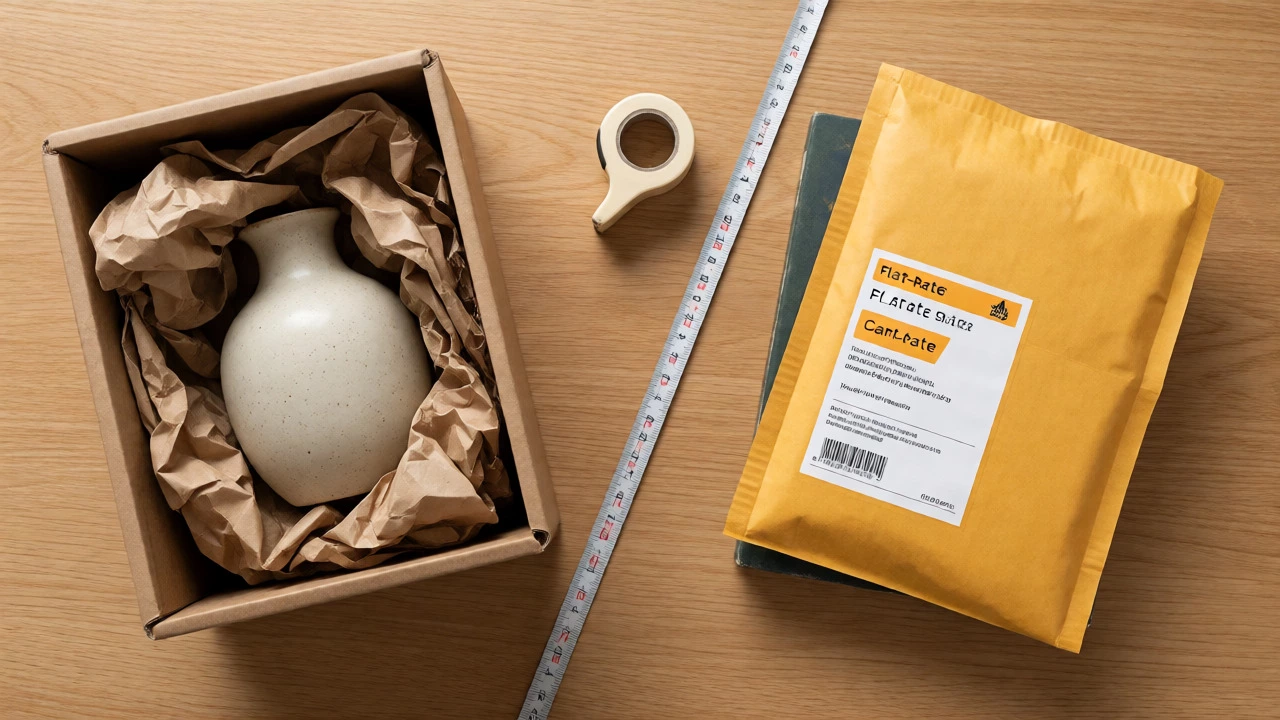
To know for sure, you need to compare two quotes. Don’t guess. Follow this quick workflow:
- Weigh and measure your item + padding: Get the exact dimensions of the smallest box that safely holds your item.
- Get Quote A (Own Box): Enter these dimensions into the courier’s rate calculator. Note the total cost including fuel surcharges.
- Get Quote B (Carrier Box): Find the closest matching carrier-provided box size. Add the cost of that box ($2-$8 typically) to the shipping quote.
- Compare: If Quote A is less than Quote B + Box Cost, use your own box. If Quote B is lower, buy theirs.
| Scenario | Item Type | Own Box Est. Cost | Carrier Box Est. Cost | Winner |
|---|---|---|---|---|
| Small, Heavy Item | Book Stack (1kg) | $15.00 (High Dim Weight due to large reused box) | $12.50 (Flat Rate Small Box) | Carrier Box |
| Large, Light Item | Pillows (2kg) | $18.00 (Standard Size) | $22.00 (Oversized Flat Rate) | Own Box |
| Irregular Shape | Ceramic Vase | $25.00 (Custom Padding + Box) | $24.00 (Specialty Fragile Kit) | Tie / Carrier Box |
| Multiple Items | Household Move | $0.00 (Reused) | $40.00 (New Supplies) | Own Box |
Common Pitfalls with Reused Boxes
If you decide to use your own boxes, watch out for these traps that turn "free" into "expensive":
Old Barcodes and Labels: Peel off all previous shipping labels and barcodes. Scanners get confused by multiple codes, leading to misrouting. Misrouted packages incur correction fees or delays that cost you time and potential refund headaches.
Weak Seals: Cardboard loses strength over time, especially if stored in damp garages. Reinforce seams with H-taping method (tape along the center seam and both edges). A failed seal means the box opens mid-transit, damaging contents and voiding insurance.
Lack of Cushioning: Just because the box fits doesn’t mean the item is safe. You must fill voids with biodegradable peanuts, crumpled paper, or bubble wrap. If the item shifts, it breaks. Replacement costs outweigh the $3 you saved on the box.
Eco-Friendly Angles: Reducing Waste
Beyond cost, there’s the environmental impact. The logistics sector is under pressure to reduce carbon footprints. Reusing boxes extends the life cycle of cardboard, reducing the demand for virgin pulp. However, inefficient packing (too much air) increases transport emissions per item. So, the most eco-friendly choice isn’t always "reuse," it’s "right-size." Use the smallest possible box, whether new or old, to maximize cargo density on trucks and planes.
In Auckland, local council kerbside collection accepts clean cardboard, so disposal of unused boxes is easy. But keeping them organized in a dedicated storage area prevents damage. Wet cardboard is useless cardboard.
Final Verdict: What Should You Do?
For occasional personal shippers, using your own well-stored, clean boxes is almost always cheaper, provided you measure carefully to avoid dimensional weight penalties. For businesses shipping high volumes of small, dense items, carrier flat-rate boxes often win because they bypass complex dim-weight calculations.
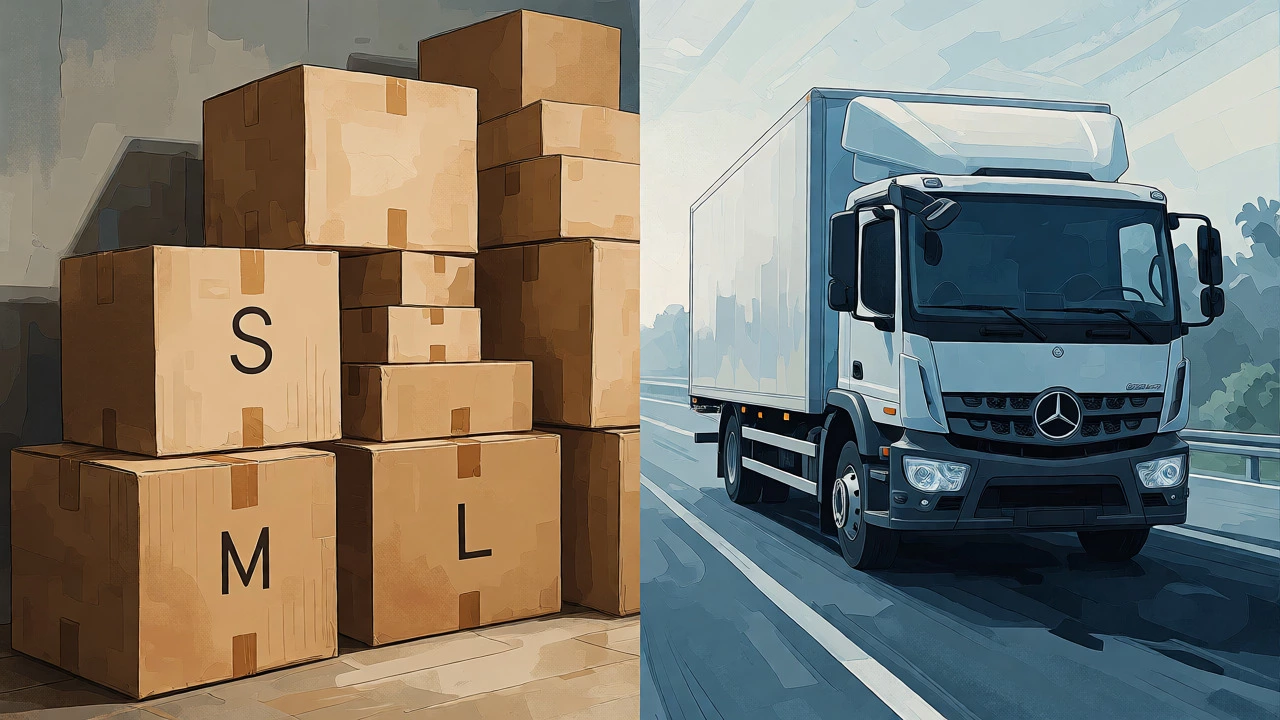
My advice? Keep a stock of three sizes of generic, blank cardboard boxes. Label them S, M, L. When you need to ship, pick the smallest one that fits with 2cm padding. Check the rate against the carrier’s flat-rate option. In 70% of cases, your own box will save you money. In the other 30%, the convenience and predictability of a carrier box are worth the few extra dollars.
Do couriers charge extra for using my own box?
No, couriers generally do not charge extra for using your own box. They charge based on the final dimensions and weight of the packaged item. However, if your box is non-standard or requires special handling, some carriers may apply a surcharge, though this is rare for standard rectangular boxes.
Can I use any box for international shipping?
You can use any sturdy box, but it must meet specific criteria: it must be strong enough to withstand transit, have no visible damage, and display clear labeling. Avoid boxes with excessive branding or confusing text, as customs officials need to clearly see the address and customs declaration form attached securely to the outside.
What is dimensional weight and why does it matter?
Dimensional weight (dim weight) is a pricing technique used by carriers to bill for the amount of space a package occupies rather than just its physical weight. If your box is large but light, you pay for the volume. This matters because using an oversized box for a small item can make shipping significantly more expensive than using a smaller, tighter-fitting box.
Are flat rate boxes always cheaper?
Not always. Flat rate boxes are cheaper for heavy, compact items that would otherwise trigger high weight-based charges. They are more expensive for large, lightweight items where you could fit the content into a smaller, cheaper zone-based rate using your own appropriately sized box.
How many times can I reuse a shipping box?
A high-quality double-walled cardboard box can typically be reused 3-5 times if stored properly away from moisture and crushing. Single-walled boxes are usually good for one or two uses. Inspect the box for soft spots, tears, or compromised corners before each use.