Traditional vs E-Logistics: Knowledge Quiz
Answer all six questions to see how well you understand modern logistics. Each question tests a core concept from the article.
Imagine you order a pair of sneakers online. In the old days, that meant waiting weeks for a mail-order catalog to process your request, shipping the item via a slow freight train, and hoping it didn't get lost in a dusty warehouse. Today, you expect it at your door in two days-or less. This shift isn't just about speed; it's a fundamental change in how goods move from manufacturer to consumer. That is the core difference between e-logistics and traditional logistics.
Traditional logistics focuses on moving bulk goods efficiently from point A to point B, often involving large shipments, long lead times, and manual tracking. E-logistics, on the other hand, is built around the individual customer experience. It relies on real-time data, digital integration, and flexible infrastructure to handle high volumes of small parcels. If you are running an online store or managing a supply chain in 2026, understanding this distinction is critical for keeping costs down and customers happy.
The Core Philosophy: Bulk vs. Individual
At its heart, traditional logistics was designed for the industrial era. Think of factories producing thousands of identical units that need to be moved to regional distribution centers. The goal here is cost efficiency per unit. You load a full truckload (FTL) or a container ship, minimize the number of stops, and accept that the final delivery might take a week. The customer is often a business (B2B), not an end-user, so they have more patience for delays.
E-logistics flips this model. The unit of movement is no longer the pallet or the container; it’s the single box. One order might contain one t-shirt, another might have three books and a phone case. This fragmentation creates complexity. You can’t just send a semi-truck to every house. Instead, e-logistics uses a network of smaller hubs, cross-docking facilities, and local couriers to break down the flow. The priority shifts from minimizing transport cost per ton to maximizing service level per order. Speed and visibility become the new currency.
| Feature | Traditional Logistics | E-Logistics |
|---|---|---|
| Primary Focus | Cost efficiency per unit | Customer experience & speed |
| Shipment Size | Bulk, Full Truckload (FTL) | Small parcels, Less-than-Truckload (LTL) |
| Tracking | Mileage-based, infrequent updates | Real-time, GPS-enabled, scan-based |
| Inventory Model | Centralized warehouses | Distributed micro-fulfillment centers |
| Data Usage | Historical reporting | Predictive analytics & automation |
| Return Process | Manual, slow, costly | Digitized, fast, integrated |
Infrastructure: Warehouses vs. Micro-Fulfillment
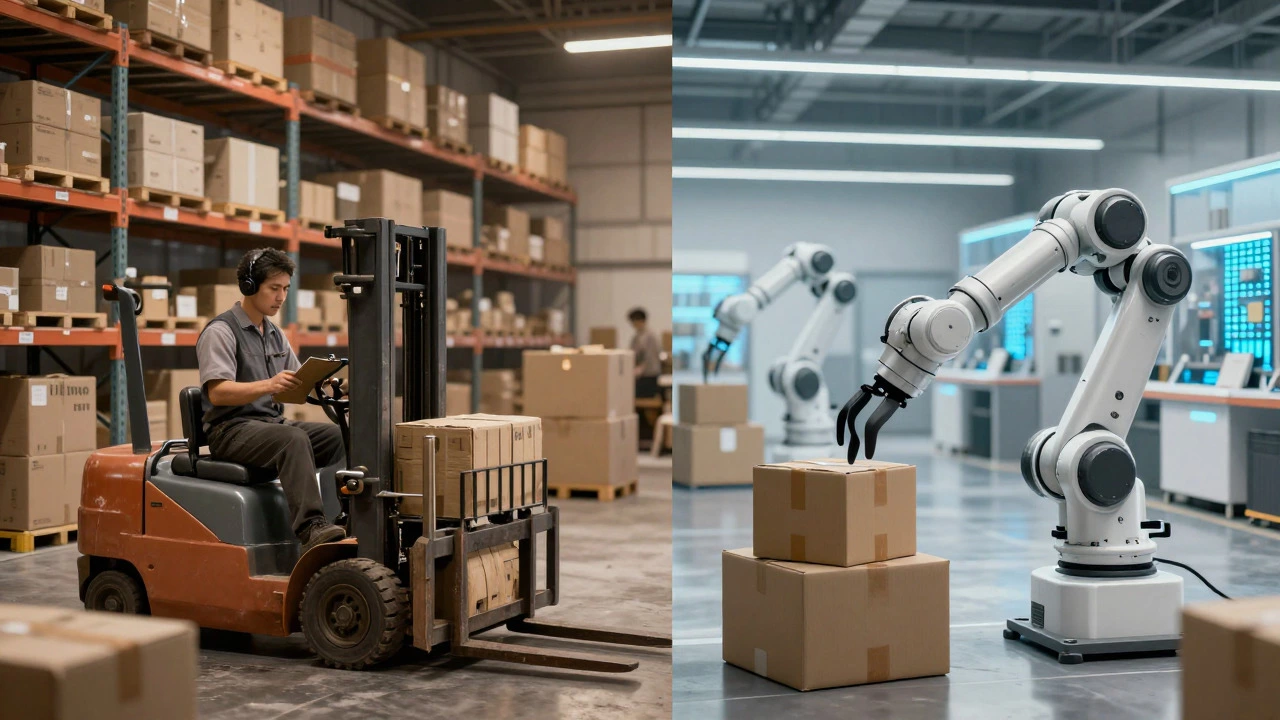
In traditional setups, you build massive warehouses in strategic locations near highways or ports. These are static. Once built, they don’t change much. Inventory sits there until it’s needed, and picking processes are often labor-intensive. Workers walk miles inside these buildings to find items, pack them, and label them. It works, but it’s slow and prone to human error.
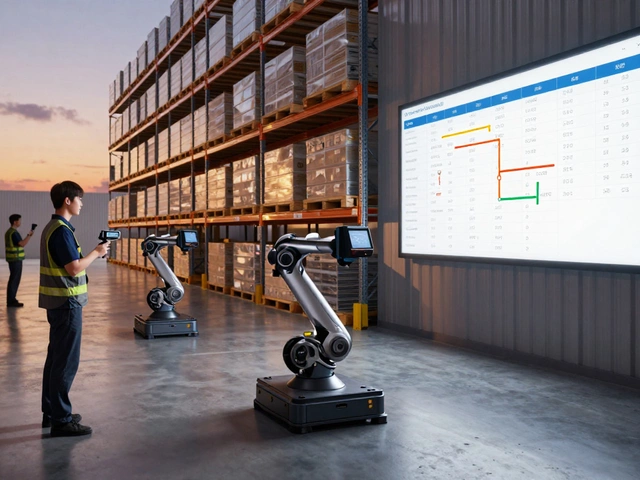
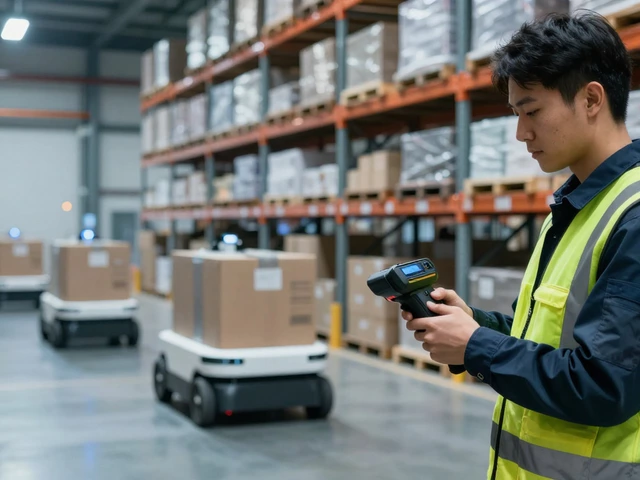
E-logistics demands agility. As online shopping habits shifted toward expecting next-day delivery, companies started building Micro-Fulfillment Centers is small, automated warehouses located close to urban consumers. These facilities are often just a few thousand square feet, tucked into back-of-house spaces in supermarkets or dedicated urban lots. They use robotics to pick items in seconds rather than minutes. By placing inventory closer to the customer, you cut down transit time significantly. This isn't just about having more trucks; it's about rethinking where stock lives.
Consider a retailer in Auckland. Under traditional models, their stock might sit in a large facility in Papakura, 30 kilometers away. For e-logistics, they might keep fast-moving items in a small hub in Ponsonby. When an order comes in, the robot picks it, a courier picks it up within the hour, and it’s delivered by evening. That proximity is the engine of modern e-commerce.
Technology: The Brain Behind the Movement
You can’t run e-logistics on paper forms and phone calls. The entire operation hinges on software integration. Traditional logistics often used standalone systems for transportation management and warehouse operations. Data silos were common. If you wanted to know where a shipment was, you had to call the carrier.
E-logistics relies on a unified digital backbone. This includes:
- Order Management Systems (OMS): These act as the central brain, syncing orders from multiple sales channels (website, marketplaces, social media) into one queue.
- Warehouse Management Systems (WMS): These direct robots and workers in real-time, optimizing pick paths to save time.
- Transportation Management Systems (TMS): These automatically select the best carrier based on cost, speed, and carbon footprint.
- Internet of Things (IoT) Sensors: Devices attached to pallets or boxes monitor temperature, humidity, and location continuously.
This connectivity allows for predictive analytics. Instead of reacting to demand spikes, e-logistics platforms forecast them. If a viral video drives sudden interest in a product, the system can alert you to shift inventory from a distant warehouse to a local hub before the stock runs out. Traditional logistics would likely suffer a stockout during such a spike because the data lag was too long.
Last Mile Delivery: The Biggest Cost Driver
If you look at any logistics budget, the last mile-the final leg from the local hub to the customer’s doorstep-is the most expensive part. In traditional logistics, this wasn't a major concern because deliveries were made to businesses with loading docks. Drivers could drop off a pallet and leave.
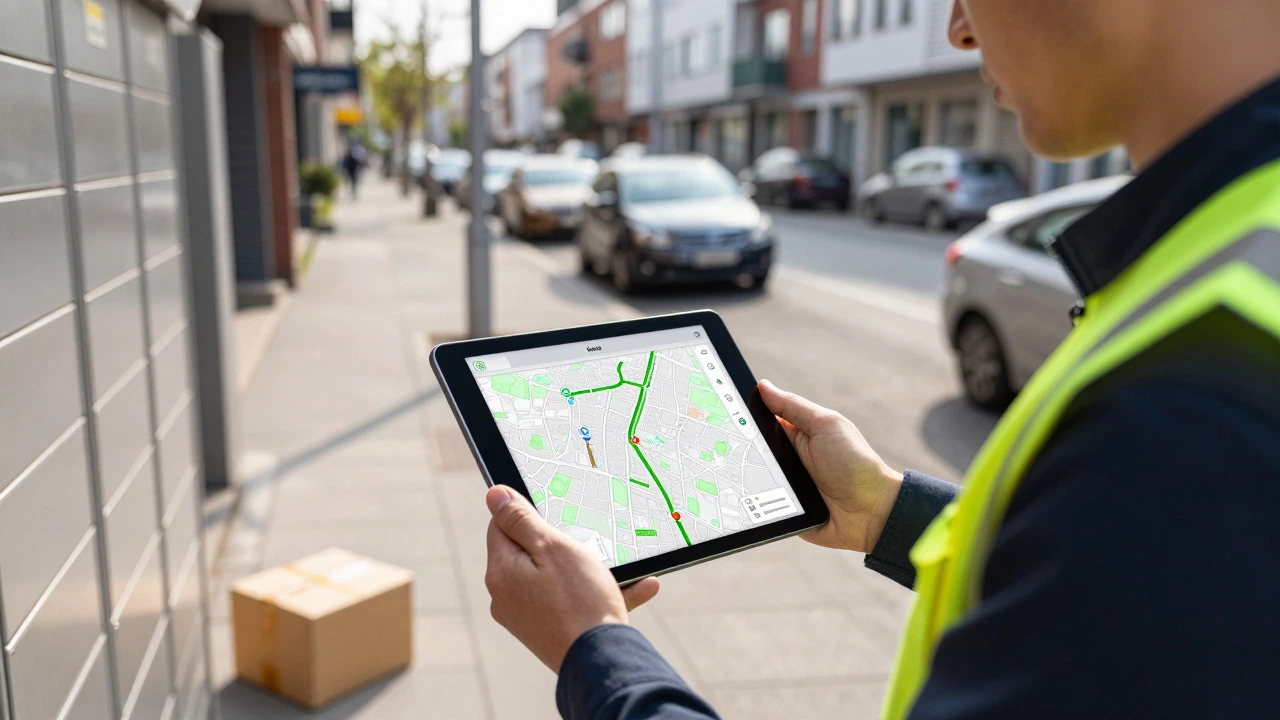
In e-logistics, the last mile is a logistical nightmare turned into a science. You’re dealing with fragmented addresses, narrow streets, unpredictable traffic, and customers who aren't always home. To manage this, e-logistics operators use route optimization algorithms. These tools calculate the most efficient path for a driver carrying 50 different packages, factoring in delivery windows, vehicle capacity, and real-time traffic data.
Furthermore, the rise of Last Mile Delivery is the final stage of the supply chain where goods are transported from a distribution center to the end customer. has led to innovations like lockers, parcel points, and drone delivery pilots. Customers now have choices. They can choose a specific time slot, opt for a locker pickup, or allow the driver to leave the package at a neighbor’s house. This flexibility reduces failed delivery attempts, which are incredibly costly in terms of fuel and labor.
Returns: The Reverse Flow
Let’s talk about returns, or reverse logistics. In traditional brick-and-mortar retail, returns were manageable. A customer brings an item back to the store, the staff checks it, and it goes back on the shelf. Simple.
In e-logistics, returns are a constant stream. Industry standards suggest that up to 30% of online apparel purchases may be returned. Each return requires a label, a pickup, a scan at the warehouse, quality inspection, and restocking. If done poorly, returns eat into profit margins entirely.
Modern e-logistics treats returns as a core operational function, not an afterthought. Automated return portals generate labels instantly. Barcodes track the item’s status from the moment the customer drops it off. Some advanced systems even use AI to inspect returned items via photos, deciding if they can be resold immediately or need repair. This speed ensures inventory is available again quickly, maintaining cash flow and customer satisfaction.
Sustainability and Transparency
Consumers in 2026 care deeply about where their products come from and how they got there. Traditional logistics often operated in the dark. You knew the origin country, but not the specific emissions profile of the journey.
E-logistics enables granular sustainability tracking. Because every step is digitized, companies can calculate the carbon footprint of each order. This data allows brands to offer greener options, such as choosing standard ground shipping over express air freight when possible. Some platforms now display the CO2 savings directly to the customer at checkout. This transparency builds trust. It also helps companies meet regulatory requirements regarding supply chain reporting, which are becoming stricter globally.
Choosing the Right Approach for Your Business
So, which model should you adopt? The answer depends on your product type and customer base. If you sell heavy, bulky items like furniture or industrial machinery, traditional logistics might still make sense. Shipping a sofa via LTL freight is far cheaper than trying to fit it into a micro-fulfillment center workflow.
However, if you sell consumer goods-apparel, electronics, beauty products-e-logistics is non-negotiable. Your competitors are using it. Your customers expect it. The key is hybridization. Most successful retailers use a blend. They use traditional methods for inbound freight (moving stock from factory to main DC) and e-logistics for outbound fulfillment (moving stock from DC to customer). Understanding both sides of the equation allows you to optimize the entire chain, not just one segment.
The future isn't about replacing traditional logistics with e-logistics. It’s about integrating them. The physical world of trucks and warehouses remains essential. But the digital layer that orchestrates them is what defines success in the current market. If you want to stay competitive, you need to master the data, automate the routine, and focus your human energy on the complex exceptions that machines can’t handle yet.
Is e-logistics only for online stores?
No. While born from e-commerce, e-logistics principles apply to any business that needs fast, tracked, small-parcel delivery. Even brick-and-mortar stores use e-logistics for click-and-collect services and same-day local delivery.
Why is the last mile so expensive in e-logistics?
The last mile involves many short trips to individual homes rather than few long trips to businesses. This increases fuel consumption, driver hours, and the complexity of route planning. Failed deliveries due to missed appointments add further cost.
What role does AI play in modern logistics?
AI is used for demand forecasting, route optimization, and dynamic pricing. It analyzes historical data and real-time signals to predict shortages, reduce empty miles, and adjust shipping rates based on current capacity.
Can small businesses afford e-logistics technology?
Yes. Cloud-based logistics software has made advanced tools accessible. Small businesses can integrate with third-party logistics (3PL) providers who already own the technology and infrastructure, paying only for the services used.
How does e-logistics improve customer retention?
Fast, reliable delivery and easy returns reduce friction in the buying process. When customers know exactly where their order is and can resolve issues quickly, they are more likely to shop again. Visibility builds trust, which drives loyalty.