Logistics Efficiency Estimator
Enter your business data below to estimate key logistics performance indicators (KPIs) described in the article.
Higher ratios indicate better cash flow efficiency.
Estimated Cost Distribution
Enter your business parameters and click "Calculate Metrics" to see your estimated logistics KPIs.
You know that feeling when you click "Buy Now" on a pair of sneakers, and three days later they’re sitting on your porch? It feels like magic. But behind that seamless delivery is a complex web of coordinated actions. If one link breaks-say, the warehouse can’t find the right size, or the truck gets stuck at customs-you get an angry customer and a refund request.
Most people think logistics is just moving boxes from point A to point B. It’s not. It’s about managing flow. Whether you run a small e-commerce shop in Auckland or manage global freight for a multinational corporation, the core mechanics remain the same. Understanding these four pillars helps you spot bottlenecks before they cost you money. And let’s be honest, in today’s market, speed and accuracy are the only things that keep customers coming back.
Order Processing: The Starting Gun
Everything begins with data. Order Processing is the initial step where a customer's purchase request is captured, verified, and converted into an actionable task within the supply chain system. It sounds simple, but this is where most errors happen. Did the customer use a discount code correctly? Is their address valid? Do we actually have the stock?
If you’re still using spreadsheets to track orders, you’re fighting a losing battle. Modern Logistics Software automates this verification instantly. It checks inventory levels in real-time, calculates shipping costs based on current carrier rates, and sends confirmation emails automatically. This reduces human error by up to 90%. Think about it: if you manually enter 500 orders a day, even a 1% error rate means five unhappy customers daily. That’s 35 unhappy customers a week.
The goal here isn’t just to take the money; it’s to set the stage for accurate fulfillment. Good order processing ensures that the warehouse team knows exactly what to pick, pack, and ship. No guessing games. No "sorry, we don't have that anymore." Just clear, digital instructions sent directly to the floor.
Inventory Management: The Heartbeat
Once the order is in, you need to know what you have. Inventory Management is the process of tracking goods throughout the supply chain, from production to sale, ensuring optimal stock levels to meet demand without overstocking. This is arguably the hardest part of logistics. Too much stock ties up cash and risks obsolescence. Too little stock leads to lost sales and disappointed buyers.
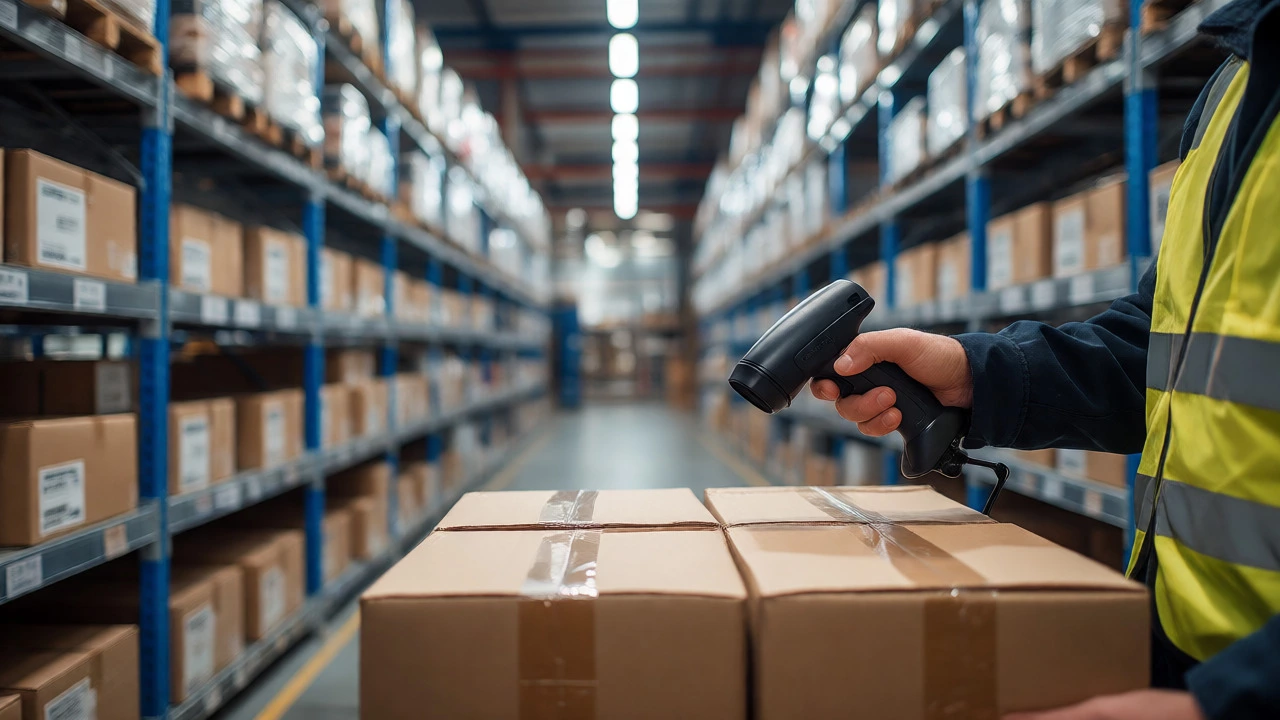
Effective inventory control relies on visibility. You need to know where every SKU (Stock Keeping Unit) is located, down to the specific bin or shelf. Barcode scanners and RFID tags make this possible, but the brain behind it is the software. Systems like NetSuite or SAP integrate with your sales channels to update stock counts the second a sale happens. If you sell on Shopify, Amazon, and eBay simultaneously, manual updates are impossible. One missed update means overselling, which triggers refunds and negative reviews.
A common mistake businesses make is treating all inventory equally. It shouldn’t be. Use ABC analysis: Class A items are high-value, low-volume products that need tight control. Class C items are low-value, high-volume goods where bulk ordering makes sense. By categorizing your stock, you optimize storage space and reduce handling time. Remember, every hour your staff spends hunting for misplaced items is money burning a hole in your pocket.
Warehousing and Fulfillment: The Action Phase
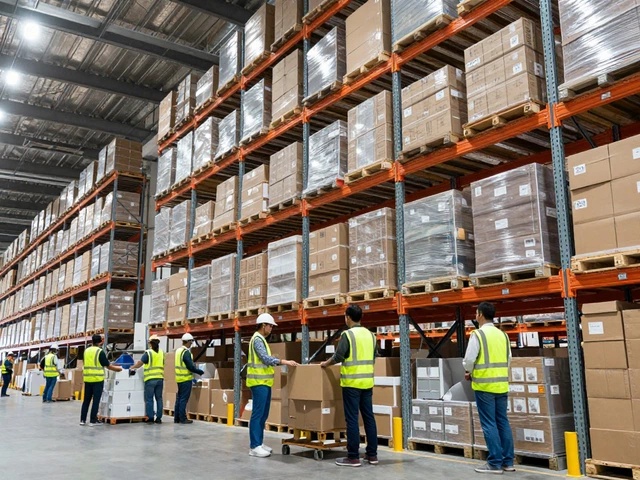
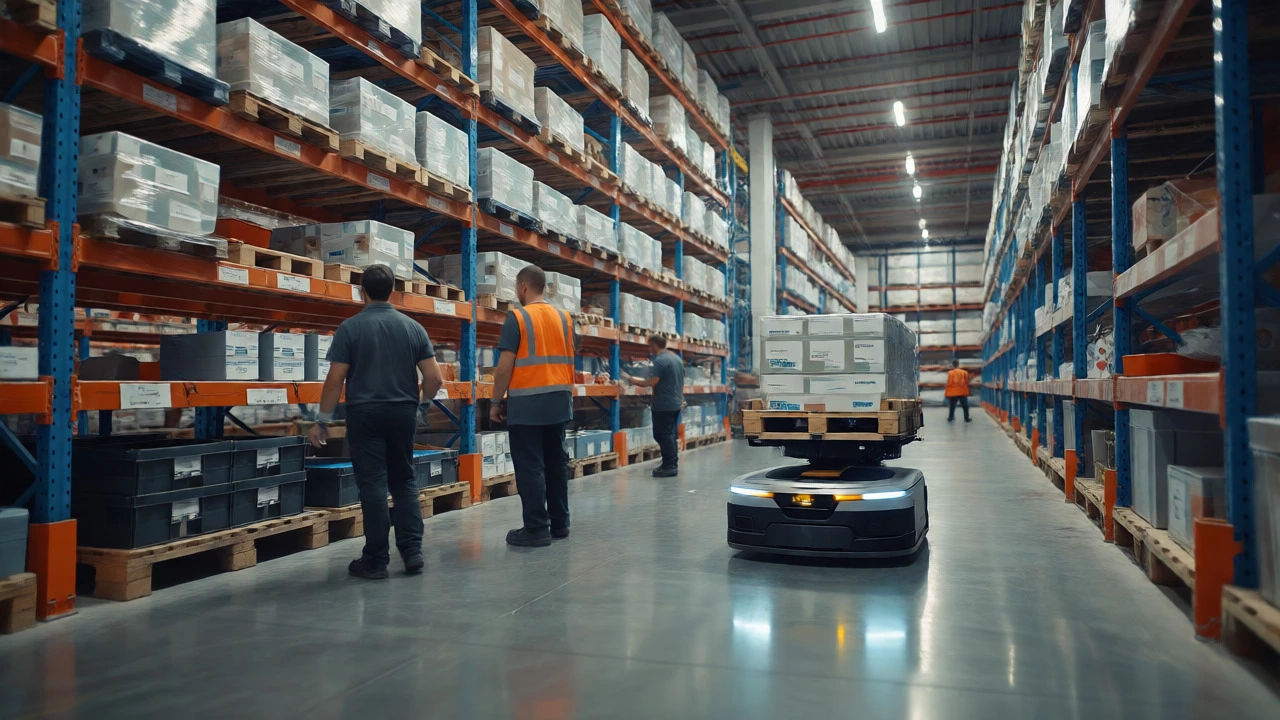
This is where the rubber meets the road. Warehousing involves the physical storage, organization, and preparation of goods for shipment, including receiving, put-away, picking, packing, and shipping activities. It’s not just about having shelves; it’s about efficiency. How fast can you pick an item? How accurately can you pack it so it doesn’t break in transit?
Fulfillment centers use various strategies to speed this up. Batch picking groups similar orders together to minimize walking time. Zone picking assigns workers to specific areas, passing the order along like an assembly line. For smaller operations, wave picking might work better, releasing orders in batches during peak hours. The right method depends on your volume and product mix.
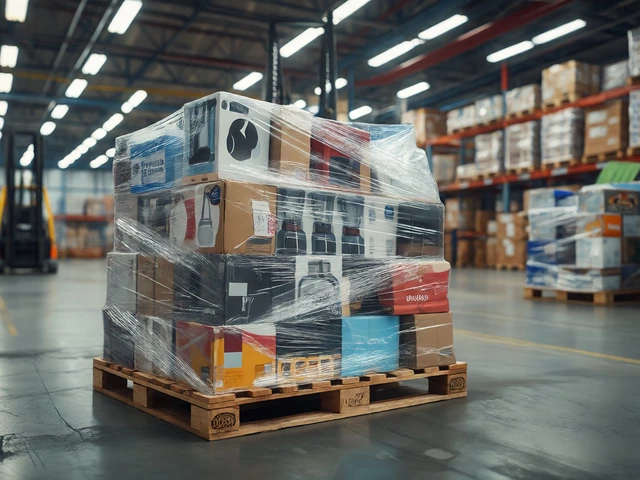
Packing is often overlooked but critical. Using the wrong box size wastes material and increases shipping costs due to dimensional weight pricing. Carriers charge for the space a package takes up, not just its actual weight. Smart packaging algorithms in modern logistics software suggest the optimal box size for each order, saving cents per unit that add up to thousands annually. Plus, proper packing reduces damage claims, which are a nightmare to process and hurt your brand reputation.
Transportation and Distribution: The Final Mile
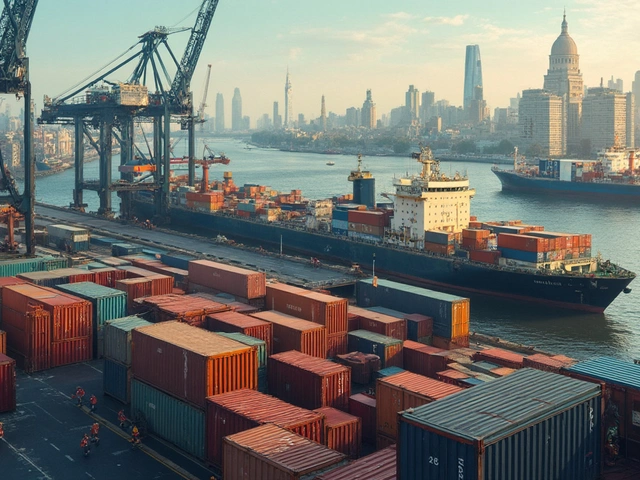
Finally, the goods must move. Transportation refers to the movement of goods via various modes such as road, rail, air, or sea, optimizing routes and carriers to balance cost and speed. This includes everything from long-haul freight trucks to local courier vans delivering the last mile.
Choosing the right mode of transport is a balancing act. Air freight is fast but expensive. Sea freight is cheap but slow. Road transport offers flexibility but faces traffic delays. In New Zealand, for example, domestic shipping between Auckland and Wellington often relies on intermodal solutions-trucks to ports, ferries across the Cook Strait, then more trucks. Logistics software helps model these scenarios to find the cheapest reliable option.
Last-mile delivery is the most expensive and problematic segment. It accounts for nearly half of total shipping costs. Customers expect precise delivery windows now, not just "sometime Tuesday." Real-time tracking links allow them to see exactly where their package is. If you’re not offering visibility, you’re inviting support calls. "Where is my stuff?" is the most common query. Answering it proactively through automated notifications saves massive amounts of customer service labor.
How These Processes Interconnect
These four steps aren’t isolated silos. They feed into each other constantly. Poor inventory data leads to bad order processing decisions. Bad warehousing practices cause shipping delays. Delayed transportation results in inaccurate estimated delivery dates shown to customers.
Integration is key. When your e-commerce platform talks seamlessly to your Warehouse Management System (WMS), and the WMS talks to your Transportation Management System (TMS), data flows freely. This connectivity allows for predictive analytics. You can forecast demand spikes based on seasonal trends and adjust inventory levels accordingly. You can reroute shipments in real-time if weather disrupts a flight path. Without integrated systems, you’re reacting to problems instead of preventing them.
| Process | Primary Goal | Key Technology | Common Pitfall |
|---|---|---|---|
| Order Processing | Accuracy & Speed | E-commerce Integrations | Data entry errors |
| Inventory Management | Optimal Stock Levels | RFID / Barcode Scanners | Overselling or dead stock |
| Warehousing | Efficient Picking/Packing | WMS (Warehouse Mgmt Sys) | Poor layout design |
| Transportation | Cost-Effective Delivery | TMS (Transport Mgmt Sys) | Lack of route optimization |

Why Software Matters More Than Ever
You might wonder, do I really need specialized software? Can’t I just use Excel? For ten orders a day, maybe. For a hundred, definitely not. As your business grows, complexity scales exponentially. Manual processes become unmanageable. Mistakes multiply. Staff burnout increases.
Modern logistics software acts as the central nervous system. It connects suppliers, warehouses, carriers, and customers. It provides dashboards showing KPIs like order cycle time, perfect order rate, and inventory turnover ratio. These metrics tell you where to focus improvement efforts. If your perfect order rate drops below 95%, you have a quality issue. If inventory turnover slows down, you have a cash flow issue.
Cloud-based solutions offer scalability. You don’t need to buy servers or hire IT teams to maintain them. Updates happen automatically. Security is handled by experts. This democratizes advanced logistics capabilities, allowing small businesses to compete with giants like Amazon on service quality, if not price.
Frequently Asked Questions
What is the difference between logistics and supply chain management?
While often used interchangeably, they are distinct. Supply Chain Management (SCM) is the broader concept encompassing all entities involved in producing and delivering a product, including sourcing raw materials and manufacturing. Logistics is a subset of SCM focused specifically on the movement, storage, and flow of goods and information. Think of SCM as the entire orchestra, while logistics is the section responsible for getting the instruments to the stage on time.
How does automation improve order processing?
Automation eliminates manual data entry, which is prone to human error. It instantly validates addresses, checks stock availability, applies correct tax rules, and generates shipping labels. This speeds up the handoff to the warehouse, reducing the time between purchase and dispatch. It also enables real-time communication with customers, keeping them informed without staff intervention.
What is safety stock and why is it important?
Safety stock is extra inventory held to protect against uncertainties in supply or demand. It acts as a buffer. If a supplier delivers late, or if there’s an unexpected spike in sales, safety stock prevents stockouts. Calculating the right amount requires analyzing historical data, lead times, and variability. Holding too much increases holding costs; holding too little risks lost sales.
Which logistics process is the most expensive?
Generally, transportation is the largest cost component in logistics, often accounting for 50-60% of total logistics budgets. Within transportation, last-mile delivery is disproportionately expensive due to inefficiencies like failed deliveries and low drop densities. However, warehousing costs can also be significant, especially in high-rent urban areas.
Do small businesses need a Warehouse Management System (WMS)?
Not necessarily a full-scale enterprise WMS initially. Small businesses can start with basic inventory modules within their e-commerce platform. However, once you exceed a certain volume (often around 50-100 orders/day) or manage multiple SKUs across locations, a dedicated WMS becomes crucial for maintaining accuracy and efficiency. Cloud-based WMS options are increasingly affordable for SMEs.