Warehouse Tech Stack Estimator
Enter your operational details below to receive a customized recommendation for your Warehouse Management System (WMS), scanning technology, and automation level.
Your Recommended Strategy
Core System
Cloud WMS
Standard cloud-based solution.
Scanning Tech
Barcode
Cost-effective standard.
Automation Level
Manual + Conveyor
Basic flow improvement.
Projected Impact
Based on labor savings and error reduction calculations.
Key Technologies to Implement
You walk into a modern distribution center, and it’s quiet. Not silent-there’s the hum of conveyor belts and the beep of handheld devices-but you don’t hear the chaotic shouting matches or see piles of paper everywhere. That silence is the sound of warehouse management technology doing its job. If you’re running a fulfillment hub, an e-commerce storage facility, or even a small inventory room, understanding what tech actually moves your stock from shelf to shipper is non-negotiable. It’s not just about buying the most expensive robot; it’s about matching tools to your specific flow.
The Brain: Warehouse Management Systems (WMS)
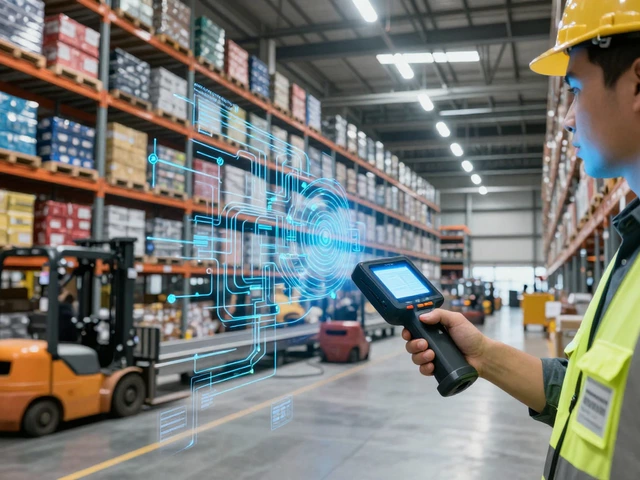
At the core of every efficient operation sits the Warehouse Management System, or WMS. Think of this as the brain of your warehouse. It’s not just a spreadsheet on steroids; it’s a centralized database that tracks every single item’s location, status, and movement in real-time. Without a robust WMS, you’re essentially guessing where your inventory is, which leads to overselling online and undershipping physically.
Modern WMS platforms have moved beyond simple tracking. They now optimize picking routes, manage labor allocation, and integrate seamlessly with your Enterprise Resource Planning (ERP) system. For instance, if you use Shopify or Magento for sales, your WMS should pull orders instantly, preventing the lag time that causes shipping delays. The best systems today are cloud-based, allowing managers to view dashboard metrics from anywhere, whether they’re in Auckland or New York.
| Function | Purpose | Impact on Efficiency |
|---|---|---|
| Inventory Tracking | Real-time visibility of stock levels and locations | Reduces stockouts by up to 30% |
| Order Picking Optimization | Calculates shortest paths for pickers | Cuts travel time by 15-20% |
| Labor Management | Tracks worker performance and assigns tasks | Improves productivity accountability |
| Integration API | Connects WMS with ERP, CRM, and Shipping carriers | Eliminates manual data entry errors |
The Eyes: Barcode Scanning and Mobile Computers
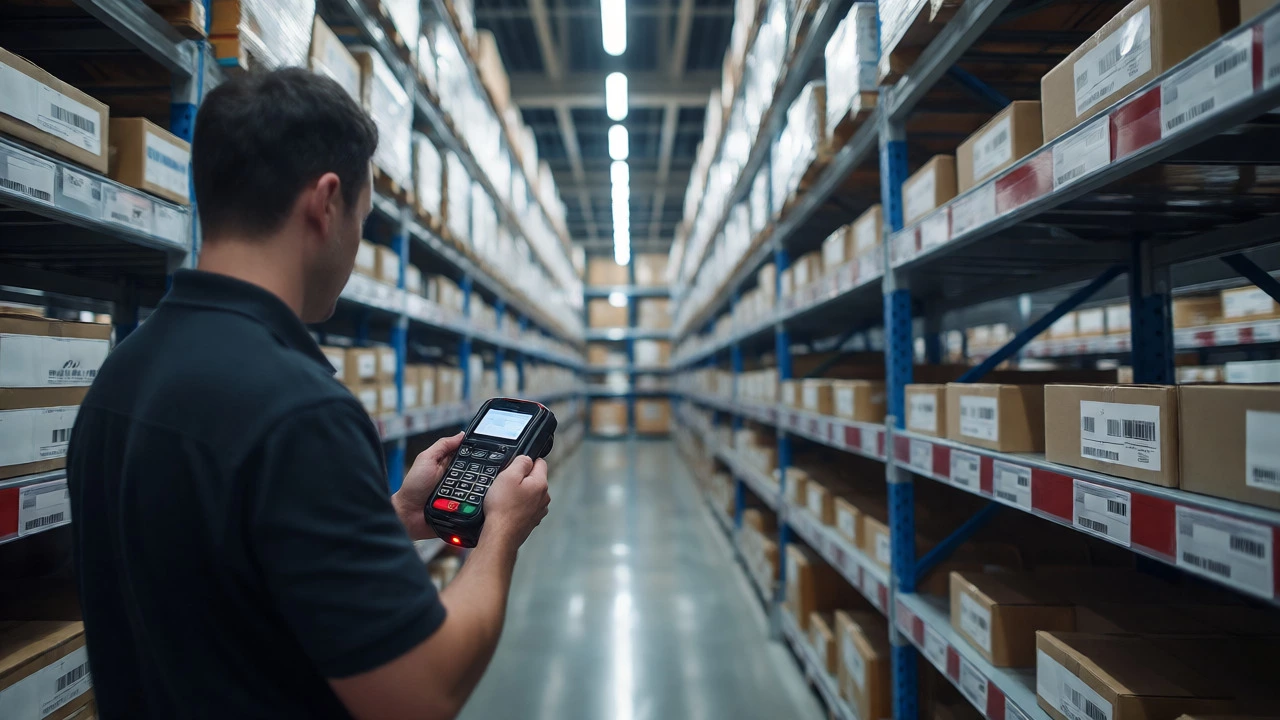
If the WMS is the brain, barcode scanning is the eyes. This technology remains the backbone of most warehouses because it’s cheap, reliable, and universally understood. You slap a label on a box, scan it, and the system knows exactly what it is and where it needs to go.
Gone are the days of clunky, tethered scanners. Today’s mobile computers are ruggedized smartphones or tablets designed for industrial environments. They run Android or Windows and connect via Wi-Fi to your WMS. When a picker scans an item, the device confirms the match instantly. If they grab the wrong SKU, the device vibrates and flashes red before they can make a mistake. This immediate feedback loop drastically reduces error rates.
However, barcodes have limits. They require line-of-sight. If the label is crumpled or facing down, the scanner fails. This friction adds seconds to every task, which multiplies across thousands of picks per day. That’s why many operations are looking at alternatives for high-volume areas.
The Invisible Hand: RFID Technology
Radio Frequency Identification (RFID) solves the line-of-sight problem. Unlike barcodes, RFID tags emit radio signals that readers can detect without direct visual contact. You can wave a reader over a pallet of goods, and it identifies all fifty boxes inside in under two seconds.
This isn’t magic; it’s physics. Passive RFID tags don’t need batteries-they get power from the reader’s signal. Active tags do have batteries but offer longer range. In retail and high-value logistics, RFID has revolutionized cycle counting. Instead of shutting down the warehouse for three days to count inventory manually, staff can walk aisles with handheld readers and complete counts in hours with near-perfect accuracy.
The catch? Cost. RFID tags are more expensive than printed barcode labels, and the infrastructure requires significant upfront investment. For low-margin items like screws or canned food, the ROI might take years. But for electronics, apparel, or pharmaceuticals, the speed and accuracy gains often justify the price tag within months.
The Muscle: Automation and Robotics
When volume gets too high for human feet, you bring in the machines. Warehouse automation ranges from simple conveyor belts to complex Autonomous Mobile Robots (AMRs).
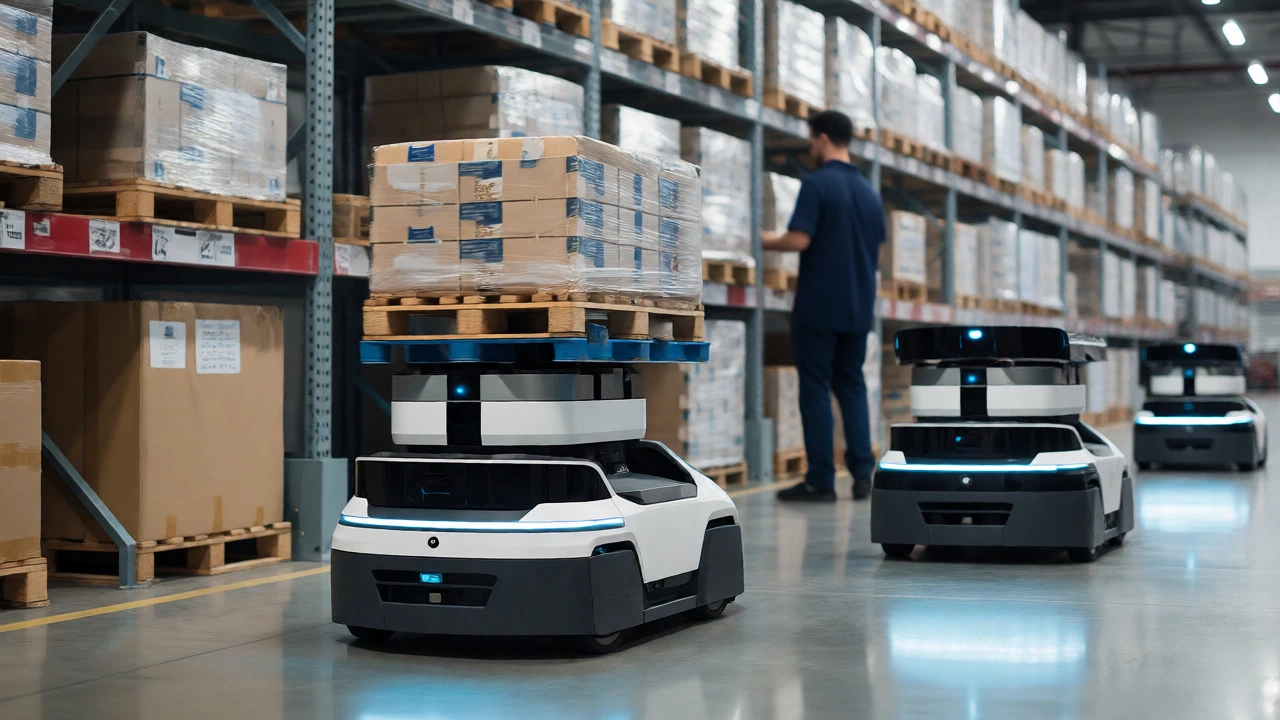
Conveyors are still workhorses. They move boxes from receiving to packing without human intervention. But the real game-changer is AMRs. These aren’t the fixed-arm robots you see in car factories. They are free-roaming bots that navigate using lasers and cameras. Companies like Amazon popularized them, but smaller providers now offer scalable solutions for mid-sized businesses.
Consider "Goods-to-Person" (GTP) systems. Instead of workers walking miles to find products, shelves rotate toward them. An AMR lifts a rack of items and drives it to a picking station. The worker grabs what they need, and the robot takes the rack back. This cuts walking time-which accounts for nearly 50% of a picker’s shift-to almost zero. Productivity skyrockets, and physical strain drops significantly.
The Glue: IoT and Cloud Connectivity
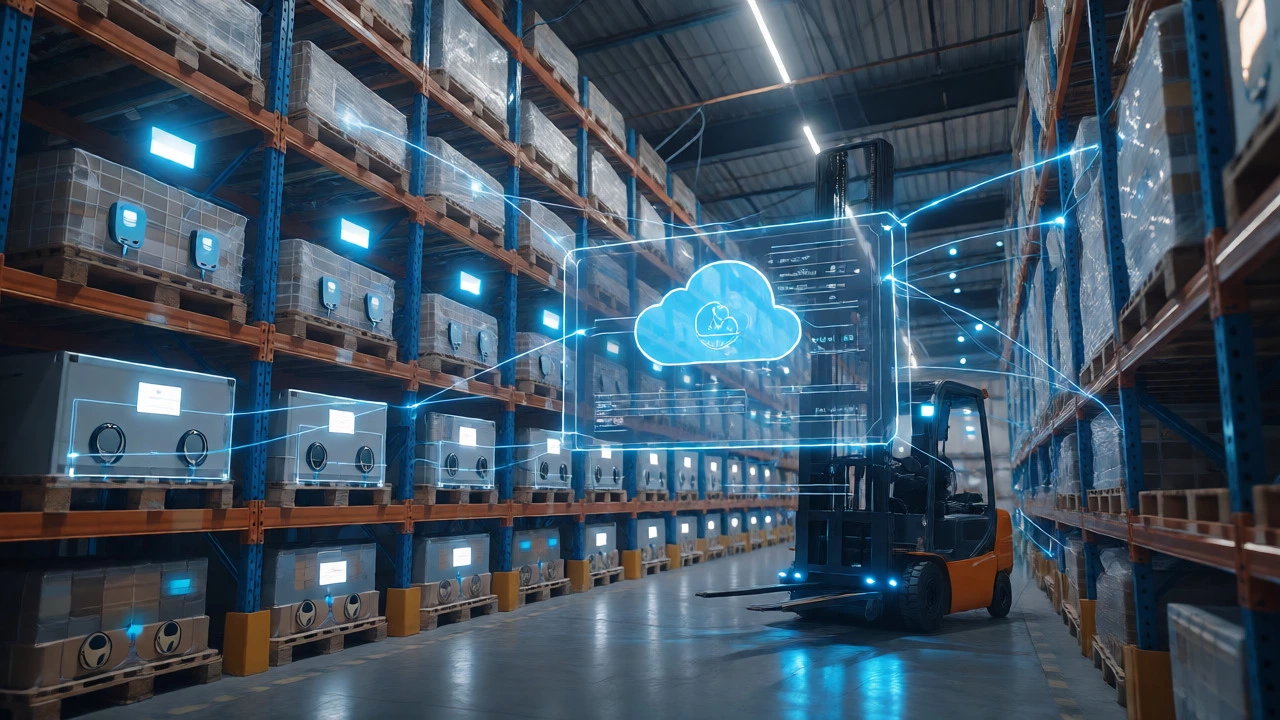
All these components need to talk to each other. That’s where the Internet of Things (IoT) comes in. Sensors on racks monitor temperature for cold-chain goods. Smart lights guide pickers to the exact bin location. Even the forklifts themselves report their battery levels and maintenance needs to the central server.
Cloud computing enables this connectivity. Traditional on-premise servers required massive IT teams to maintain. Cloud-based WMS solutions update automatically, scale easily during peak seasons (like Black Friday), and allow remote access. You don’t need to buy new hardware when your order volume doubles; you just upgrade your subscription plan.
Data analytics plays a huge role here. By aggregating data from scanners, robots, and sensors, managers can predict bottlenecks. Maybe Tuesdays are always slow because of staffing gaps. Maybe certain SKUs are frequently misplaced. The system spots these patterns and suggests fixes before they become costly problems.
Choosing the Right Stack for Your Operation
So, how do you decide what to buy? Don’t chase trends. Look at your pain points.
- Small Business (<500 orders/day): Stick to a solid cloud WMS and basic barcode scanning. Avoid heavy automation. Focus on accurate data entry.
- Mid-Sized (500-5,000 orders/day): Invest in mobile computers with voice-picking capabilities. Consider adding conveyors for high-volume SKUs. Start testing RFID for high-value items.
- Large Enterprise (>5,000 orders/day): Full automation is likely necessary. Implement AMRs, automated sorting systems, and comprehensive IoT sensor networks. Integration with advanced AI forecasting tools becomes critical.
Remember, technology amplifies existing processes. If your current workflow is messy, automating it will just create faster chaos. Clean up your standard operating procedures first, then layer in the tech that supports them.
Frequently Asked Questions
Is RFID better than barcode scanning?
Not necessarily. RFID offers faster scanning and no line-of-sight requirement, making it ideal for high-volume or high-value items. However, barcodes are significantly cheaper and sufficient for most general warehousing tasks. Many companies use both: barcodes for individual items and RFID for pallet-level tracking.
Do I need a custom WMS or can I use off-the-shelf software?
Off-the-shelf cloud WMS solutions are suitable for 90% of businesses. They offer flexibility, regular updates, and lower upfront costs. Custom development is only recommended if your business model is highly unique and cannot be accommodated by standard configuration options, such as specialized manufacturing integration or niche regulatory requirements.
How does voice picking improve efficiency?
Voice picking allows workers to keep their hands free and eyes on the task. The system speaks instructions to the worker via a headset, who responds verbally. This eliminates the need to stop, look at a screen, or type, reducing cognitive load and speeding up the picking process by approximately 15% compared to traditional methods.
What is the typical ROI timeline for warehouse automation?
For basic automation like conveyors and improved WMS, ROI can be seen in 6-12 months through reduced labor costs and fewer errors. Complex robotics projects like AMRs may take 18-36 months to break even, depending on volume growth and labor savings. Always calculate based on your specific labor rates and throughput increases.
Can warehouse technology help with sustainability?
Yes. Efficient routing reduces energy consumption from forklifts and vehicles. Accurate inventory tracking prevents over-ordering and waste. Automated packaging systems minimize material usage by right-sizing boxes. Additionally, smart lighting and HVAC controls integrated with IoT sensors reduce overall facility energy bills.