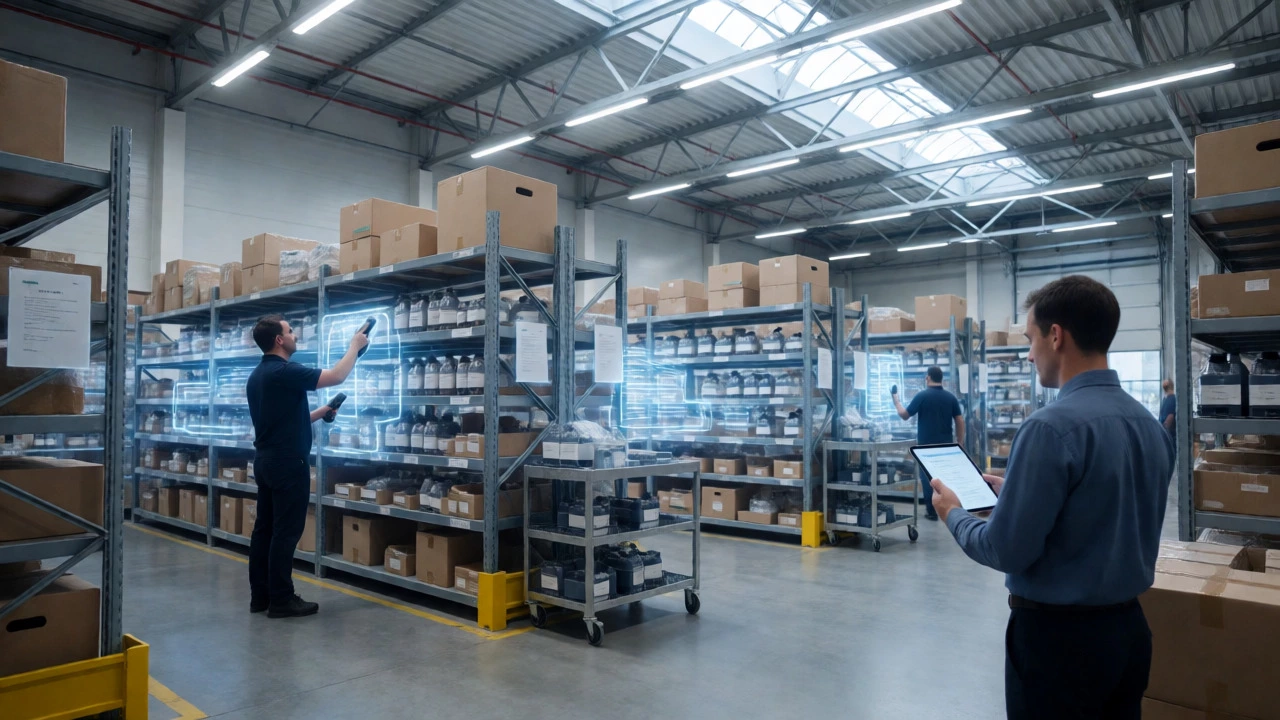
Warehouse Labor Efficiency Calculator
Estimate your team's efficiency by inputting task data. This tool mimics the core function of a Labor Management System (LMS) by comparing actual output against standard benchmarks.
Task Inputs
You’ve got the shelves organized. The inventory counts match the system. Your shipping times are decent. But when you look at your payroll costs versus output, something feels off. You’re paying for hours worked, but are those hours actually productive? This is where Labor Management System (LMS) enters the picture. It’s not just another piece of software; it’s the lens that shows you exactly how efficient your team really is. If you’ve ever wondered why two pickers with the same experience level produce wildly different results, or why overtime spikes on Tuesdays for no apparent reason, an LMS holds the answers.
The Core Definition: More Than Just Time Clocks
A Labor Management System is a software platform that measures, analyzes, and optimizes the productivity of warehouse employees. Unlike a simple time-and-attendance app that just records when someone clocks in, an LMS tracks what they do during those hours. It connects tasks like picking, packing, and putting away to specific performance standards. Think of it as the difference between knowing a car has gas and knowing its fuel efficiency, speed, and maintenance needs simultaneously. The central entity here is productivity measurement, which relies on data from your Warehouse Management System (WMS) and human resources inputs.
Why does this matter? Because guesswork is expensive. Without an LMS, you rely on supervisors’ gut feelings to determine if a shift was good or bad. With an LMS, you have hard data. You know that Picker A completed 150 lines per hour while Picker B managed only 90. Was Picker B slower because they were new? Were they assigned harder zones? Did they have equipment issues? An LMS helps you answer these questions by correlating task complexity with actual output. It transforms raw activity logs into actionable business intelligence.
How LMS Differs from WMS and TMS
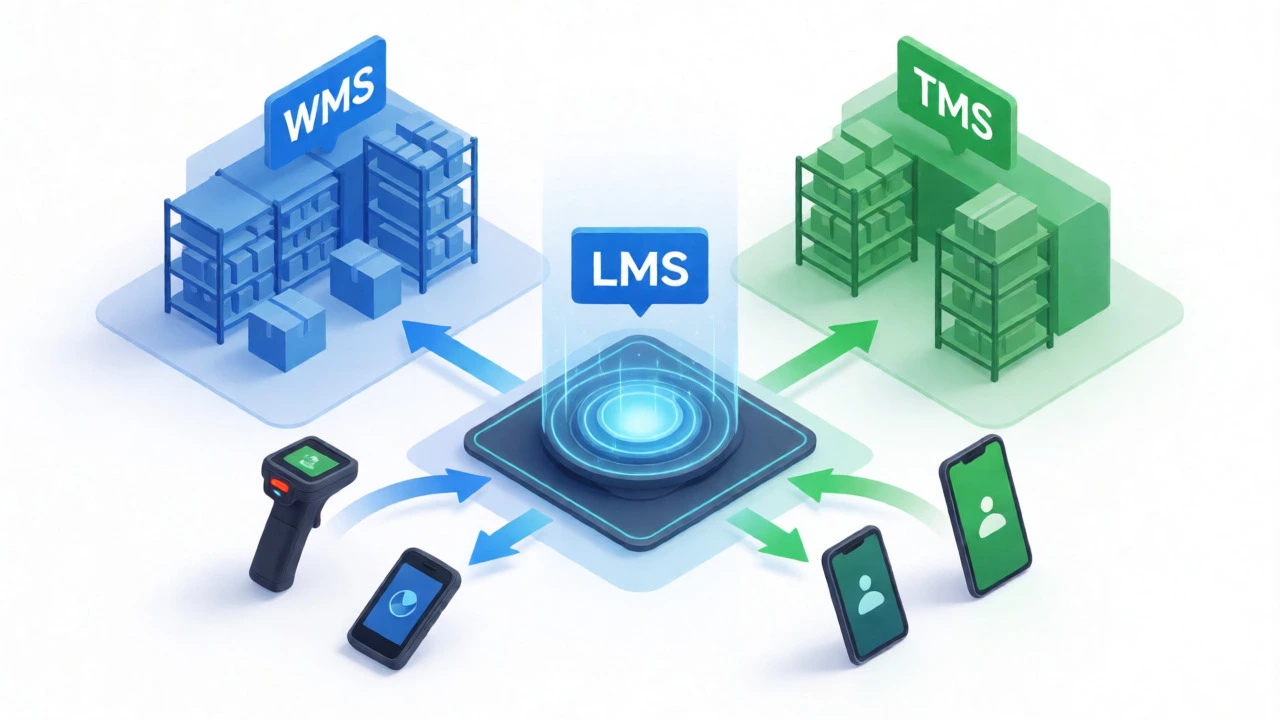
Confusion often arises because warehouses run multiple systems. Let’s clear up the landscape. Your Warehouse Management System (WMS) controls inventory location and movement. It tells workers *where* to go. Your Transportation Management System (TMS) handles outbound shipping logistics. It tells carriers *when* to pick up. The LMS sits alongside these, focusing entirely on the *human element*. It doesn’t tell a worker where Item X is located; it evaluates how quickly and accurately they retrieved it compared to the standard.
| System Type | Primary Focus | Key Metric | User Base |
|---|---|---|---|
| WMS | Inventory & Location | Inventory Accuracy | Inventory Managers |
| LMS | Workforce Productivity | Lines Per Hour (LPH) | Ops Directors / HR |
| TMS | Shipping & Freight | On-Time Delivery % | Logistics Coordinators |
This distinction is critical. A WMS might show that 1,000 items were picked today. An LMS reveals that this took 400 labor hours instead of the projected 300. That gap is money lost. By integrating LMS data with WMS transaction logs, you create a closed loop where every action is accounted for in terms of cost and time.
The Mechanics: How Data Becomes Insight
So, how does the rubber meet the road? Most modern LMS platforms use engineered labor standards. These are benchmarks derived from industrial engineering studies-time studies that determine how long a specific task should take under normal conditions. For example, picking a single small item from a bin might have a standard time of 45 seconds. If a worker consistently takes 60 seconds, the LMS flags a variance.
But it’s not about punishing slowness. It’s about context. Advanced LMS tools integrate with wearable technology or handheld scanners to capture real-time data. They account for variables like travel distance between bins, weight of items, and even aisle congestion. Some systems use AI to dynamically adjust standards based on historical performance trends. If Zone C is notoriously congested during peak hours, the LMS can automatically lower the expected productivity rate for that zone during that window, giving workers a fairer target.
Data collection happens via three main channels:
- Task Completion Logs: Timestamps from when a worker starts and finishes a task in the WMS interface.
- Device Telemetry: Data from RF scanners, tablets, or wearables indicating movement and idle time.
- Quality Checks: Error rates recorded during packing or auditing processes.
This granular data allows managers to identify bottlenecks. Maybe the packaging station is always backed up at 2 PM because the tape dispensers run out. Or perhaps one shift consistently underperforms due to poor lighting in the receiving dock. These aren’t guesses anymore; they’re visible patterns.
Real-World Benefits: Why Companies Invest
Implementing an LMS isn’t cheap, so the return on investment needs to be clear. Typically, companies see productivity gains of 10% to 20% within the first year. How? Through better scheduling and targeted training.
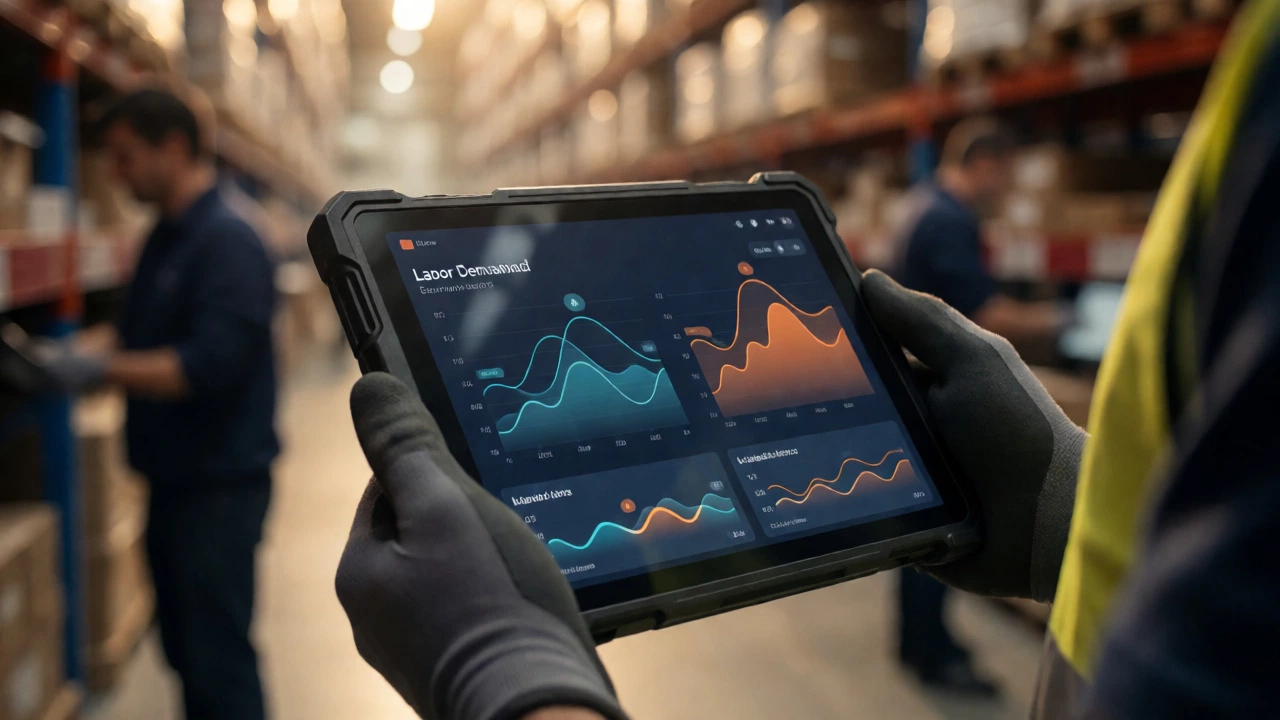
Consider scheduling. Without an LMS, you might staff the warehouse evenly throughout the day. But if order volume spikes between 10 AM and 2 PM, you’re understaffed then and overstaffed later. An LMS provides historical labor demand curves, allowing you to align staffing levels precisely with workload peaks. This reduces unnecessary overtime and prevents burnout during crunch times.
Training is another huge win. Instead of generic "be faster" advice, supervisors can pull up individual dashboards. They can say, "You’re spending 30% more time walking than the average picker." This leads to specific coaching on route optimization. New hires ramp up faster because they receive immediate feedback on their performance against standards, rather than waiting for a quarterly review.
There’s also the compliance angle. In regions with strict labor laws, tracking active work time versus idle time ensures accurate payroll processing. It protects both the employee and the employer from disputes over unpaid breaks or miscalculated overtime.
Common Pitfalls When Implementing LMS
It’s not all smooth sailing. Many warehouses fail with LMS implementations because they treat it as a surveillance tool rather than a management aid. If workers feel they are being spied on without context, morale drops. Unionized environments, in particular, require careful negotiation regarding how productivity metrics are used in evaluations.
Another trap is setting unrealistic standards. If you benchmark against your top performer-who might be a super-user with exceptional physical fitness-you’ll set targets that 80% of the workforce can’t hit. This leads to frustration and gaming the system, where workers skip safety checks or rush through quality controls just to keep their numbers up. Start with conservative baselines and adjust them gradually as the team adapts.
Finally, don’t ignore the integration challenge. If your LMS doesn’t talk seamlessly to your WMS, you end up with siloed data. Manual reconciliation defeats the purpose. Ensure your vendor offers robust API connections or native integrations with your existing tech stack before signing the contract.
Choosing the Right Solution for Your Operation
Not every warehouse needs enterprise-grade LMS functionality. A small fulfillment center with ten employees might benefit more from simple KPI tracking spreadsheets than a complex algorithmic engine. However, once you cross the threshold of 50+ full-time equivalent workers, manual tracking becomes impossible.
When evaluating vendors, ask these questions:
- Does the system support dynamic labor standards that adjust for SKU complexity?
- Can it handle multi-modal workflows (e.g., pick-and-pack vs. pick-to-light)?
- Is there mobile access for supervisors to view live dashboards on the floor?
- How does it handle non-productive time (breaks, meetings, downtime)?
Look for providers that offer pilot programs. Running a test on one shift or one product line lets you validate the ROI before rolling out company-wide. Remember, the goal isn’t to squeeze every second out of a worker; it’s to eliminate waste and make work smoother.
Frequently Asked Questions
Is LMS suitable for small warehouses?
Generally, LMS becomes cost-effective when you have 50 or more warehouse associates. For smaller teams, the overhead of implementing and maintaining the software often outweighs the productivity gains. Small operations can achieve similar benefits through rigorous supervisor observation and basic KPI tracking in their WMS.
Does LMS replace the Warehouse Management System (WMS)?
No, they serve different purposes and usually work together. The WMS manages inventory and task assignment, telling workers what to do. The LMS measures how well they did it. While some modern WMS platforms include basic labor modules, dedicated LMS solutions offer deeper analytics, engineered standards, and workforce planning capabilities that standalone WMS systems lack.
How does LMS handle indirect labor?
Indirect labor includes activities like cleaning, restocking supplies, or attending meetings. Advanced LMS platforms allow users to log time against specific indirect codes. This data is crucial for calculating true total cost of ownership per unit shipped. Without tracking indirect time, you underestimate the labor cost associated with each order.
What is 'engineered labor standards'?
Engineered labor standards are scientifically determined time benchmarks for performing specific tasks. They are derived from time-and-motion studies conducted by industrial engineers. For example, a standard might dictate that picking a case from a pallet position takes exactly 12 seconds. LMS compares actual performance against these pre-set standards to calculate efficiency ratings.
Can LMS help reduce turnover?
Yes, indirectly. By providing clear, objective performance metrics, LMS removes ambiguity from performance reviews. Employees understand exactly what is expected of them. Furthermore, by identifying inefficient processes (like excessive walking), managers can improve working conditions, reducing fatigue and dissatisfaction that often lead to high turnover.