Courier Package Cost & Classification Estimator
Enter dimensions and weight to see which charge applies.
You’ve probably seen them zipping around town in branded vans or stacked high on delivery trucks. But have you ever stopped to think about what actually makes a box a courier package? It’s not just any cardboard container with a label stuck on it. There’s a specific set of rules, sizes, and handling requirements that separate a standard postal letter from a courier-delivered parcel. If you’re an online seller trying to figure out how to ship your products, or a recipient confused by why your “package” arrived damaged while your friend’s didn’t, understanding the anatomy of a courier package is your first step toward smoother deliveries.
At its core, a courier package is a discrete unit of goods prepared for transport via a dedicated express delivery service. Unlike regular mail, which often travels through national postal systems with variable timelines, courier packages are handled by private companies specializing in speed, tracking, and security. Think of it as the difference between taking public bus versus hiring a private taxi. Both get you there, but one offers direct routing, real-time updates, and a higher level of care. In Auckland, where local businesses thrive on quick turnarounds, knowing these distinctions can save you money and headaches.
The Anatomy of a Standard Courier Package
So, what exactly constitutes this type of shipment? It starts with the physical object itself. A courier package must be a single, self-contained unit. You can’t tape three loose books together and call it one package if they shift independently inside a larger envelope. The packaging needs to withstand the rigors of sorting machines, manual loading, and potential drops. Most couriers, including major players like DHL, FedEx, UPS, and local NZ favorites like NZ Post Courier or Aramex, have strict guidelines on dimensions and weight.
Typically, a standard courier package falls within specific size limits. For instance, many domestic services consider anything under 30kg and fitting within certain dimensional constraints (like no side exceeding 1 meter) as a standard parcel. Anything heavier or bulkier moves into freight or pallet categories, which require different handling equipment. The outer layer matters too. Corrugated cardboard is the gold standard because it provides structural integrity without adding excessive weight. Bubble wrap, air pillows, or foam inserts go inside to cushion the contents. If you use flimsy paper bags or boxes that crush easily, the courier might reject it or charge extra for re-packaging.
Courier Service is a logistics provider that specializes in the rapid transportation of small parcels and documents using a network of vehicles and hubs. These services operate differently from traditional postal systems by offering door-to-door pickup and delivery with guaranteed timeframes.
Why Labels and Tracking Numbers Matter
A blank box isn’t a courier package; it’s just a box. The magic happens when you attach the shipping label. This isn’t just a piece of sticker paper-it’s a digital passport for your goods. Every courier package must carry a unique tracking number, usually a barcode that scans at every checkpoint. This allows both the sender and receiver to monitor progress in real-time. Without this data trail, you’re essentially sending goods into the void.
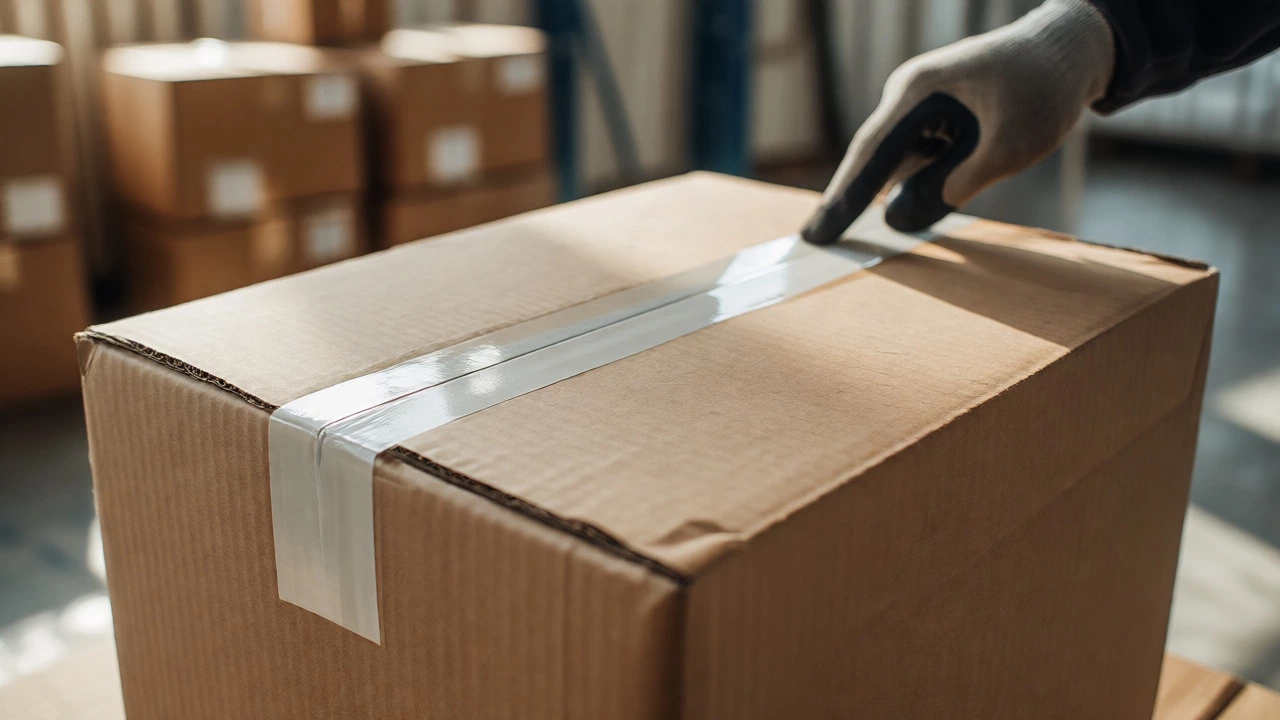
The label contains critical information: the recipient’s address, the sender’s return address, the service level chosen (e.g., next-day, economy), and the declared value. If you’re shipping internationally, customs declarations become part of the label package, detailing what’s inside and its worth. Missing or illegible labels are the top cause of delayed deliveries. I’ve seen countless cases where a smudged barcode meant a package sat in a warehouse for days until someone manually entered the details. Always print your labels clearly and protect them with clear tape to prevent rain damage during loading.

Size and Weight Restrictions: The Hidden Rules
Here’s where things get tricky for new shippers. Couriers don’t just look at the actual weight of your item; they calculate volumetric weight. This means if you send a large, light box-say, a pillow in a giant cube-the courier charges based on the space it takes up in the truck, not just its scale weight. Why? Because a truck has limited volume. If everyone sends lightweight, bulky items, the truck fills up before it hits its weight limit, costing the carrier money.
To avoid surprise fees, measure your box correctly. Length + Width + Height gives you the cubic dimension. Compare this against the carrier’s volumetric divisor (often 5000 or 6000 depending on the region). If your volumetric weight exceeds the actual weight, you pay the higher amount. For example, a 1kg pillow in a 40x40x40cm box might weigh 1kg on the scale but count as 12.8kg volumetrically with a divisor of 5000. That’s a huge price jump. Pack tightly. Remove empty space. Use right-sized boxes instead of stuffing small items into big ones.
| Package Type | Typical Weight Limit | Handling Method | Best For |
|---|---|---|---|
| Document Envelope | < 0.5 kg | Manual sort, hand-carry | Contracts, passports, keys |
| Small Parcel | < 5 kg | Automated conveyor belts | Electronics, clothing, books |
| Standard Box | < 30 kg | Forklift or trolley | Appliances, bulk retail goods |
| Oversized Item | > 30 kg | Pallet jack, team lift | Furniture, machinery parts |
Insurance and Liability: Protecting Your Goods
Just because it’s called a “package” doesn’t mean it’s automatically insured. Most courier services include basic liability coverage, often capped at a low amount per kilogram or per package (e.g., $50-$100 NZD). If you’re shipping a $2,000 laptop, that basic cover won’t cut it. You need to declare the full value and pay for additional insurance.
Read the fine print on exclusions. Many policies exclude fragile items like glass, ceramics, or electronics unless packed specifically according to their guidelines. If you pack a vase loosely in a box with no padding, and it breaks, the claim will likely be denied due to “insufficient packaging.” Keep receipts and photos of the item before packing. When it arrives, inspect it immediately. If there’s visible damage to the box, note it on the delivery receipt before signing. Once you sign clean, proving later that the internal item was broken becomes much harder.
How Courier Packages Differ from Regular Mail
People often confuse courier packages with registered post. While both offer tracking, the operational models differ significantly. National postal services, like NZ Post, rely heavily on centralized sorting facilities and may involve multiple handoffs between regional centers. Courier networks, especially integrated ones like FedEx or DHL, control the entire chain from pickup to drop-off. This vertical integration allows for tighter quality control and faster transit times.
Another key difference is accessibility. Postal workers might leave a notice card if you’re not home, requiring you to visit a post office to collect. Couriers often offer more flexible options: leave-with-neighbor, safe-place instructions, or even rescheduling via an app. For e-commerce businesses, this flexibility reduces failed delivery attempts, which cost money and delay customer satisfaction. If you run an online store, choosing a courier over standard mail for high-value items is almost always the smarter move, despite the higher upfront cost.
Packing Tips to Avoid Rejection
Courier drivers are busy. They don’t have time to repack your sloppy job. To ensure your package gets picked up without fuss, follow these simple rules:
- Use New Boxes: Old boxes lose structural strength. Tape seams securely with plastic packing tape, not masking or scotch tape.
- No Loose Ends: Remove old labels and barcodes. Confused scanners lead to misrouted packages.
- Seal All Gaps: Use the H-tape method-tape along all edges and the center seam.
- Label Clearly: Place the main label on the largest flat surface. Add a duplicate label inside the box just in case the outer one tears off.
- Check Prohibited Items: Lithium batteries, perfumes, and aerosols often have special shipping rules. Check the carrier’s list before booking.
By treating your shipment with the same care you’d want for your own belongings, you minimize risks. Remember, the goal is to make the driver’s job easy. If they see a well-packed, clearly labeled, sturdy box, they’ll handle it gently. If it looks like it might burst open, they’ll toss it aside for inspection, delaying your delivery.
What is the maximum size for a courier package?
Most standard courier services accept packages up to 30kg in weight. Dimensions typically should not exceed 1 meter in length, width, or height individually, though combined girth limits apply. Larger items may require freight services.
Do courier packages come with insurance?
Basic liability coverage is usually included but is limited (often $50-$100). Full value protection requires declaring the item's worth and paying an additional fee. Always check specific carrier terms for exclusions.
Can I send liquids in a courier package?
Yes, but liquids must be sealed tightly and placed in leak-proof containers. They should be surrounded by absorbent material. Some carriers classify liquids as hazardous materials, so check their specific guidelines before shipping.
What happens if my courier package is lost?
If a package is lost, you file a claim with the courier service. You'll need proof of value and proof of mailing. Compensation depends on whether you purchased additional insurance beyond the basic liability coverage.
Is a courier package the same as a parcel?
In everyday language, yes. Technically, "parcel" is a broader term used by postal services, while "courier package" implies use of a private express delivery service with tracking and speed guarantees.