Pallet Delivery Cost Calculator
Estimate Your Pallet Shipping Cost
Estimated Cost
When you order a large shipment-say, 50 boxes of bottled water, a stack of furniture, or a bulk supply of industrial parts-you don’t just toss them into a cardboard box and call a courier. That’s where pallet delivery comes in. It’s not just a way to move stuff. It’s the backbone of how businesses ship heavy, bulky, or high-volume goods efficiently and safely.
What Exactly Is a Pallet Delivery?
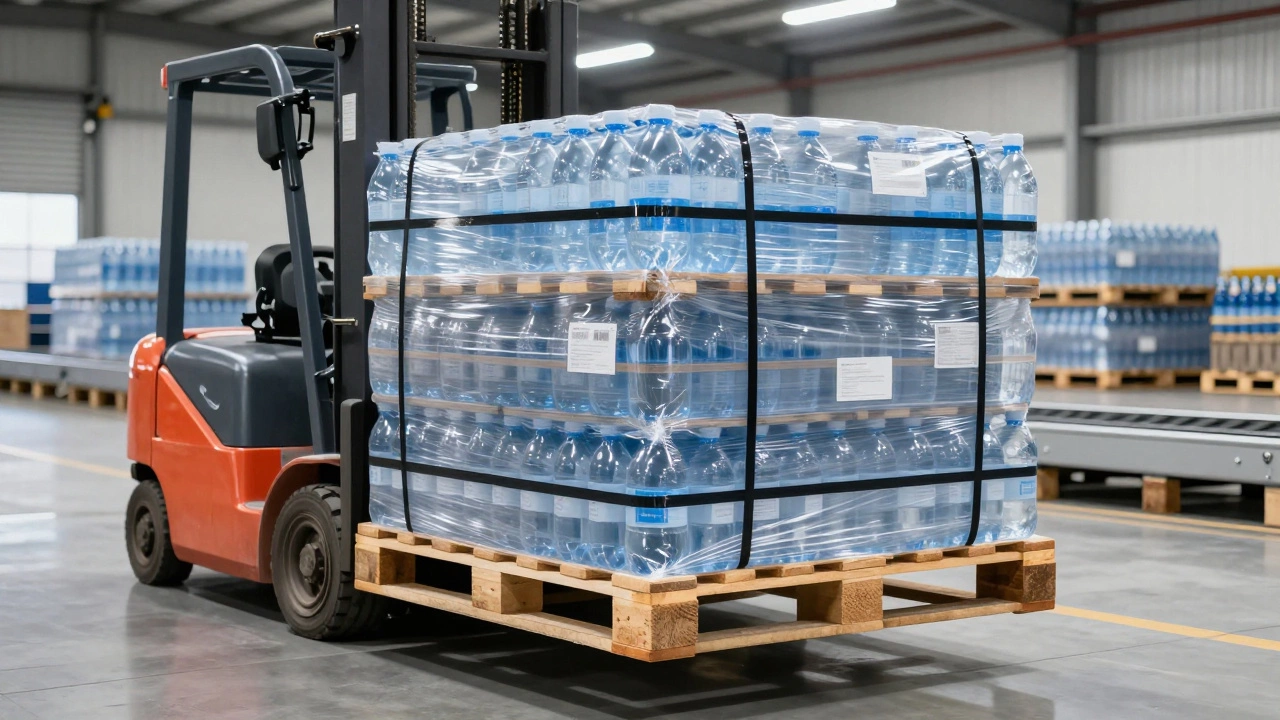
A pallet delivery means shipping goods stacked on a flat, wooden or plastic platform called a pallet. These pallets are designed to be lifted by forklifts, pallet jacks, or automated warehouse systems. Once loaded, the whole unit gets strapped, shrink-wrapped, or banded together so it doesn’t shift during transit. The entire pallet then moves as one piece-from warehouse to truck, to delivery van, and finally to your loading dock.
Think of it like this: instead of handling 30 individual boxes, a driver handles one pallet. That cuts down on labor, reduces damage, and speeds up loading and unloading. Pallet delivery isn’t just convenient-it’s essential for businesses moving more than a few hundred pounds at a time.
Why Use Pallets Instead of Regular Boxes?
Why not just ship boxes? Because pallets solve real problems.
- Speed: A forklift can move a full pallet in 10 seconds. Moving 20 boxes by hand? That’s 5 minutes, minimum.
- Protection: Shrink-wrap and strapping keep items from falling, tipping, or getting crushed. Moisture and dust stay out.
- Stacking: Pallets are built to be stacked. In a warehouse or truck, you can build vertical storage without collapse risk.
- Automation: Modern distribution centers use robotic arms and conveyor systems that only work with pallets. No pallet? No automation.
Companies like Amazon, Home Depot, and even small local distributors rely on palletized shipping because it scales. A single pallet can carry 1,000-2,500 pounds. That’s the difference between needing 10 delivery trips and one.
How Does a Pallet Delivery Work?
Here’s how it flows from start to finish:
- Preparation: Goods are stacked evenly on a standard pallet-usually 48x40 inches (the most common size in North America). Items are secured with stretch wrap, straps, or corner boards.
- Labeling: Each pallet gets a barcode or RFID tag with tracking info, destination, and handling instructions (like "Fragile" or "This Side Up").
- Pickup: A freight carrier arrives with a truck equipped with a lift gate or forklift. They hook into the pallet, lift it, and load it onto the trailer.
- Transport: The pallet moves via truck, rail, or sometimes ship, depending on distance. It may pass through multiple hubs, but stays on the pallet the whole time.
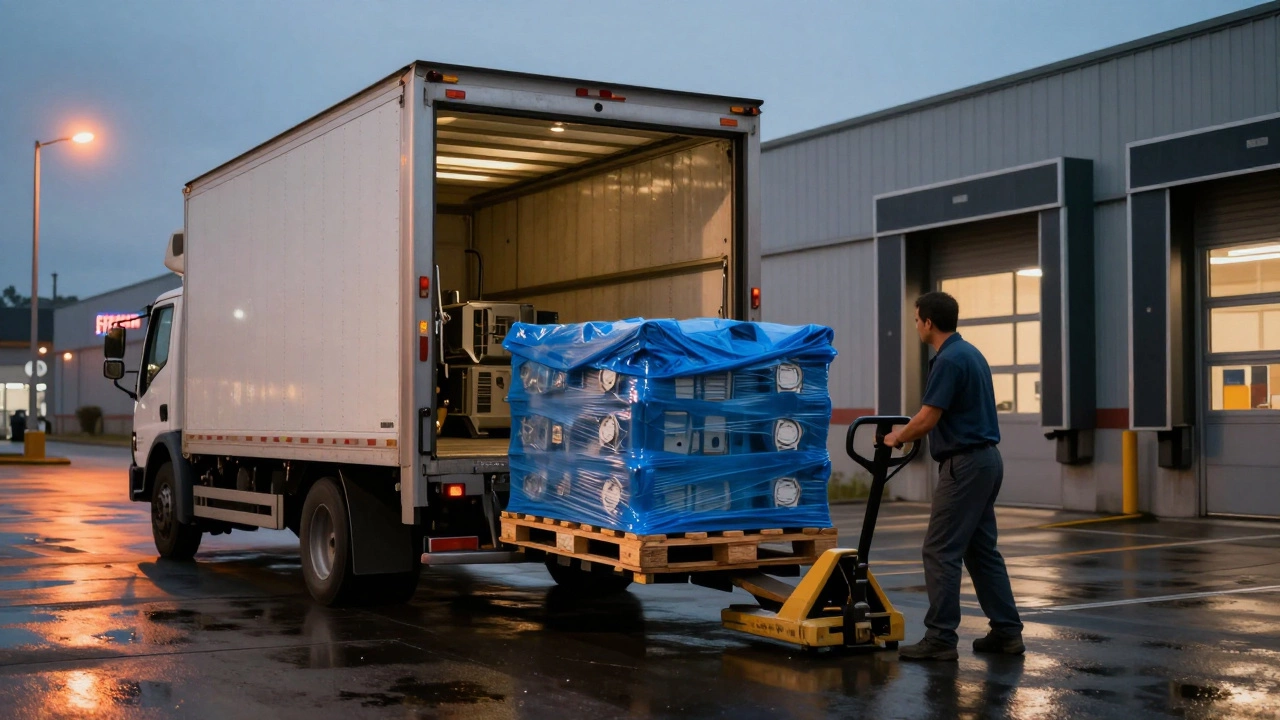
- Delivery: At the destination, the driver uses a pallet jack or forklift to unload it. No manual lifting required.
This process is why pallet delivery is the standard for B2B shipping. It’s faster, safer, and cheaper than handling items individually-even if the upfront setup feels like extra work.
Types of Pallets Used in Delivery
Not all pallets are the same. The type you choose affects cost, durability, and compatibility.
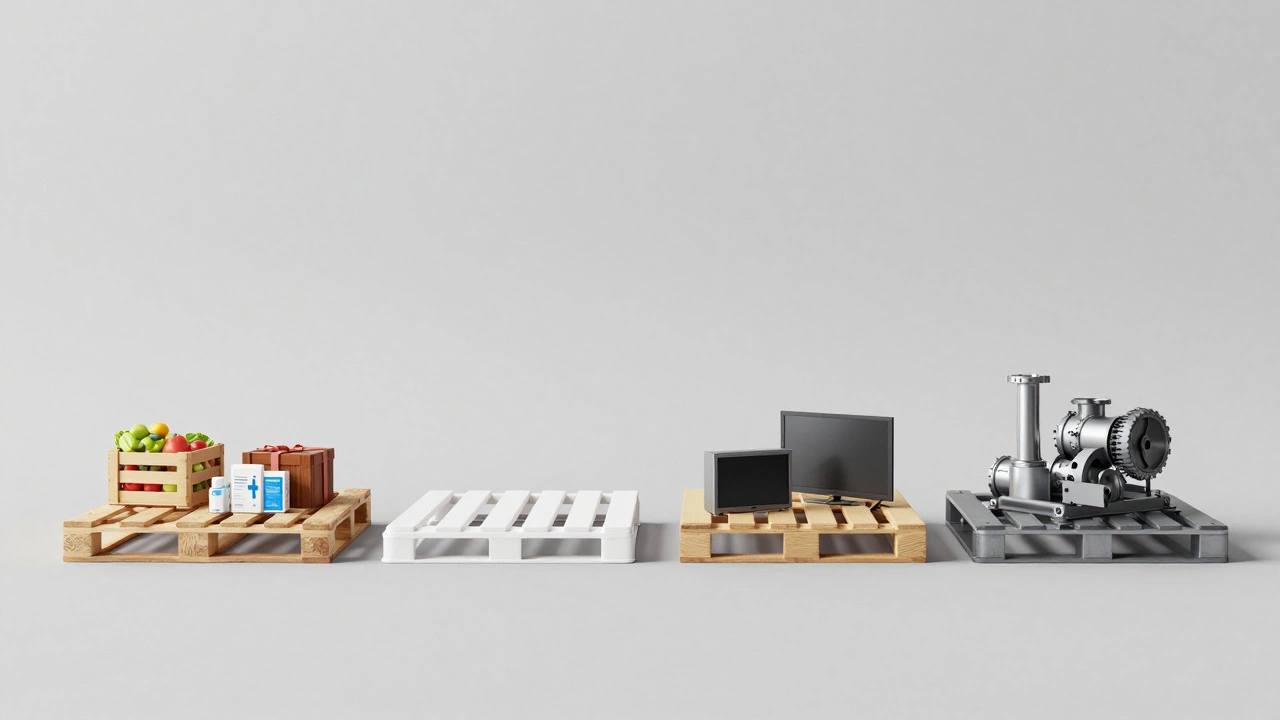
- Wooden pallets: The most common. Cheap, strong, and easy to repair. Used in 90% of U.S. pallet shipments. Can be recycled or burned.
- Plastic pallets: Lightweight, moisture-resistant, and easy to clean. Great for food, pharma, or clean rooms. More expensive upfront but last longer.
- Cardboard pallets: Lightweight and recyclable. Used for light loads under 200 lbs. Not for long-haul or wet conditions.
- Metal pallets: Used in heavy industry or military logistics. Extremely durable but heavy and costly.
Most carriers accept standard wooden pallets. If you’re shipping internationally, some countries require heat-treated wood (marked with HT stamp) to prevent insect spread.
Who Uses Pallet Delivery?
You might think pallets are only for big companies. But here’s who actually uses them:
- E-commerce brands: Shipping bulk inventory from warehouse to fulfillment centers.
- Manufacturers: Moving raw materials or finished products to distributors.
- Restaurants and grocery stores: Receiving cases of canned goods, dairy, or frozen items.
- Construction firms: Delivering lumber, tiles, or drywall to job sites.
- Non-profits and schools: Receiving donations, supplies, or equipment in bulk.
If you’re shipping more than 150 pounds in one go, pallet delivery is likely the smartest option. It’s not about size-it’s about efficiency.
Costs and Pricing
Pallet delivery isn’t priced like a package. It’s based on:
- Weight: Most carriers charge per 100 pounds (called a CWT rate).
- Dimensions: Height matters. If your pallet is over 72 inches tall, you may pay extra.
- Distance: Local deliveries cost less than cross-country.
- Service level: Ground shipping is cheapest. Next-day or scheduled delivery adds 30-60%.
On average, a single pallet shipped across the U.S. costs $120-$350. That’s a fraction of what it would cost to ship the same items in 20 individual boxes. Some carriers offer flat-rate pallet shipping for small businesses-think $99 for a 48x40 pallet under 500 lbs within 500 miles.
Common Mistakes to Avoid
Even experienced shippers mess up. Here are the top 5 errors:
- Overloading: Don’t stack higher than the pallet’s edges. That makes it unstable.
- Uneven weight: Heavy items on one side? That can tip the pallet during transit.
- No wrapping: Unwrapped pallets get damaged, wet, or stolen. Always use stretch film.
- Wrong pallet size: Using a 36x36 pallet when carriers expect 48x40? You’ll pay extra or get rejected.
- Missing labels: No tracking number? Your pallet might vanish in a warehouse.
One business in Ohio lost $12,000 in inventory because they didn’t label a pallet. The carrier assumed it was a return and sent it back to the wrong warehouse. A simple sticker could’ve saved it.
Pallet Delivery vs. Parcel Delivery
Here’s a quick comparison:
| Feature | Pallet Delivery | Parcel Delivery |
|---|---|---|
| Typical Weight | 100-5,000 lbs | Under 70 lbs |
| Handling Method | Forklift, pallet jack | Hand-carried, conveyor belt |
| Cost per Pound | $0.10-$0.30 | $1.00-$5.00 |
| Delivery Speed | 1-7 days (ground) | 1-3 days (standard) |
| Best For | Bulk, heavy, B2B | Small, light, B2C |
As you can see, pallets win big on cost and volume. But if you’re shipping a single phone or a small gift, stick with UPS or FedEx.
What Happens If Your Pallet Gets Damaged?
Damage is rare-but it happens. Most carriers offer basic liability coverage (usually $0.50-$1.00 per pound). So if your 1,000-lb pallet gets crushed, you might only get $500 back. That’s not enough for most businesses.
Always buy supplemental pallet delivery insurance. It costs 1-3% of the shipment value. For a $10,000 load, that’s $100-$300. Far cheaper than replacing inventory.
Also, inspect everything before signing. If the pallet looks bent, wet, or torn, write "DAMAGED" on the delivery receipt. That’s your legal protection.
Final Thoughts
Pallet delivery isn’t glamorous. But it’s one of the most reliable, cost-effective ways to move goods at scale. Whether you’re a startup shipping your first bulk order or a warehouse running daily deliveries, understanding pallet logistics saves time, money, and headaches.
Start small: learn the standard pallet sizes, wrap your loads properly, and always label clearly. Once you get the hang of it, you’ll wonder how you ever shipped anything another way.
Can I ship a pallet with regular courier services like FedEx or UPS?
Yes, but only if it’s under 150 lbs and fits their parcel size limits. Most FedEx and UPS services cap at 150 lbs per package. Anything heavier or larger than 108 inches in length plus girth must go through a freight carrier like XPO, Old Dominion, or FedEx Freight. These carriers specialize in palletized shipments and offer better rates, tracking, and handling.
Do I need to buy my own pallets?
Not necessarily. Many suppliers, warehouses, and carriers provide reusable pallets. Some even offer a pallet exchange program: you return empty pallets when you receive your next shipment. If you’re shipping regularly, buying your own pallets makes sense-especially if you’re using plastic or custom-sized ones. But for occasional shipping, renting or using provided pallets cuts cost.
How do I know if my goods are pallet-ready?
Your items should be stackable, uniform in shape, and able to be secured with stretch wrap or straps. Boxes should be taped shut and not bulging. Fragile items need corner protectors. Avoid mixing odd-sized boxes on one pallet-it creates instability. If you can lift the whole stack with a forklift without it tilting or sliding, it’s pallet-ready.
Is pallet delivery environmentally friendly?
Compared to shipping individual boxes, yes. Pallet delivery reduces packaging waste, lowers fuel use per pound shipped, and cuts down on delivery trips. Wooden pallets are also recyclable or repairable. Many companies now use returnable plastic pallets that last 10+ years. The biggest environmental win? Fewer trucks on the road because one pallet replaces 10-20 separate packages.
Can I ship a pallet internationally?
Yes, but it’s more complex. International pallet shipping requires customs documentation, export compliance, and often heat-treated wood (marked HT). You’ll need an international freight forwarder who handles customs clearance, duties, and delivery. Expect longer transit times-10-30 days depending on destination. Always confirm your carrier’s international pallet policies before shipping.