
Courier Cost Calculator
Calculate Your True Shipping Costs
See how hidden fees inflate your courier costs. Compare with freight alternatives for bulk shipments.
Estimated Costs
Everyone uses courier services. You order a gift online, it shows up the next day. You send documents to a client, they get it by noon. It feels effortless. But behind that convenience? A long list of hidden problems that most people never think about until something goes wrong.
Delays Happen More Than You Think
When you pick a courier, you’re trusting them to move your package on time. But delays aren’t rare exceptions-they’re part of the system. Weather, traffic, strikes, customs holds, or even a driver missing a scan can push delivery by days. In New Zealand, a package from Auckland to Invercargill might take two days on paper. But during winter storms or peak holiday season, it can stretch to five. And there’s no real way to predict it. You don’t get a heads-up. You just get a notification that says ‘out for delivery’… again.
International couriers are worse. A shipment from China to Wellington might be stuck in customs for a week because of a missing form. Or it gets rerouted through Sydney for no clear reason. You pay extra for ‘express’ service, but the label doesn’t mean anything when the system breaks down.
Costs Add Up Fast
It’s easy to think courier services are affordable because you see flat rates online. But those prices rarely tell the full story. There’s fuel surcharges, handling fees for oversized items, remote area charges (yes, even in New Zealand), and weekend delivery premiums. If you’re sending a 10kg box to a rural town like Taumarunui, you might pay $80. But if you ship the same box via a regional freight company, it’s $45-with the same delivery window.
And then there’s the hidden cost of failed deliveries. If no one’s home, the courier leaves a card. You have to book a redelivery. That’s another fee. Sometimes, you end up paying three times just to get one package delivered. Small businesses that ship daily end up spending hundreds extra each month just because they didn’t read the fine print.
Lost or Damaged Packages Are a Nightmare
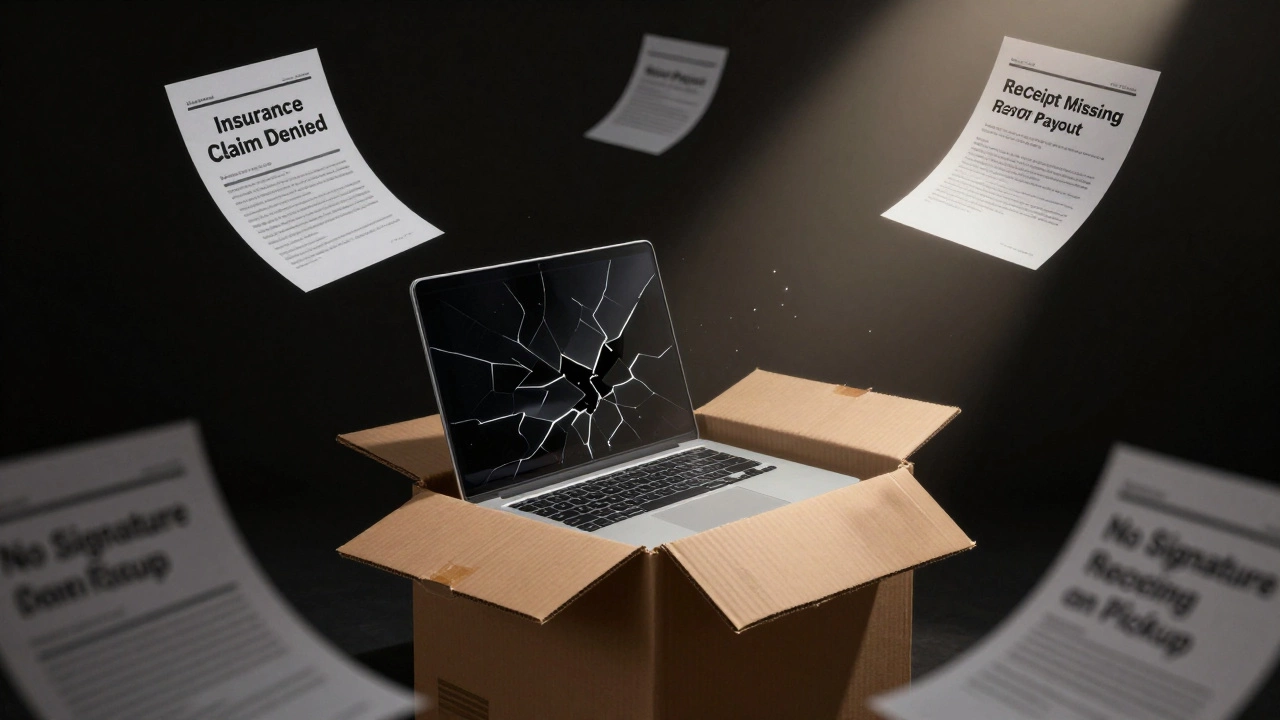
You send a laptop. It arrives with a cracked screen. You call the courier. They say, ‘We’re not responsible for damage unless it’s visibly damaged on pickup.’ But you didn’t open the box then. You opened it at home. Now you’re stuck. The courier’s insurance payout? $100. Your laptop cost $1,200. You’re out $1,100.
Claims are slow, confusing, and often denied. You need photos, receipts, proof of value, a signed delivery note showing condition. Most people don’t keep all that. And if the package was shipped without insurance? Forget it. The courier’s liability cap is usually $100, no matter what’s inside. That’s not protection. That’s a loophole.
Lack of Control and Transparency
When you use a courier, you hand over your package-and your control. You can’t track the exact location of your box in real time. You get updates like ‘in transit’ or ‘arrived at facility.’ But what facility? Where? Is it in Christchurch? Or was it just scanned at a depot in Hamilton and hasn’t moved since?
Unlike a food delivery app where you can watch the rider’s location on a map, courier tracking is a black box. You can’t call the driver. You can’t ask them to leave it at the back door. You can’t change the delivery time after 10 a.m. If you’re running a small business and need that invoice delivered by 2 p.m. for a client meeting? You’re out of luck.
Environmental Impact Is Often Ignored
Courier services rely on hundreds of small vans driving short distances, often with half-empty loads. One van makes five drops in one neighborhood, then drives back to the depot empty. Then it does it again. That’s not efficient. That’s wasteful.
In Auckland, courier vans contribute to traffic congestion in suburbs like Ponsonby and Mt. Eden. Many still use diesel engines. Even ‘eco-friendly’ couriers often offset emissions instead of reducing them. If you’re trying to run a sustainable business, using a courier might be the opposite of what you think.
Dependence on Human Factors
Couriers aren’t robots. They’re people. And people get tired, sick, or overwhelmed. During peak seasons like Christmas or Black Friday, drivers are pushed to deliver 80-100 packages a day. Mistakes happen. Packages get left on the wrong porch. Items get stolen from porches. Deliveries get skipped because the driver’s route is too long.
And if you have a complaint? You talk to a call center in the Philippines or India. They read from a script. They can’t fix anything. They can’t change the delivery route. They can’t send someone back. You’re stuck waiting for the next delivery window, hoping your package isn’t lost in the chaos.
Not All Couriers Are Created Equal
There’s no standard. One courier might guarantee next-day delivery in major cities. Another might take three days. One offers insurance. Another doesn’t. One gives you a tracking number. Another just texts you when it’s delivered. You can’t compare them easily because they don’t publish their performance data.
Some couriers outsource to local drivers you’ve never heard of. You think you’re using a big name like NZ Post or DHL. But the person handing your package to you? Works for a subcontractor with no accountability. If something goes wrong, no one takes responsibility.
What Happens When You Need to Return Something?
Returning a product is harder than sending it. Most couriers don’t offer free returns. You have to print a label, pack the item again, and drop it off at a depot. If you’re in a small town, the nearest depot might be 30 minutes away. You lose time. You pay for packaging. You pay for shipping again. And if the return label expires? Too bad. You’re stuck with the item.
For online sellers, return logistics can eat up 15-20% of your profit margin. That’s not just a cost-it’s a risk. And most small businesses don’t have the tools to manage it well.
Alternatives Exist-And They’re Often Better
You don’t have to use a courier. For local deliveries, community delivery networks or bike couriers in cities like Wellington or Dunedin are cheaper and faster. For bulk shipments, freight companies offer better rates and real-time tracking. For international, some freight forwarders give you customs clearance included, not extra fees slapped on later.
And if you’re a business? Consider hybrid models. Use a courier for urgent items. Use regional logistics for everything else. Track performance. Compare delivery times. Stop paying for hype. Start paying for results.
There’s nothing wrong with using a courier. But pretending they’re flawless? That’s where the real cost comes in.
Are courier services reliable for international shipping?
Not always. International courier services often rely on multiple partners across borders, which increases the chance of delays, lost packages, or customs issues. A package from New Zealand to Germany might be held up for days due to missing paperwork or unclear duty rules. Even premium services like DHL or FedEx can’t guarantee on-time delivery internationally. Tracking updates are often delayed or vague, and resolving problems requires jumping through hoops with customer service teams overseas.
Can I get compensation if my courier loses my package?
You can, but only if you paid for insurance and kept proof of value. Most couriers offer basic liability coverage-usually capped at $100 NZD-regardless of what’s inside. If you sent a $500 camera without insurance, you’ll likely get nothing. To claim, you need the original receipt, photos of the item, and proof you shipped it in good condition. Even then, the process can take 4-8 weeks. Many people give up before getting paid.
Why do courier delivery times change so often?
Delivery times are estimates, not promises. They’re based on average conditions, not real-time traffic, weather, or staffing levels. If a driver is sick, the route gets reassigned. If a warehouse is backed up, scans get delayed. During holidays, volume spikes and systems break. Couriers don’t update you unless it’s a major delay. What’s supposed to be ‘next day’ can turn into ‘in 3-5 days’ with no warning.
Is it cheaper to use a courier or a freight company for multiple packages?
For multiple or heavy packages, freight companies are almost always cheaper. Couriers charge per item, often with extra fees for size or weight. Freight companies charge by volume and weight, and they consolidate multiple shipments. For example, sending five 5kg boxes via courier might cost $150. Sending them together as one pallet via freight could cost $70-with better tracking and lower risk of damage.
Do courier services deliver on weekends?
Some do, but it costs more. Weekend delivery is considered a premium service. In New Zealand, NZ Post and some private couriers offer Saturday delivery for an extra $15-$30. Sunday delivery is rare and usually only available in major cities like Auckland or Wellington. If you need weekend delivery regularly, it’s better to negotiate a contract rate than pay per shipment.