Shipping Cost Calculator
Calculate Your Shipping Costs
Based on the article's insights about e-commerce logistics, estimate costs for your packages using real carrier data.
Estimated Shipping Options
Key Insight: The article shows that 68% of e-commerce returns start with fulfillment errors, and transportation costs can vary 10x based on carrier choice. Optimal logistics integrates all three activities (fulfillment, transportation, warehouse management) for the best customer experience.
When you click "Buy Now" on an online store, what happens behind the scenes? It’s not magic. It’s logistics. And at the heart of every successful e-commerce delivery are three core activities that move products from warehouse to doorstep-without them, your package never leaves the building.
Order Fulfillment: The First Step That Makes or Breaks Customer Trust
Order fulfillment isn’t just picking items off a shelf. It’s a chain reaction: receiving inventory, scanning it into the system, storing it correctly, pulling the right items for each order, packing them securely, and labeling them for the right carrier. One mistake-like sending the wrong size or damaged product-and the customer leaves, often for good.
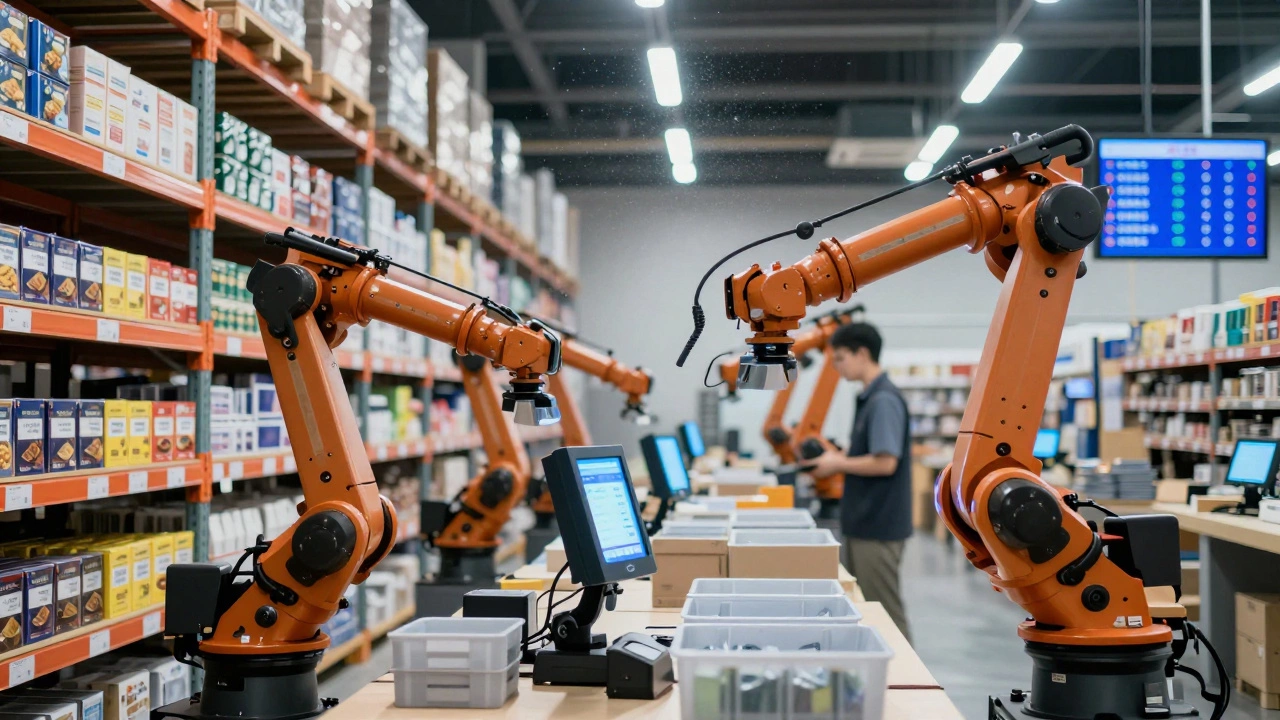
In high-volume warehouses, automation plays a big role. Barcode scanners, pick-to-light systems, and robotic arms help workers process hundreds of orders an hour. But even the most advanced systems rely on clean data. If inventory counts are off because someone miscounted a shipment, fulfillment errors spike. A 2024 study by the Council of Supply Chain Management Professionals found that 68% of e-commerce returns started with a fulfillment error.
Good fulfillment means speed, accuracy, and visibility. Customers don’t just want their order fast-they want to know where it is. That’s why leading e-commerce brands update tracking status every time an item is scanned: received, packed, dispatched, out for delivery.
Transportation: Getting It There Without Breaking the Bank
Once the box is sealed, it’s time to move it. Transportation is the most visible-and expensive-part of logistics. It’s not just about hiring a courier. It’s about choosing the right mode: truck, rail, air, or ship; the right carrier: national, regional, or last-mile specialist; and the right route: direct, consolidated, or hub-and-spoke.
For small businesses, the biggest mistake is treating all shipments the same. Sending a lightweight book via express air freight costs 10 times more than ground shipping. Meanwhile, a heavy sofa shipped via standard ground might take five days-too long for customers expecting next-day delivery.
Smart e-commerce sellers use dynamic routing tools that compare carrier rates in real time and choose the best balance of cost and speed. In New Zealand, for example, many sellers use a mix of NZ Post for rural areas and private couriers like CourierPost or Aramex for urban centers. In the U.S., FedEx Ground, UPS SurePost, and USPS Priority Mail are common hybrids.
Transportation also means managing returns. Reverse logistics-the process of bringing items back-can cost up to 50% more than outbound shipping. That’s why some companies offer free returns only if the customer uses a pre-paid label from the same carrier that delivered the item. It keeps the supply chain closed and cheaper.
Warehouse Management: The Hidden Engine of E-Commerce
Warehouse management is what keeps everything else running. It’s not just storage-it’s about layout, labor, technology, and space optimization. A poorly organized warehouse means pickers walk miles a day instead of meters. That slows down fulfillment, increases labor costs, and frustrates staff.
Top-performing warehouses use ABC analysis: A-items (fast-moving products like phone chargers or face masks) sit near packing stations. B-items (moderate sellers) are in mid-range zones. C-items (slow-movers like seasonal decor) go to the back or high shelves. This cuts average pick time by up to 30%.
Technology matters too. Warehouse Management Systems (WMS) track inventory in real time, flag low stock, suggest reordering, and even predict demand spikes based on past sales and holidays. A WMS can tell you that 70% of yoga mats sell in January-so you stock up in November, not December.
And don’t forget space. Many small e-commerce businesses rent too much warehouse space early on. Others cram too much into a tiny unit. The sweet spot? Enough room to handle 150% of your peak demand without paying for unused square footage. In Auckland, warehouse rents jumped 22% in 2024. Every square meter counts.

How These Three Activities Work Together
These three activities-fulfillment, transportation, and warehouse management-don’t operate in silos. They’re connected. A delay in warehouse inventory updates causes fulfillment errors. A wrong shipping label sends a package to the wrong region. A slow pick time delays the entire dispatch window.
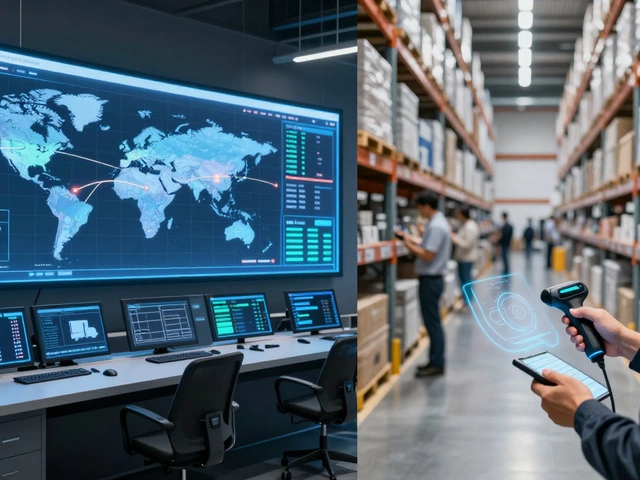
The best e-commerce logistics systems integrate all three. For example: when an order comes in, the WMS instantly checks stock, assigns the pick location, triggers a packing task, updates inventory, and sends the shipment details to the carrier’s system-all in under 60 seconds. That’s the standard for brands like Kogan, Catch, and Amazon.
Without this integration, even the fastest courier can’t save you. A customer who gets a tracking update saying "Out for Delivery" at 8 PM but their package doesn’t arrive until Tuesday? That’s not bad luck. That’s broken logistics.
What Happens When One Part Fails
Let’s say your warehouse is great. Your fulfillment team is sharp. But your transportation partner keeps missing delivery windows. Customers start leaving negative reviews: "Ordered on Monday, still waiting Friday. Never again."
Or your carrier is perfect, but your warehouse doesn’t update stock in real time. You sell 100 Bluetooth speakers online-but only have 65 in stock. You ship them all anyway, then scramble to refund 35 customers. Your reputation takes a hit.
Or your fulfillment is flawless, but you ship everything via expensive express delivery. Your profit margins vanish. You raise prices. Sales drop. You cut costs by switching to a budget carrier. Packages arrive broken. Customers complain. You’re stuck in a loop.
Logistics isn’t about doing one thing well. It’s about making all three parts work as one.

Real-World Example: A New Zealand E-Commerce Store
Take a small Auckland-based business selling organic skincare. They started with manual picking, shipped everything via NZ Post, and stored inventory in a garage. Fulfillment took 3-5 days. Returns were a nightmare.
They switched to a cloud-based WMS, hired a local fulfillment center in Manukau, and partnered with a regional courier that guarantees next-day delivery to major cities. Now, orders placed before 2 PM ship the same day. Tracking updates every step. Returns are processed in 48 hours.
Result? Customer satisfaction scores jumped from 3.2 to 4.7 stars. Repeat buyers increased by 63% in six months.
It wasn’t about spending more. It was about aligning the three activities.
How to Check If Your Logistics System Is Working
Ask yourself these questions:
- Do you know your average order fulfillment time-from click to dispatch?
- Can you track every item from receipt to delivery with a single scan?
- Are you using the cheapest reliable carrier for each shipment type?
- Do you have real-time inventory visibility across all sales channels?
- What’s your return processing time? Is it faster than your delivery time?
If you can’t answer all five with confidence, one of your three core activities is leaking.
Final Thought: Logistics Is Your Silent Sales Team
No one sees your warehouse. No one knows your carrier. But every customer feels the result. Fast delivery? They’ll buy again. Slow, broken, or lost packages? They’ll tell five friends.
Logistics isn’t a cost center. It’s your most important customer experience channel. Get the three activities right, and you don’t just move products-you build loyalty.
What are the 3 main activities of e-commerce logistics systems?
The three main activities are order fulfillment (picking, packing, and preparing orders), transportation (moving goods via the right carrier and route), and warehouse management (organizing inventory, space, and technology to support fast, accurate operations). All three must work together seamlessly for e-commerce to succeed.
Why is order fulfillment more than just packing boxes?
Order fulfillment includes receiving inventory, scanning it into the system, storing it correctly, selecting the right items for each order, packing them securely, and labeling them accurately. A single mistake-like sending the wrong product or damaged item-leads to returns, negative reviews, and lost customers. It’s the first real touchpoint between your brand and the buyer.
How do I choose the best carrier for my e-commerce shipments?
Don’t pick based on price alone. Match the carrier to the package type and delivery speed customers expect. Use lightweight, low-cost carriers for small items and regional couriers for time-sensitive deliveries. For rural areas, national postal services often offer better coverage. Use dynamic routing tools that compare real-time rates and delivery windows across carriers to find the best balance of cost and reliability.
Can I manage warehouse logistics without expensive software?
You can start with spreadsheets and barcode scanners, but it won’t scale. Without a Warehouse Management System (WMS), you risk stock inaccuracies, slow picking times, and overpaying for storage. Even basic cloud-based WMS tools like Zoho Inventory or Sortly cost under $50/month and integrate with Shopify, WooCommerce, and Amazon. The savings in labor and lost sales quickly pay for the software.
What’s the biggest mistake e-commerce sellers make in logistics?
Treating logistics as a separate function instead of an integrated system. Many sellers focus on one part-like shipping fast-while ignoring inventory accuracy or warehouse layout. That creates bottlenecks. The fastest courier can’t fix a warehouse that takes 4 hours to pick 50 orders. Success comes from aligning fulfillment, transportation, and warehouse management as one unified process.