Warehouse Solution Suitability Checker
Assess Your Operational Needs
Recommended Path
When you're trying to map out your technology stack, the lines between different software categories can get blurry really fast. You've got the big players like SAP is a German multinational corporation headquartered in Walldorf, Baden-Württemberg, Germany whose products include enterprise software to manage business operations and customer relations., and suddenly you're wondering if this massive platform covers your warehouse floor just as well as your accounting ledger. The short answer is that SAP is primarily an Enterprise Resource Planning (ERP) system that includes robust warehouse management capabilities, specifically through its Extended Warehouse Management module. It isn't just one or the other; it's a comprehensive suite where these functions live together.
The Core Identity of SAP Software
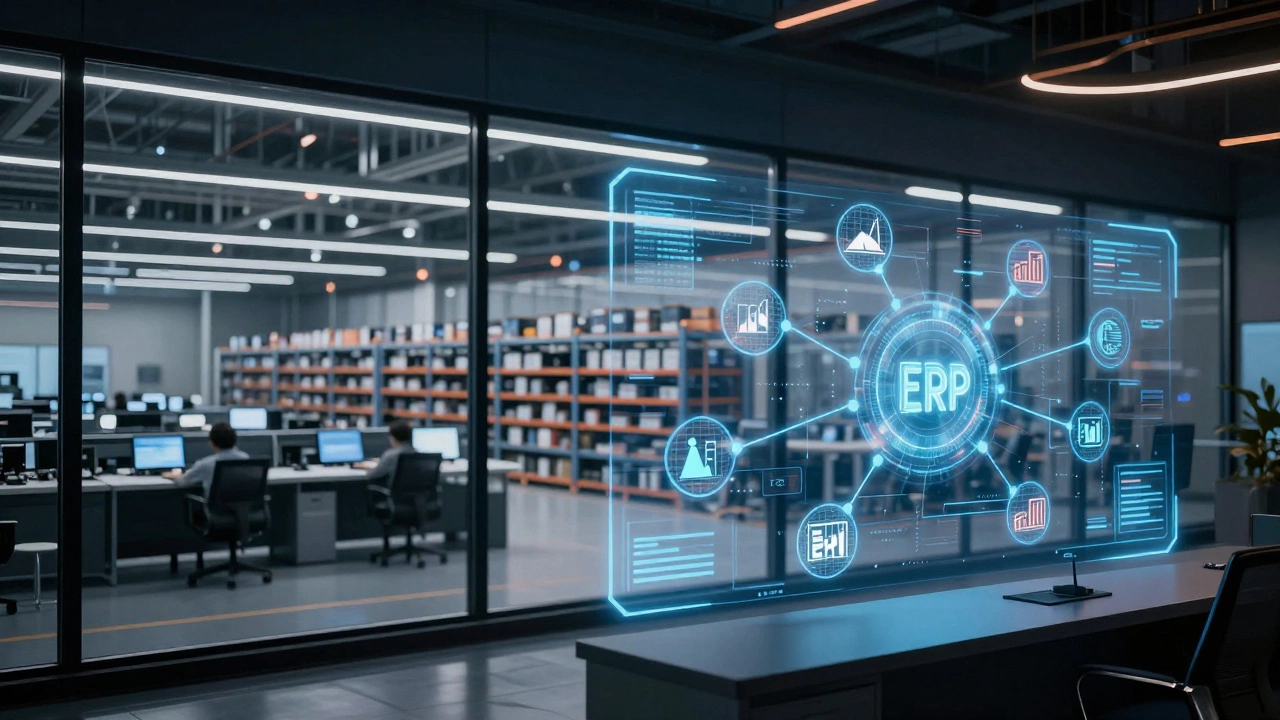
To understand why the confusion exists, we need to look at the DNA of the software itself. At its heart, SAP was built to handle financials, procurement, and overall resource planning. Think of it as the brain of a large organization. It processes invoices, manages payroll, tracks assets, and coordinates production schedules. When people say they "run SAP," they are almost always referring to this central ERP backbone.
However, as businesses grew, they didn't want their warehouse talking to their accountant via email spreadsheets. They wanted seamless flow. So, SAP evolved. The company developed modules that could sit on top of the core ERP to handle specialized tasks. One of those specialized areas is the warehouse. In the world of logistics, the distinction matters because buying a full ERP suite just for a warehouse task is often overkill, while trying to run a global conglomerate on a basic warehouse tool won't cut it.
| System Type | Primary Function | User Base | Typical Cost Profile |
|---|---|---|---|
| ERP (e.g., SAP S/4HANA) | Financials, HR, Supply Chain | C-Suite, Finance, Operations | High (Implementation & Licensing) |
| Standalone WMS | Storage, Picking, Shipping | Warehouse Managers, Staff | Versatile (Often lower entry) |
| SAP EWM | Complex Warehouse Ops within ERP | Supply Chain Execs, Ops | High (Requires ERP License) |
This table illustrates a crucial point: cost and complexity. A dedicated warehouse management system (WMS) focuses entirely on the four walls of the distribution center. An ERP looks at the global business picture. Where the overlap happens is in inventory visibility. If you sell a shirt, the ERP reduces your stock count financially. The WMS tells you exactly which bin location that shirt is sitting in physically.
Diving into SAP Extended Warehouse Management
Now, let's address the elephant in the room: does SAP actually do warehouse work? Yes, and it does it quite aggressively through a product called SAP Extended Warehouse Management, known internally as EWM. This isn't a toy feature added to an invoicing app; it is a deep, industrial-grade tool designed for complex logistics networks.
In 2026, if you are looking at SAP EWM, you are likely dealing with high-volume operations. This module handles things like cross-docking strategies, wave picking management, and labor optimization. For example, a large automotive manufacturer doesn't just store parts; they sequence them for the assembly line. SAP EWM can coordinate with manufacturing execution systems to deliver parts just-in-time. This level of orchestration is where SAP earns its reputation as more than just an accounting database.
You might hear terms like "Embedded EWM" versus "Decentralized EWM." Embedded means the warehouse logic lives inside the main ERP server instance. It's simpler for smaller setups. Decentralized runs on a separate server but talks to the ERP constantly. This separation helps performance. Imagine a busy holiday season where thousands of orders are being processed every minute; offloading the heavy lifting to a dedicated system keeps your financial books from freezing up while pickers scan barcodes on the floor.
The Integration Challenge
Here is where things get messy for many companies. Because SAP acts as the central record keeper, having a third-party WMS that doesn't talk to SAP creates a data silo. If the warehouse thinks it has 100 units but the ERP thinks it has 50 because of a sync delay, you end up selling inventory you don't have. Or worse, you buy stock you already own.
Many organizations opt for a hybrid approach. They keep SAP as their core ERP for finance and order management but layer a best-of-breed WMS on top, such as Blue Yonder or Oracle Warehouse Management. Why? Because sometimes the SAP interface for warehouse workers on handheld scanners isn't as intuitive as a system built strictly for floor operators. User experience (UX) on a rugged tablet in a cold storage facility requires a different design mindset than a financial dashboard.
However, sticking with the native SAP ecosystem eliminates the need for complex integration middleware. You don't need to worry about API failures between two different vendors. If a purchase order comes into SAP, it automatically creates a transfer request in EWM without extra configuration. For companies that value stability over niche features, staying within the SAP walled garden often makes sense, even if it comes with a higher price tag.
When Should You Choose SAP?
So, how do you decide? Is it worth paying for the SAP suite when you just want to track pallets? You need to evaluate the complexity of your supply chain. If your operation involves multiple locations globally, complex regulatory requirements for inventory tracking, and tight integration between sales and manufacturing, the ERP-first approach wins. The overhead is justified because the alternative is managing disconnected systems manually.
Conversely, if you run a single-site distribution center focused purely on 3PL services or e-commerce fulfillment, a standalone WMS might offer a faster return on investment. These lighter solutions get you running in weeks rather than the months or years typical of an SAP implementation. You sacrifice some depth for speed and usability.
Also, consider your long-term roadmap. Are you planning to expand internationally? SAP has deep local compliance knowledge for things like tax codes and VAT across Europe, Asia, and the Americas. A small WMS might not understand the nuances of German customs declarations, whereas SAP builds that directly into the process.
Navigating the 2026 Landscape
We are now past 2025, and the shift to cloud-native architectures is fully matured. Most new implementations of SAP focus heavily on the cloud, specifically SAP S/4HANA Cloud. Legacy on-premise servers are becoming rare maintenance targets rather than growth platforms. When we discuss whether SAP is an ERP or WMS today, we must view it through a cloud lens. Data accessibility changes how you use the system.
In this era, real-time analytics are non-negotiable. SAP's strength lies in connecting warehouse data to broader business intelligence tools instantly. You can see how weather patterns affected shipping lanes in Brazil and how that impacts your New York inventory levels simultaneously. While a basic WMS shows you where boxes are, an integrated system shows you why they are there and where they need to go next based on predictive models.
Furthermore, sustainability is a massive driver right now. Modern ERP and WMS solutions track carbon footprints. SAP provides frameworks to calculate emissions per shipment, helping companies meet corporate social responsibility goals. This adds another layer of functionality beyond simple box movement.
Practical Considerations for Implementation
If you move forward with SAP, be prepared for a rigorous change management process. The software is powerful, but it expects users to follow certain workflows. Deviating from the standard process requires customization, which is expensive and risky during future upgrades. Training staff to understand not just buttons but business processes is vital.
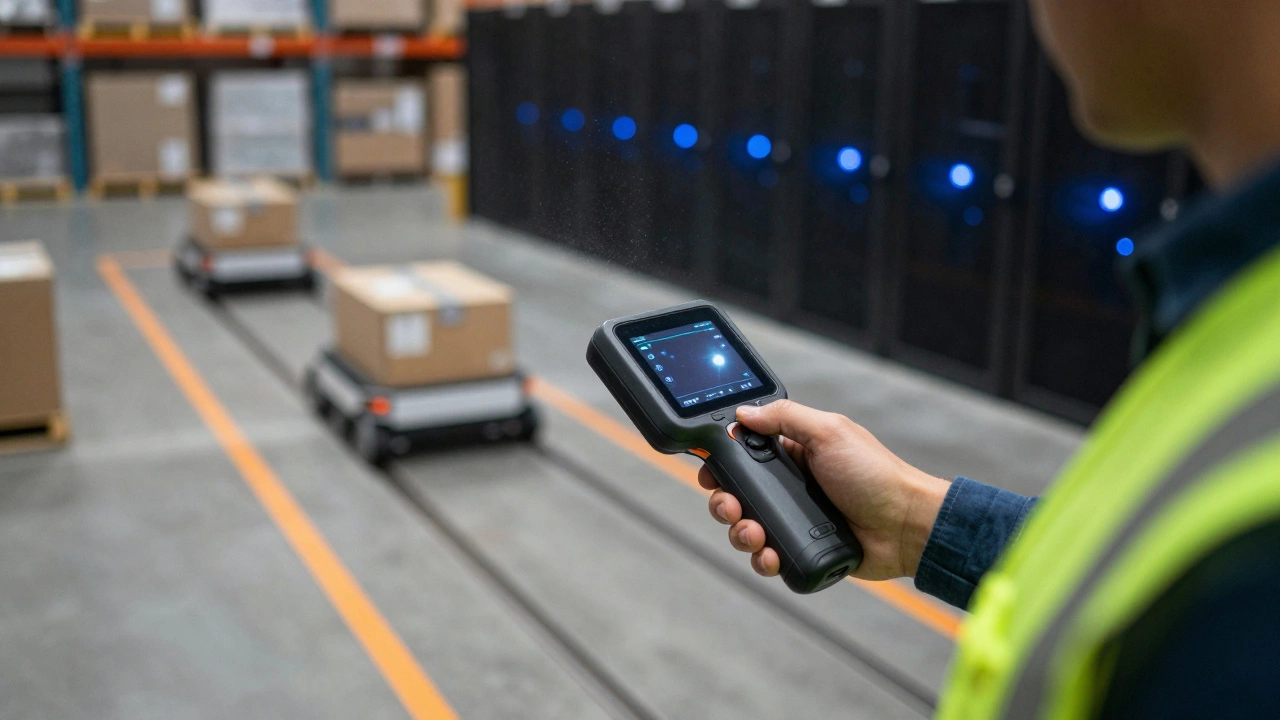
Consider the hardware as well. In a warehouse setting, SAP EWM is often paired with mobile devices, RFID scanners, and automation hardware like automated guided vehicles (AGVs). Ensuring your network infrastructure supports the traffic generated by these devices communicating with the SAP backend is essential. Downtime isn't just annoying; it stops the money flowing in.
Can I use SAP just as a WMS without the ERP part?
Technically, you can license specific modules, but SAP EWM is architected to rely on the underlying ERP logic for inventory master data and financial posting. Running it completely standalone without the ERP backbone defeats the purpose of its deep integration and often complicates the architecture.
Is SAP cheaper than buying a separate WMS?
Rarely. SAP licenses are premium. While you save on integration costs by avoiding middleware, the base licensing fee and consulting costs for SAP are significantly higher than standalone, best-of-breed WMS solutions tailored for specific industries.
Does SAP handle multi-warehouse environments well?
Yes, this is one of its strongest suits. SAP EWM allows for network-wide visibility, optimizing stock transfers between sites and consolidating reporting, which is critical for global enterprises with complex distribution chains.
How does SAP compare to NetSuite for warehousing?
NetSuite offers strong cloud ERP and WMS integration but generally targets mid-market companies. SAP typically serves large enterprises. If your revenue is in the billions and you have complex legal structures, SAP scales better. If you are growing rapidly but smaller, NetSuite might offer a better user interface experience.
Can I upgrade my WMS to SAP later?
Data migration is possible but challenging. Moving transactional data from a third-party WMS into SAP EWM requires mapping custom fields and cleaning historical records. It is recommended to plan this transition early rather than treating it as a quick add-on after a contract renewal.