Amazon Logistics Scale Simulator
Logistics Empire Simulator
Interactive ToolAdjust to see how many resources are needed to handle this volume.
Amazon handles tens of millions of orders daily. This simulator estimates the infrastructure required to support that volume based on public data.
Fulfillment Nodes
~50
Facilities needed to store & pick inventory.
Air Fleet
~50 Aircraft
Planes for cross-country hub-to-hub transport.
Last-Mile Drivers
~15,000
Vans/Flex drivers for final delivery.
Est. FBA Fees
$2.5M
Potential revenue from 3rd party sellers.
Why Vertical Integration Matters
You click "Buy Now," and two days later, a cardboard box is sitting on your porch. It feels like magic, but it’s actually one of the most complex logistical feats in human history. For years, we thought of Amazon as just an online bookstore that grew into everything store. But look closer at their balance sheet and their physical footprint, and you’ll see something different. They own planes, they build massive warehouses, they employ hundreds of thousands of drivers, and they are actively taking business away from traditional shipping giants like FedEx and UPS. So, the real question isn't whether Amazon sells books or electronics-it’s whether Amazon has quietly become the world’s largest logistics company.
The Evolution from Retailer to Logistics Giant
To understand where Amazon stands today, we have to look at how they got here. When Jeff Bezos launched the company in 1994, they relied entirely on third-party carriers. If you bought a book, Amazon printed a label and handed it off to USPS or UPS. That worked fine when volume was low. But as sales exploded, Amazon hit a wall: external carriers couldn’t keep up with speed, cost, or reliability during peak seasons like Black Friday.
This dependency became a vulnerability. In 2013, Amazon made a pivotal decision. Instead of begging FedEx for better rates, they started building their own network. This marked the birth of what is now known as Amazon Logistics, the internal delivery arm responsible for managing transportation and final-mile handoffs. Today, this division handles a significant portion of all packages delivered by Amazon. By verticalizing their supply chain, Amazon didn’t just improve customer experience; they created a parallel economy within their retail business.
Fulfillment Centers: The Heart of the Operation
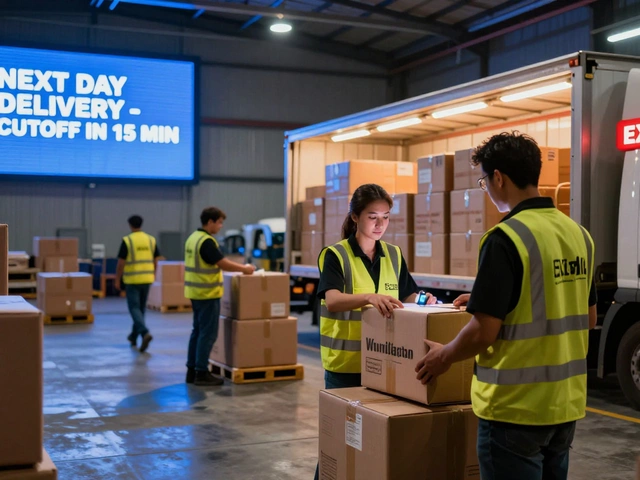
If logistics is the bloodstream of commerce, then Fulfillment Centers (FCs), massive automated warehouses where inventory is stored, picked, packed, and shipped are the heart. Unlike traditional distribution centers that move pallets of goods to retailers, Amazon FCs are designed to pick individual items for individual customers. This requires a level of precision and speed that standard warehousing cannot match.
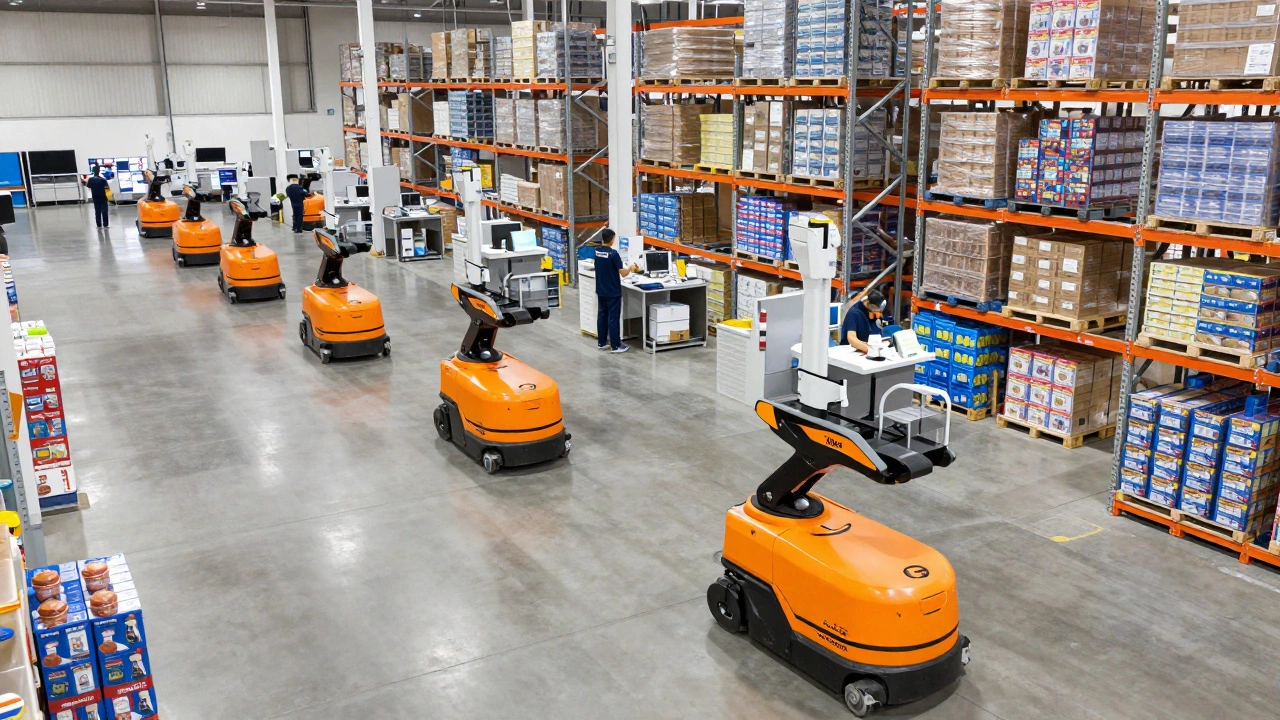
These facilities are marvels of engineering. Inside, you won’t find rows of shelves stretching endlessly. Instead, you see Kiva robots, mobile platforms that bring shelves of products to human workers rather than requiring humans to walk aisles zipping around on orange bases. These robots reduce the time it takes to locate an item from minutes to seconds. A worker stays in one spot while the robot brings the shelf to them. Once the item is scanned and packed, another system sorts it onto the correct conveyor belt based on destination zip code.
As of 2025, Amazon operates over 1,000 fulfillment nodes globally. This density allows them to place inventory closer to consumers before they even buy it. If data suggests people in Seattle will likely buy a specific blender next week, Amazon moves stock there preemptively. This predictive logistics model reduces transit times dramatically, turning same-day delivery from a premium option into a standard expectation.
Last-Mile Delivery: The Final Battle
The "last mile"-getting the package from the local station to your door-is notoriously the most expensive part of shipping. Traditional couriers charge high fees because this leg involves traffic, parking issues, and failed deliveries. Amazon saw this inefficiency and decided to solve it themselves through Amazon Flex, a gig-economy platform allowing independent contractors to deliver packages using their personal vehicles.
Amazon Flex works similarly to Uber Eats. Drivers download an app, select available blocks, and pick up packages from nearby hubs. This flexible workforce allows Amazon to scale up instantly during holidays without hiring permanent staff. Additionally, Amazon has invested heavily in its own fleet of vans, many of which are electric, aiming to reduce carbon emissions while maintaining control over service quality.
By controlling the last mile, Amazon gains crucial data insights. They know exactly when a package arrives, if the customer was home, and even how long the driver waited. This granular data feeds back into their algorithms, optimizing future routes and improving efficiency across the entire network. Traditional competitors struggle to replicate this closed-loop system because they don’t own both the retailer and the carrier sides.

Amazon Air: Taking to the Skies
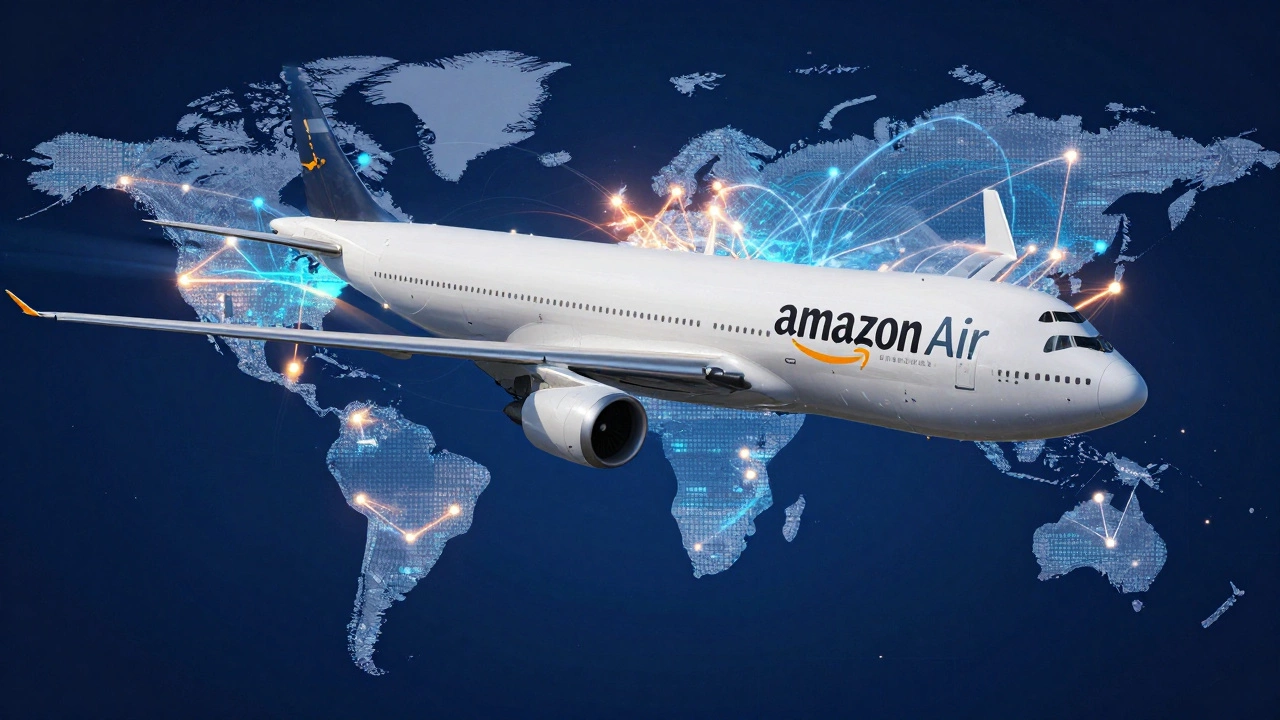
Ground transport has limits. To achieve faster cross-country delivery, Amazon launched Amazon Air, its dedicated cargo airline division focused on moving freight between major hubs rapidly. While not as visible as commercial passenger flights, Amazon Air is growing fast. As of mid-2026, the fleet includes dozens of aircraft ranging from smaller turboprops to large wide-body jets like the Boeing 767.
The strategy behind Amazon Air is simple: bypass congestion at major airports used by passenger airlines and create direct links between key fulfillment centers. For example, a package ordered in New York can fly directly to a hub in California overnight, arriving for next-day morning delivery. This air network complements their ground operations, ensuring that long-distance orders don’t suffer delays due to weather or road closures.
| Feature | Amazon Logistics | FedEx / UPS |
|---|---|---|
| Primary Focus | E-commerce fulfillment & retail support | B2B shipping & global parcel services |
| Data Integration | Seamless (owns purchase + delivery data) | Limited (relies on shipper-provided info) |
| Last Mile Model | Mixed: Owned vans + Gig workers (Flex) | Primarily employed drivers |
| Air Fleet Size | Growing rapidly (~100+ aircraft) | Established large fleets (500+ aircraft) |
| Customer Base | Internal retail + FBA sellers | Open market businesses & individuals |
Fulfillment by Amazon (FBA): Powering Other Businesses
Perhaps the strongest argument that Amazon is a logistics company lies in Fulfillment by Amazon (FBA), a service where third-party sellers store their products in Amazon’s warehouses, and Amazon handles packing, shipping, and customer service. Millions of small businesses rely on FBA to compete with big brands. When you buy from a third-party seller on Amazon, chances are high that the package bears the Amazon logo and arrives via Amazon Logistics.
This transforms Amazon from a mere retailer into an infrastructure provider. They are essentially renting out their logistics capabilities to other companies. Think of it like AWS (Amazon Web Services), but for physical goods instead of digital data. Sellers pay fees for storage and fulfillment, gaining access to Prime shipping eligibility and Amazon’s vast customer base. This revenue stream is incredibly lucrative and stable, less dependent on consumer trends for specific products and more on the sheer volume of commerce flowing through their pipes.
Why This Matters for Shoppers and Sellers
For shoppers, the result is undeniable convenience. Free, fast, and reliable delivery has become the baseline expectation. Returns are easier too, often drop-off at local stores or lockers. However, this convenience comes with trade-offs. The dominance of Amazon’s logistics means fewer choices for carriers, potentially leading to higher prices elsewhere as competitors struggle to match speeds.
For sellers, relying on Amazon creates a double-edged sword. On one hand, you get access to millions of buyers and seamless fulfillment. On the other, you lose control over branding and customer interaction. Your packaging looks like Amazon’s, your communication goes through Amazon’s system, and your success depends on Amazon’s algorithm. Many entrepreneurs worry about becoming too dependent on a single platform that owns both the marketplace and the delivery truck.
The Future of Amazon’s Logistics Network
Looking ahead, Amazon continues to innovate. Investments in drone delivery (Prime Air, Amazon’s experimental drone delivery service aimed at delivering small packages within 30 minutes) remain active, though regulatory hurdles slow widespread adoption. Meanwhile, automation inside warehouses keeps increasing, with new AI-driven sorting systems reducing labor costs and errors.
There is also a push toward sustainability. Electric delivery vans, solar-powered warehouses, and optimized routing algorithms aim to lower the environmental impact of such a massive operation. Whether these efforts can offset the sheer increase in consumption driven by easy shopping remains debated, but the technology is advancing quickly.
Is Amazon considered a logistics company?
Yes, functionally speaking. While legally structured as a retail and tech conglomerate, Amazon operates one of the largest private logistics networks in the world, including warehouses, trucks, planes, and last-mile delivery services. Its logistics division supports not only its own retail sales but also millions of third-party sellers through Fulfillment by Amazon (FBA).
How does Amazon Logistics differ from UPS or FedEx?
UPS and FedEx are independent carriers serving a wide variety of clients across industries. Amazon Logistics primarily serves Amazon’s own ecosystem-retail customers and FBA sellers. This vertical integration gives Amazon tighter control over timing, data, and customer experience, whereas UPS/Fedex operate as neutral third parties.
What is Amazon Flex?
Amazon Flex is a gig-work platform that allows individuals to use their personal vehicles to deliver Amazon packages. Drivers sign up via an app, choose delivery blocks, and earn money per block completed. It helps Amazon scale its last-mile capacity without maintaining a huge permanent driver workforce.
Does Amazon own its airplanes?
Yes. Through Amazon Air, the company owns and operates a growing fleet of cargo aircraft. These planes transport goods between major fulfillment hubs across continents, enabling faster cross-country delivery times compared to relying solely on ground transport or passenger airline belly space.
Can I use Amazon Logistics for my own non-Amazon business?
Not directly. Amazon Logistics is currently reserved for packages originating from Amazon.com or sold through Fulfillment by Amazon (FBA). If you sell independently outside Amazon’s platform, you must use traditional carriers like USPS, UPS, FedEx, or regional courier services.