International Shipping Cost Calculator
Calculate Your Shipping Cost
Results
Enter your package details to see estimated costs.
Key factors:
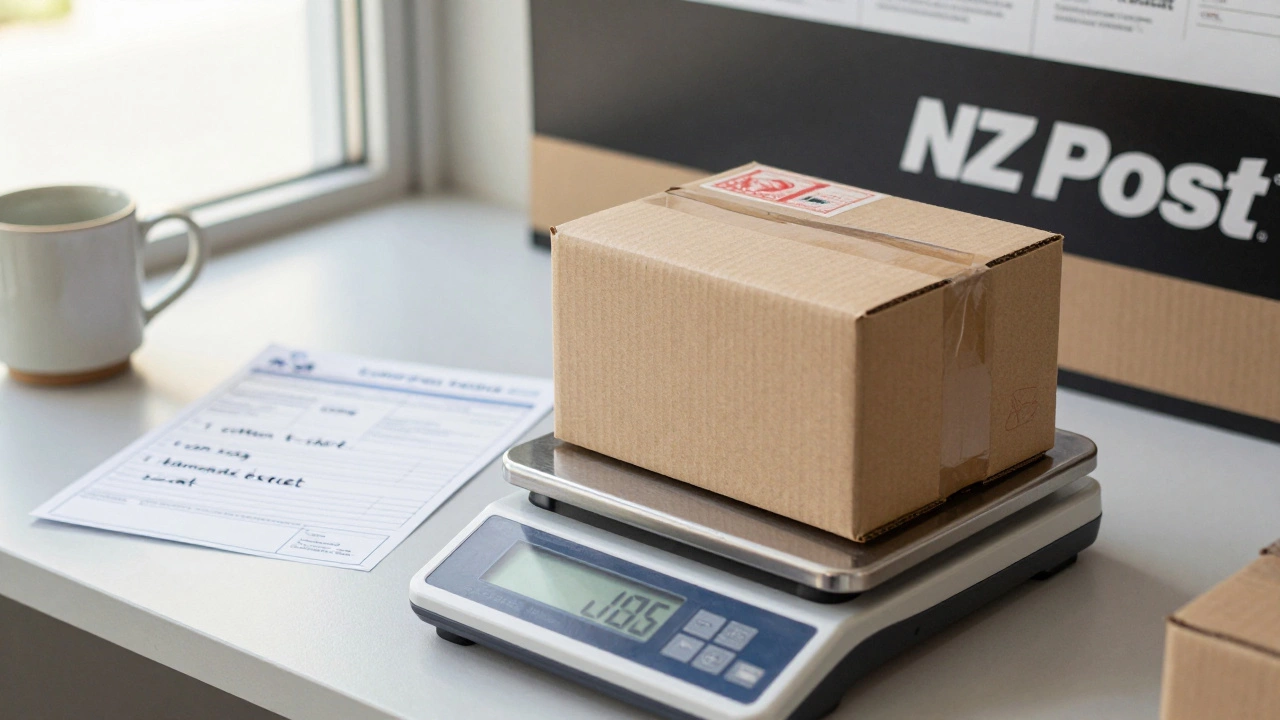
Your package may be charged by actual weight or volumetric weight (whichever is higher). This calculator uses the formula: length × width × height ÷ 5000
Sending a package overseas isn’t just about sticking on a label and dropping it in the mailbox. The real question isn’t can you send it - it’s how much it will cost, and why prices vary so wildly between services. If you’ve ever mailed a birthday gift to family in Poland or shipped spare parts to a client in Brazil, you know the frustration: one quote says $45, another says $120, and no one explains why.
What Drives the Price of International Shipping?
There’s no single rate for international shipping. The cost depends on five big factors: weight, size, distance, speed, and customs. You can’t control distance - Brazil is farther than Australia - but you can control the other four.
Weight matters most. Most carriers charge by the kilogram, but they also use volumetric weight. That’s the space your package takes up, not just how heavy it is. A box of pillows might weigh 2 kg but take up the same space as a 10 kg box of books. Carriers charge you for whichever is higher. Always measure your package in centimeters: length × width × height ÷ 5000 = volumetric weight in kg. If that number is bigger than your actual weight, you’re paying for the space.
Speed adds cost fast. Standard shipping to the UK might cost $35 and take 10 days. Express? $95 and 3 days. That’s a 170% price jump for 7 fewer days. Most people don’t need express. Unless it’s medical supplies or a contract due tomorrow, standard is smarter.
Customs fees are the wild card. Some countries charge import taxes, VAT, or handling fees. Canada adds 5-13% VAT on top of the item’s value. The EU charges VAT on everything over €150. Australia hits you with a 10% GST on packages over $1,000 AUD. These aren’t hidden - they’re legal. But most carriers don’t tell you upfront. You pay them at the door, or worse, your package gets held for weeks.
Real-World Price Examples (2025)
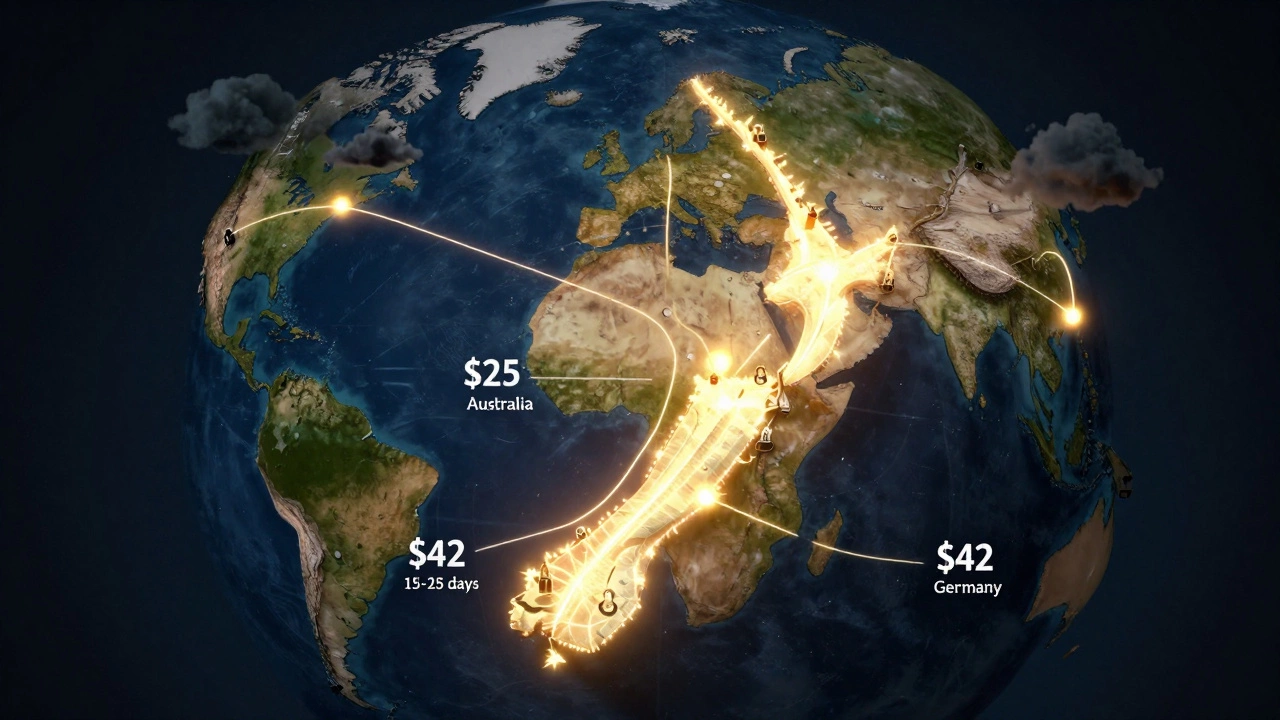
Here’s what actual shipping looks like from Auckland, New Zealand, to major destinations in December 2025, using standard service (not express):
| Destination | Package Size (1kg, 20x20x20cm) | Delivery Time | Carrier |
|---|---|---|---|
| United States | $32 | 7-12 days | NZ Post |
| United Kingdom | $38 | 10-15 days | DHL eCommerce |
| Australia | $25 | 5-8 days | NZ Post |
| Germany | $42 | 12-18 days | UPS Standard |
| Brazil | $55 | 15-25 days | FedEx International Economy |
| Japan | $35 | 8-12 days | Japan Post |
Notice how Australia is cheaper than the UK? That’s because it’s closer and has a strong postal agreement with New Zealand. Brazil is the most expensive because of high handling fees, longer routes, and stricter customs checks. Japan is mid-range - efficient system, low duties.
How to Save Money on International Shipping
There are simple ways to cut your shipping bill without sacrificing reliability.
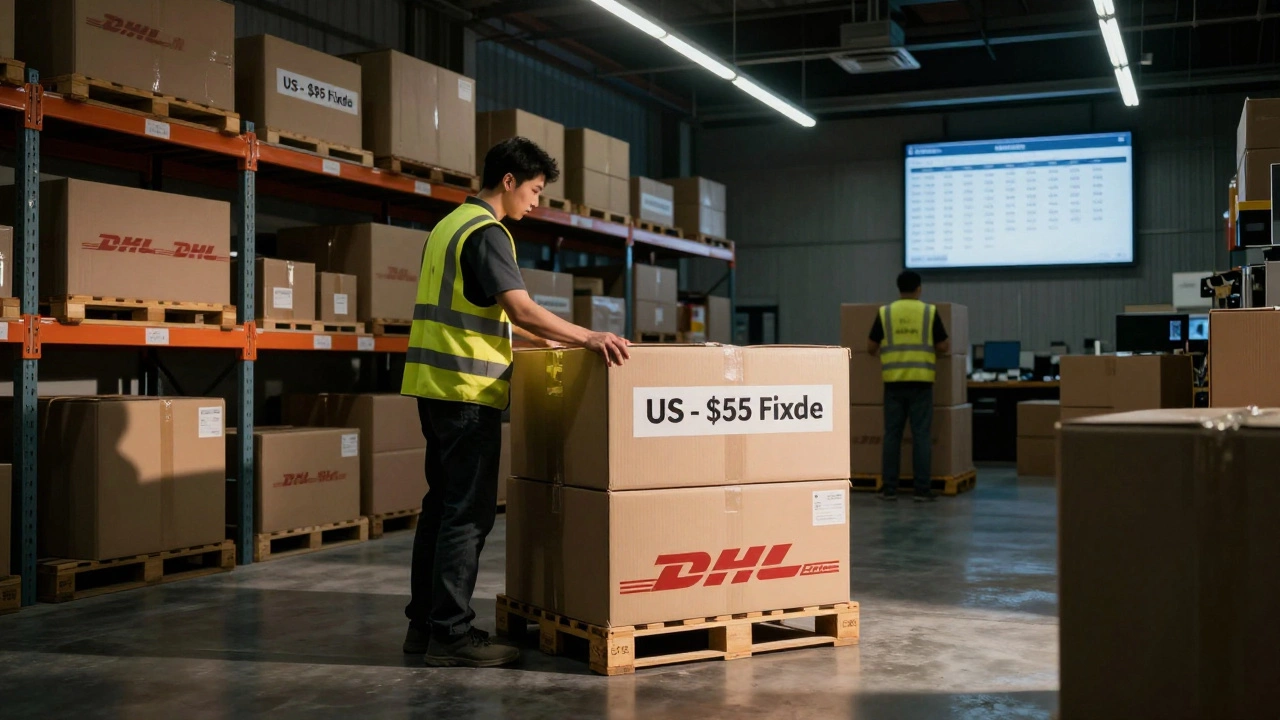
- Use flat-rate boxes. NZ Post, DHL, and FedEx offer fixed-price boxes for specific regions. A medium box to the US costs $55 no matter if you fill it with socks or books - as long as it’s under 20kg. This beats paying by weight if you’re close to the limit.
- Ship in bulk. If you’re sending multiple items to the same country, combine them. One 5kg package costs less than five 1kg packages. Carriers give volume discounts.
- Drop it off yourself. Paying for pickup adds $10-$20. Take your package to a local depot. Most courier hubs in Auckland, like those in Newmarket or Ōtāhuhu, are open late.
- Avoid fragile or high-value items. Insurance adds cost. If you’re sending a $300 camera, you’ll pay $25 extra for coverage. For low-value items, skip it. Most countries don’t inspect packages under $100.
- Compare with freight forwarders. Companies like ShipBob or MyUS let you ship to a US warehouse first, then forward internationally. For multiple small packages, this can cut costs by 30%.
What You Should Never Do
Some mistakes cost more than the shipping itself.
- Don’t write "gift" on the customs form. Customs officers see this every day. If they suspect you’re hiding value, they’ll open it anyway. List the actual contents: "1 cotton t-shirt, 1 ceramic mug, 1 handmade bracelet." Be honest. Under-declaring can lead to fines or seizure.
- Don’t use random online couriers. Sites promising $10 shipping to Germany? They’re often scams or use unreliable middlemen. Your package vanishes. Stick to major carriers: NZ Post, DHL, FedEx, UPS, or TNT.
- Don’t ship liquids, batteries, or aerosols without checking. These are banned on many routes. Even nail polish or deodorant can be flagged. Check the carrier’s prohibited items list before you pack.
- Don’t assume delivery is guaranteed. Rural areas in Indonesia, parts of Nigeria, or mountain towns in Peru may take 30+ days. Always ask for tracking and consider adding a signature requirement.
Who’s the Best Carrier for Your Needs?
Not all carriers are equal. Here’s who wins in different scenarios:
- Best for budget: NZ Post. Lowest base rates to Australia, USA, UK. Slower, but reliable for non-urgent items. Their tracking updates are basic but functional.
- Best for speed: DHL Express. Delivers to 220 countries in 1-3 days. Expensive, but if you need it fast and tracked, this is the gold standard.
- Best for heavy items: FedEx International Economy. Handles parcels up to 68kg. Good rates for boxes over 5kg. Better than DHL for bulky items.
- Best for Europe: UPS Standard. More consistent customs clearance in the EU than others. Less likely to get stuck in customs delays.
For most people sending small packages, NZ Post or DHL eCommerce are the sweet spot. They balance cost, reliability, and tracking.
What About Customs Duties? Do You Pay Them?
You might not pay them upfront, but you’ll pay them eventually.
Carriers like DHL and FedEx will collect duties and taxes on your behalf and bill you when the package arrives. That’s convenient - but it’s not cheap. You’ll get a text or email with a link to pay $15-$60 extra. Some people ignore it. Then their package sits in customs for weeks.
Some carriers offer DDP - Delivered Duty Paid. That means the sender pays all fees upfront. It’s more expensive at checkout, but the receiver gets the package with no surprises. If you’re sending gifts or business samples, DDP is worth the extra $5-$15.
Pro tip: If you’re shipping a gift under $50 AUD to Australia or under €150 to the EU, you won’t pay VAT. Declare it accurately. Don’t overvalue it.
How Long Does International Shipping Actually Take?
Don’t believe the websites that say "5-7 days." That’s express service. Standard shipping? Plan for 10-25 days. Here’s the real timeline:
- 1-3 days: Pickup, sorting, and outbound flight from New Zealand.
- 3-7 days: Transit time. Flights between continents aren’t daily. Your package might sit in a warehouse in Singapore or Los Angeles for a few days.
- 2-10 days: Customs clearance. This is the black hole. Some countries process packages in hours. Others take weeks. Brazil and Russia are notorious.
- 1-5 days: Local delivery. Last-mile delivery in rural areas can take extra time.
If you need it in 10 days, ship it 3 weeks ahead. Always add buffer time.
Is it cheaper to ship internationally by air or sea?
For small packages, air is the only option. Sea freight is for pallets or containers - think 100kg+ and weeks of wait time. If you’re shipping one box, air is your only choice. Sea freight isn’t cheaper for single items - it’s just not designed for it.
Can I use Amazon or eBay to ship internationally?
You can’t use Amazon or eBay’s shipping for personal packages. Their services are only for sellers on their platforms. If you’re sending a gift, you need to go through a courier like NZ Post or DHL. Don’t try to trick the system - it won’t work.
Do I need a commercial invoice for every package?
Yes, for any package over $100 in value or if it’s not clearly a gift. Even small packages need a customs form. Most carriers provide a printable form you fill out online. Include: item description, quantity, value, and reason for shipping (gift, sample, sale). Keep a copy.
What happens if my package gets held in customs?
You’ll get a notice - usually by email or text - asking for payment of duties, taxes, or additional documents. If you don’t respond within 10-14 days, the package may be returned or destroyed. Don’t ignore it. Pay online if you can, or call the carrier’s local office. Delays are common, but they’re fixable.
Are there countries I shouldn’t ship to?
Yes. Some countries have strict bans or unreliable systems. Avoid shipping to North Korea, Syria, or Crimea. Russia is risky due to sanctions and delays. Venezuela and Afghanistan have very low delivery success rates. Always check your carrier’s restricted countries list before you pay.
Final Tip: Always Track and Insure When It Matters
International shipping is unpredictable. Packages get lost. Customs delays happen. But you can protect yourself. Always use tracking. And if the item is worth more than $100, pay for insurance. Most carriers offer $100 coverage for free. For higher value, pay $5-$10 extra. It’s not a waste - it’s insurance against a $500 loss.
Shipping internationally isn’t rocket science. But it’s not simple either. Know your weight, choose your speed, declare honestly, and pick the right carrier. Do that, and you’ll save money, avoid headaches, and get your package where it needs to go - on time, every time.