When you ship a package with UPS, you’re not just paying for a courier to pick up a box. You’re tapping into one of the largest, most complex logistics systems on the planet. But is UPS really a logistics company? Or is it just a delivery service? The answer isn’t as simple as it seems.
What Exactly Is Logistics?
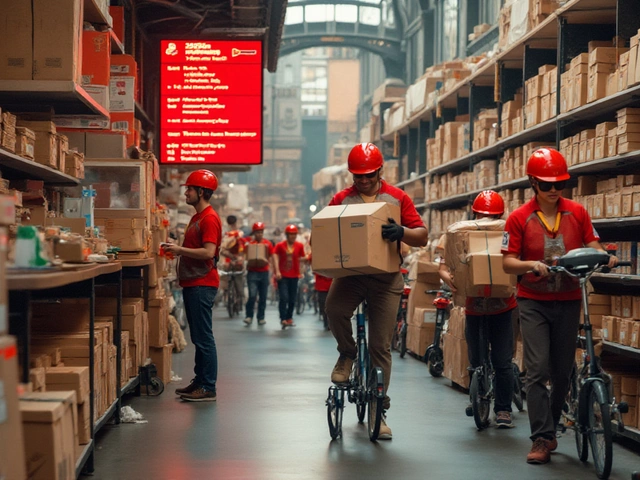
Logistics isn’t just about getting packages from point A to point B. It’s the entire system behind moving goods - planning, storing, transporting, tracking, and managing inventory across multiple locations. Think of it like the nervous system of global trade. It includes warehouses, freight forwarding, customs clearance, route optimization, inventory control, and last-mile delivery. If a company handles any part of that chain, it’s part of logistics.
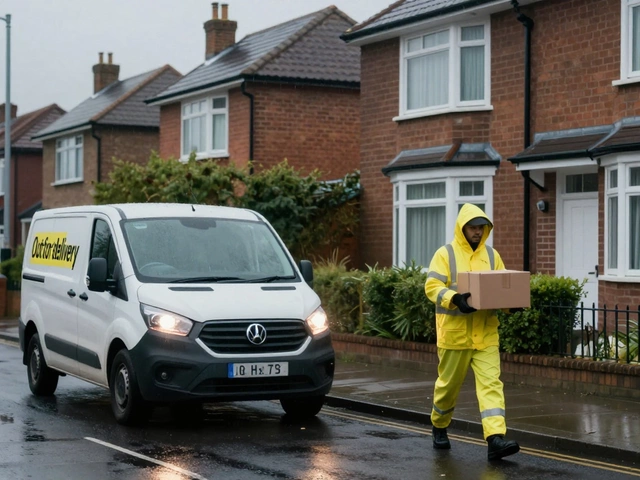
Many people confuse logistics with delivery. Delivery is just one piece - the final step. Logistics is the whole puzzle. A company that only drives vans around a city isn’t a logistics provider. But one that manages storage, coordinates international shipments, tracks inventory in real time, and optimizes truck routes across continents? That’s logistics.
UPS Does Way More Than Deliver Packages
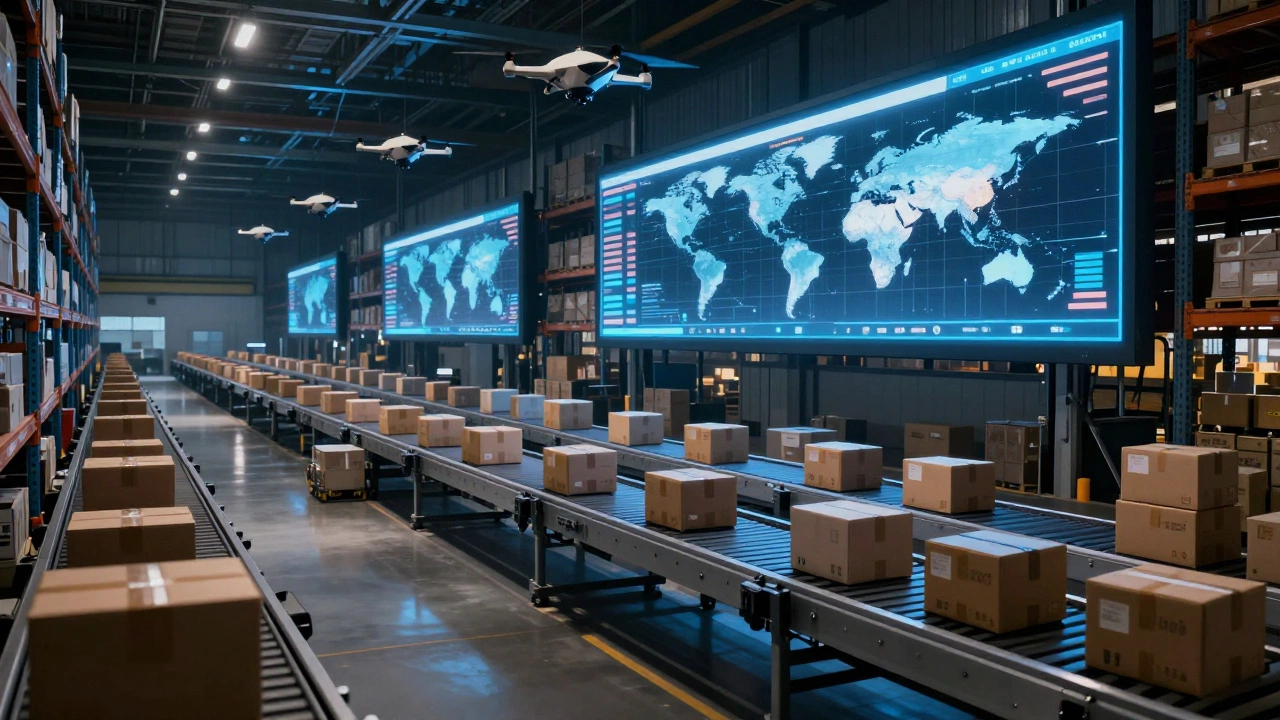
UPS doesn’t just show up at your door with a box. It operates over 1,000 facilities worldwide, including major distribution hubs in Louisville, Kentucky; Leipzig, Germany; and Singapore. These aren’t just loading docks - they’re automated sorting centers that handle over 24 million packages every single day. That’s not courier work. That’s logistics engineering.
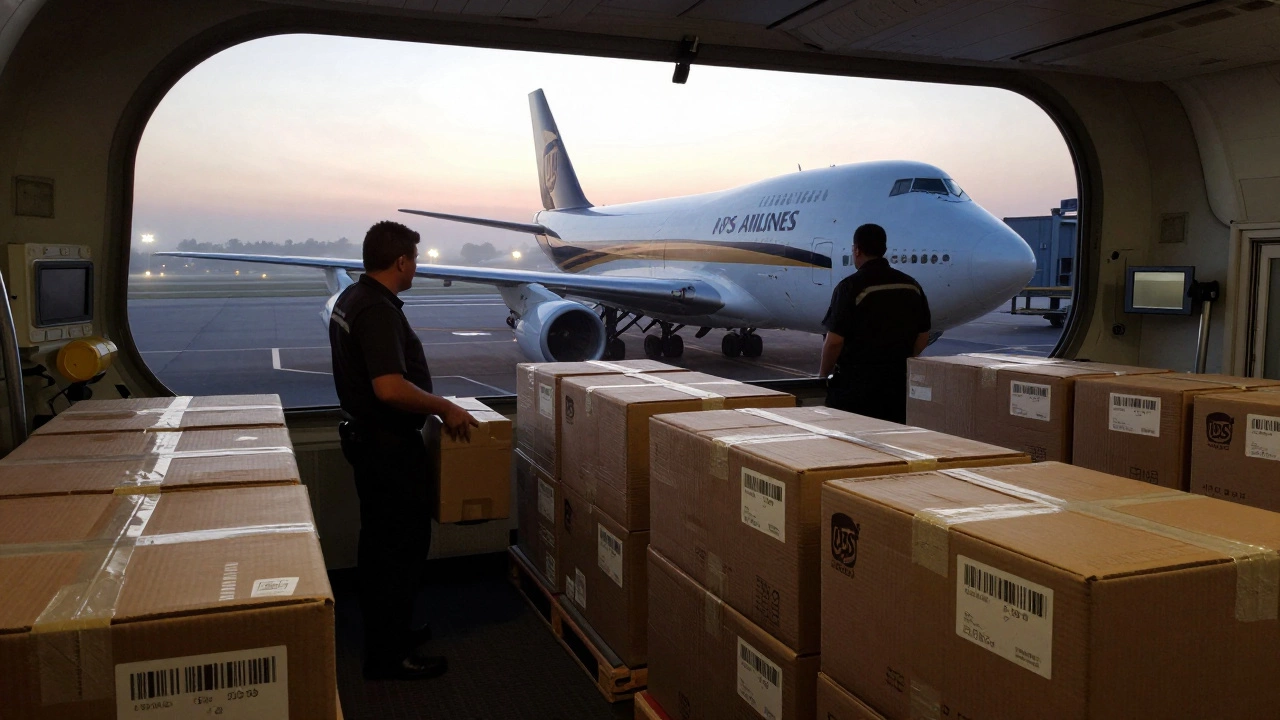
UPS also runs its own fleet of over 120,000 vehicles, including cargo planes like the Boeing 747 and 767. It owns and operates its own air network - UPS Airlines - which flies more than 1,000 daily flights. That’s more than any other private airline in the world. FedEx has a similar setup. But most delivery companies? They rent planes. UPS builds and manages its own global air freight system.
Then there’s the technology. UPS uses its ORION system - a real-time route optimization tool that cuts millions of miles off delivery routes every year. It tracks inventory for Fortune 500 companies across 200+ countries. It handles customs paperwork for international shipments. It even offers supply chain consulting to manufacturers and retailers. That’s not delivery. That’s logistics management.
How UPS Compares to Other Players
Let’s look at a few competitors to see how UPS stacks up:
| Feature | UPS | FedEx | DHL | Amazon Logistics |
|---|---|---|---|---|
| Owns air fleet | Yes (UPS Airlines) | Yes (FedEx Express) | Yes (DHL Aviation) | Partial (leased aircraft) |
| Global warehouse network | Yes (1,000+ facilities) | Yes (1,500+ facilities) | Yes (2,500+ facilities) | Yes (growing rapidly) |
| Customs brokerage | Yes | Yes | Yes | No |
| Supply chain consulting | Yes (UPS Supply Chain Solutions) | Yes (FedEx Supply Chain) | Yes (DHL Supply Chain) | No |
| Inventory management for clients | Yes | Yes | Yes | Internal only |
As you can see, UPS isn’t just a delivery company. It’s built to handle end-to-end supply chain needs. While Amazon Logistics focuses mostly on its own e-commerce orders, UPS serves over 1 million business customers - from small online stores to multinational manufacturers. That’s the difference between a last-mile operator and a full-service logistics provider.
Why the Confusion Exists
Most consumers only interact with UPS when a driver knocks on their door. That’s the last mile - the most visible part. So it’s easy to assume UPS is just a courier. But businesses know better. If you’re a manufacturer shipping parts from China to a factory in Ohio, and you need UPS to store those parts in a warehouse, clear customs, schedule just-in-time delivery, and track every box in real time - you’re not hiring a courier. You’re hiring a logistics partner.
Even the name “United Parcel Service” sounds like a delivery company. But the full name of its logistics division? UPS Supply Chain Solutions. That’s not a side project. It’s a $15 billion-a-year business unit that handles everything from warehouse automation to freight forwarding. It’s not an afterthought - it’s core to their strategy.
Real-World Example: How a Small Business Uses UPS for Logistics
Take a New Zealand-based company selling handmade skincare products. They source ingredients from Europe, package in Auckland, and ship to customers in the U.S. and Australia. They don’t have a warehouse. They don’t have customs agents. They don’t have a freight broker.
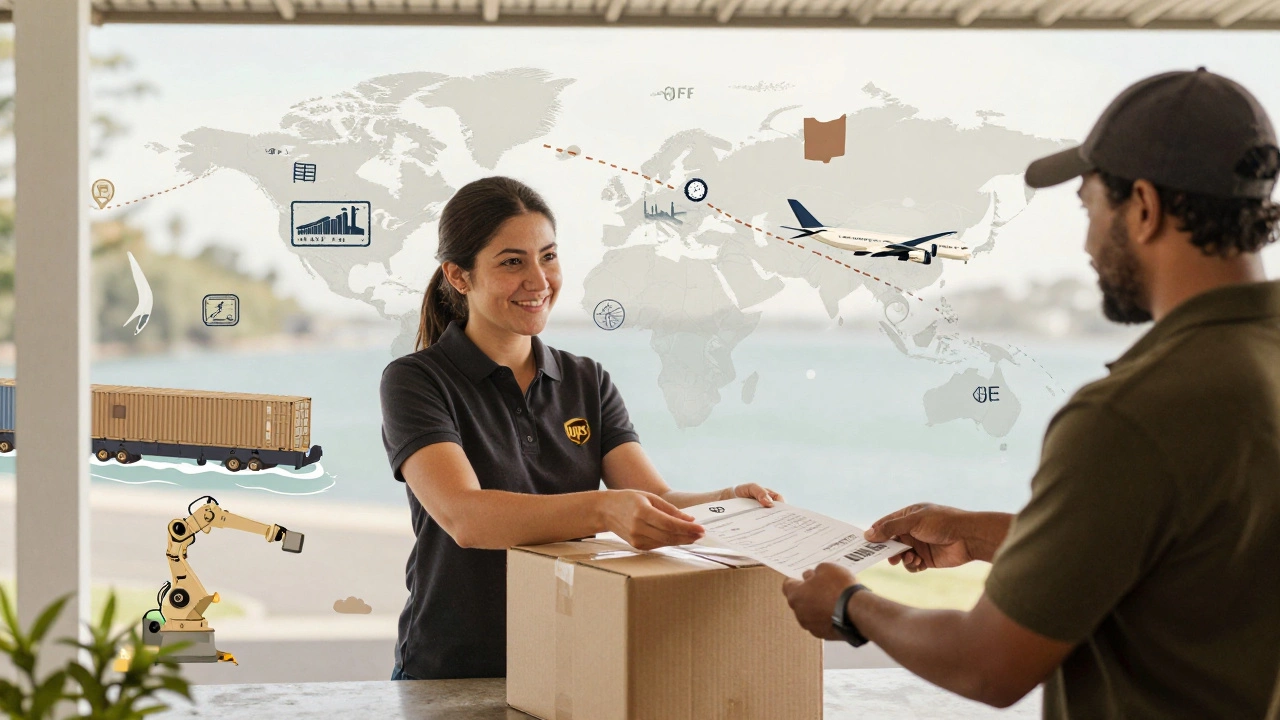
They use UPS. UPS picks up the boxes from their garage, stores them in a bonded warehouse in Auckland, handles export documentation, flies them to a U.S. hub, clears customs, and delivers them to the customer’s door. The business owner doesn’t think about planes, customs forms, or inventory tracking. But UPS does - all of it, automatically.
That’s logistics. Not delivery. Logistics.
So, Is UPS a Logistics Company?
Yes. Absolutely.
UPS doesn’t just deliver packages. It moves entire supply chains. It owns the planes, the warehouses, the software, the customs experts, and the global network. It’s not a courier. It’s a logistics infrastructure provider. If you need to move goods across borders, store them safely, track them precisely, and deliver them on time - UPS is one of the few companies that can handle it all.
Calling UPS a delivery service is like calling Amazon a bookstore. It started there, but it’s grown into something much bigger. UPS is a logistics company through and through.
Is UPS only a delivery company?
No. While UPS delivers packages, it also manages warehouses, handles customs clearance, operates its own airline, tracks global inventory, and provides supply chain consulting. These are all core logistics functions, not just delivery.
What’s the difference between logistics and courier services?
Courier services focus on point-to-point delivery - usually within a region or country. Logistics covers the entire chain: storage, transportation, customs, inventory, and planning. A courier delivers your coffee. Logistics ensures the beans are sourced, roasted, shipped, stored, and delivered to your door - on time and at scale.
Does UPS handle international shipping?
Yes. UPS operates in over 220 countries and territories. It handles everything from air freight and ocean shipping to customs brokerage and duty payment. Its global network is one of the most extensive in the world.
Can small businesses use UPS for logistics?
Yes. UPS Supply Chain Solutions offers scalable services for businesses of all sizes. From warehousing and inventory management to cross-border shipping, small businesses can access enterprise-level logistics without needing their own infrastructure.
Is UPS cheaper than other logistics providers?
It depends. For simple domestic deliveries, UPS might cost more than local couriers. But when you factor in customs, warehousing, and tracking - UPS often saves money by reducing errors, delays, and lost inventory. For international or complex shipments, it’s usually more cost-effective than piecing together multiple services.
What This Means for You
If you’re shipping goods - even just a few boxes a week - you’re already using logistics. The question isn’t whether you need it. It’s whether you’re using a company that can do it right. UPS isn’t just a name on a truck. It’s a global system built to move commerce. And if you’re trying to grow your business beyond your local area, you need more than a courier. You need a logistics partner.