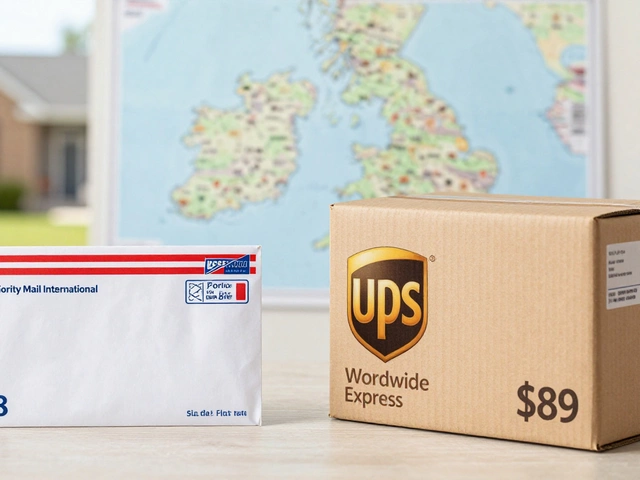
International Shipping Cost Estimator
Carriers charge based on whichever is higher: your package's actual weight or its "dimensional weight" (volume). Use this tool to see if you are paying for empty air.
Package Details
Analysis Result
Ever watched your profit margin evaporate because a package from Auckland to London cost more than the item itself? It’s frustrating. But here is the truth most shippers ignore: you are likely overpaying not because rates are high, but because your packaging and routing choices are inefficient. Saving money on international shipping isn't about finding a magic discount code; it's about understanding how carriers calculate weight, how customs view your goods, and where you can cut fat without cutting corners.
The Weight vs. Volume Trap
Carriers do not care how heavy your box feels when you lift it. They care about dimensional weight, or DIM weight. This is a billing method that charges you based on the volume a package occupies in their cargo hold rather than its actual physical weight. If you ship a lightweight hoodie in a giant box, you pay for the air, not the cotton.
To fix this, measure your items precisely. Calculate the volumetric weight using the standard formula: Length × Width × Height (in centimeters) divided by the carrier’s divisor (usually 5000 or 6000). Compare this number to the actual scale weight. The higher number is what you pay. Right-sizing your boxes is the single fastest way to drop costs by 15-30%. Don’t use a "one size fits all" approach. Keep a variety of small, medium, and large boxes on hand. For irregular items, consider poly mailers instead of rigid boxes if the item isn’t fragile. Poly mailers eliminate the dead space that cardboard boxes create.
| Packaging Type | Best For | Cost Impact | Risk Factor |
|---|---|---|---|
| Standard Corrugated Box | Fragile, bulky items | High (due to DIM weight) | Low |
| Poly Mailer | Clothing, soft goods | Low (minimal volume) | Medium (tearing risk) |
| Custom-Fit Box | High-value electronics | Medium (material cost) | Very Low |
| Bubble Wrap Only | Small, durable items | Lowest | High (crush risk) |
Mastering Incoterms and Customs Duties
Shipping fees are just the entry ticket. The real budget killer is often hidden at the border. Incoterms (International Commercial Terms) define who pays for what during transit. Many sellers default to DDP (Delivered Duty Paid), meaning they cover shipping, insurance, and import duties. While this looks great for customer experience, it exposes you to volatile exchange rates and unpredictable tariff changes.
If you are selling B2B, switch to DAP (Delivered at Place) or EXW (Ex Works) if appropriate. This shifts the responsibility of clearing customs and paying duties to the buyer. For B2C e-commerce, DDP is often necessary to prevent "surprise tax" refusals upon delivery, but you must accurately classify your goods. Using the wrong HS Code (Harmonized System code) can lead to fines or delayed shipments. In New Zealand, we benefit from free trade agreements with many countries. Check if your destination country has an FTA with NZ. If yes, ensure you have the correct Certificate of Origin documentation. Without it, you might pay full tariffs even when eligible for zero-duty status.
Consolidation and Freight Modes
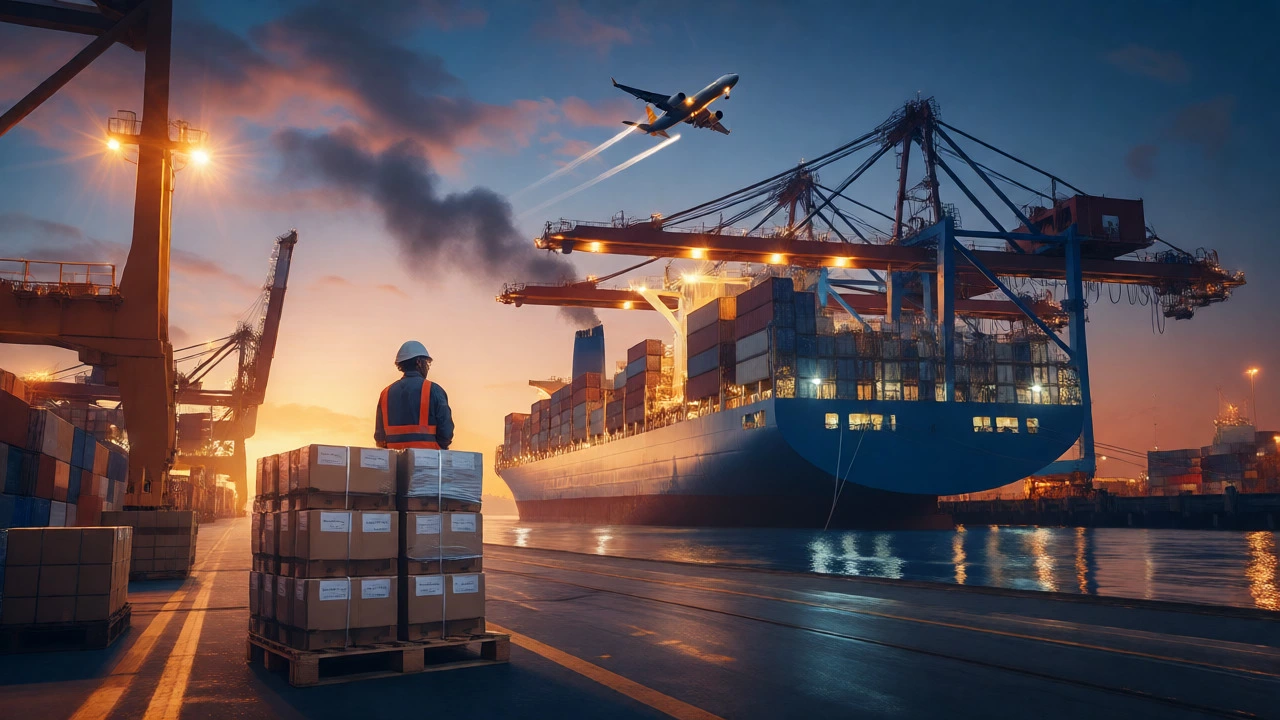
Sending individual parcels is expensive. If you have multiple orders going to the same region, consolidate them. Instead of five separate $20 shipments to Sydney, send one $40 freight shipment to a local fulfillment center there, then distribute locally. This leverages economies of scale.
Choose the right mode of transport based on urgency, not habit. Air freight is fast but costly. Ocean freight is slow but cheap. There is also a middle ground: expedited ocean or rail freight for certain corridors. For example, sending goods from Asia to Europe via rail can be faster than sea and cheaper than air. Evaluate your inventory turnover. If you sell slow-moving stock, do not rush it via air. Let it sit in a warehouse and ship via sea. Reserve air freight for high-margin, time-sensitive products like fashion drops or urgent spare parts.
- Air Express: Best for samples, emergency replacements, and high-value low-weight items. Cost: High. Speed: 2-5 days.
- Ocean FCL (Full Container Load): Best for bulk inventory replenishment. Cost: Lowest per unit. Speed: 30-45 days.
- Ocean LCL (Less than Container Load): Best for mid-sized shipments (1-15 CBM). Cost: Medium. Speed: 25-40 days.
- Road/Rail: Best for cross-border movements within continents (e.g., EU internal). Cost: Medium-Low. Speed: Variable.
Negotiating Rates and Using Freight Forwarders
Do not accept the first quote. Carrier rates are negotiable, especially if you offer consistent volume. Even small businesses can negotiate better terms by committing to a monthly minimum spend. However, dealing directly with DHL, FedEx, or UPS can be a hassle for smaller players due to complex contracts.
This is where freight forwarders shine. A good forwarder aggregates volume from hundreds of clients, securing bulk discounts they pass on to you. They also handle paperwork, which saves you hours of administrative work. When choosing a forwarder, look for transparency in surcharges. Fuel surcharges, security fees, and remote area surcharges can add 10-20% to your base rate. Ask for an all-inclusive quote before booking. Also, check their network coverage. Some forwarders specialize in specific lanes, such as NZ-to-US or China-to-EU. Using a specialist often yields better rates and fewer delays than a generalist.

Technology and Data-Driven Decisions
You cannot save what you do not measure. Use logistics software to track cost-per-order across different carriers and routes. You might discover that Carrier A is cheaper for packages under 2kg, while Carrier B wins for anything heavier. Automate your rate shopping so your checkout page always shows the cheapest viable option to the customer.
Additionally, monitor return rates. International returns are disproportionately expensive. If you see a spike in returns from a specific region, investigate why. Is the sizing chart wrong? Is the product description misleading? Fixing the root cause prevents future shipping losses. Some companies now use local return hubs in key markets (like the US or UK) to process returns domestically, avoiding the cost of shipping defective items back to New Zealand immediately.
Common Pitfalls to Avoid
One major mistake is ignoring insurance. Self-insuring seems tempting until a $5,000 watch goes missing. Always insure high-value shipments. Another pitfall is poor labeling. Illegible addresses or missing phone numbers cause failed deliveries, leading to storage fees and re-delivery charges. Ensure every package has a clear, printed label with a valid contact number for the recipient.
Finally, beware of "cheap" carriers with poor tracking. If a customer calls asking where their order is and you have no data, you lose trust. Trust leads to repeat business, which lowers your long-term customer acquisition cost. Sometimes, paying $2 extra for reliable tracking is worth saving $10 in lost future sales.
Is it cheaper to ship internationally via postal service or courier?
It depends on the weight and destination. For small, lightweight items (under 2kg) to major cities, national postal services (like NZ Post) are often cheaper. However, for heavier packages, valuable goods requiring signature confirmation, or destinations with less developed postal infrastructure, private couriers (DHL, FedEx, UPS) usually offer better reliability and competitive rates due to their global networks.
What is dimensional weight and why does it matter?
Dimensional weight (DIM weight) is a pricing technique used by carriers to charge for the space a package occupies rather than its actual weight. It matters because lightweight but bulky items take up valuable cargo space. Carriers calculate DIM weight by multiplying length x width x height and dividing by a factor (e.g., 5000). If the DIM weight is higher than the actual weight, you are charged for the DIM weight, making proper packaging crucial for cost savings.
How can I reduce customs duties on international shipments?
You can reduce customs duties by ensuring accurate HS Code classification, utilizing Free Trade Agreements (FTAs) between your country and the destination, and providing proper Certificates of Origin. Additionally, declaring the correct value is vital; undervaluing goods can lead to fines, while overvaluing increases duty payments. Consider using DDP (Delivered Duty Paid) for smoother customer experiences, though it requires careful cost management.
Should I use a freight forwarder for small shipments?
Yes, freight forwarders can be beneficial even for small shipments if you have consistent volume. They aggregate loads to secure bulk discounts that individual shippers cannot get. They also handle complex customs paperwork, saving you time and reducing the risk of errors. Look for forwarders that specialize in your specific trade lanes for the best rates and service.
What is the impact of packaging on shipping costs?
Packaging significantly impacts shipping costs through dimensional weight calculations. Oversized boxes increase the billed volume, raising costs unnecessarily. Using right-sized packaging, such as poly mailers for clothing or custom-fit boxes for electronics, minimizes wasted space and reduces both material costs and carrier charges. Proper packaging also reduces damage claims, which indirectly saves money.