Priority Mail & Shipping Cost Estimator
Enter your package details below to compare estimated costs between standard shipping (no guarantee) and expedited services (guaranteed delivery).
USPS Priority Mail
Estimated Delivery: 1-3 Business Days
No Money-Back Guarantee
UPS / FedEx Ground
Estimated Delivery: 2-5 Business Days
Reliable but not guaranteed
FedEx 2-Day Express
Guaranteed Delivery: 2 Business Days
Money-back guarantee if late
Recommendation
Enter details to see price comparisons.
You’re staring at a box on your kitchen counter. It’s not urgent enough to pay $30 for overnight air, but you can’t wait the five days standard ground takes. You want that sweet spot: two days. But when you check the post office website, the pricing looks like a maze of flat-rate envelopes, weight tiers, and zone charts. How much is 2-day priority mail, really?
The short answer? It depends. There is no single "two-day" price tag because carriers don't sell time; they sell speed zones based on distance. However, for most domestic packages in the US, you are looking at a starting point of roughly $9.65 for small items via USPS Priority Mail, or around $12-$15 for UPS/FedEx Ground services that often arrive in two days if you're lucky. If you need guaranteed two-day service, costs jump significantly, often exceeding $25-$40 depending on weight.
The Myth of "Guaranteed" Two-Day Service
Here is the trap many people fall into: they assume paying more guarantees a specific day. In reality, major carriers like USPS (United States Postal Service) do not offer a product explicitly called "2-Day Priority Mail." Instead, they offer Priority Mail (a service with an estimated 1-3 business day delivery window). If you live near a sorting hub, it arrives tomorrow. If you live across the country, it might take three days.
If you absolutely need it there in two days, you have to buy certainty. This brings us to the real cost drivers: Distance, Weight, and Guarantee Level.
Breaking Down USPS Priority Mail Costs
Priority Mail is the go-to option for packages under 70 lbs where speed matters but budget is tight. The pricing model is unique because it combines flat-rate boxes (where size matters, not weight) with dimensional weight pricing for custom boxes.
- Small Flat Rate Envelope: ~$9.65. Great for documents or thin items up to 1 lb.
- Medium Flat Rate Box: ~$18.05. Ideal for heavier items that fit in the box, regardless of whether they weigh 1 lb or 20 lbs.
- Large Flat Rate Box: ~$21.10. For bulky but light items.
- Custom Box (Zone Based): Starts around $10.50 for Zone 1-2 (local) and climbs to $25+ for Zone 8 (cross-country).
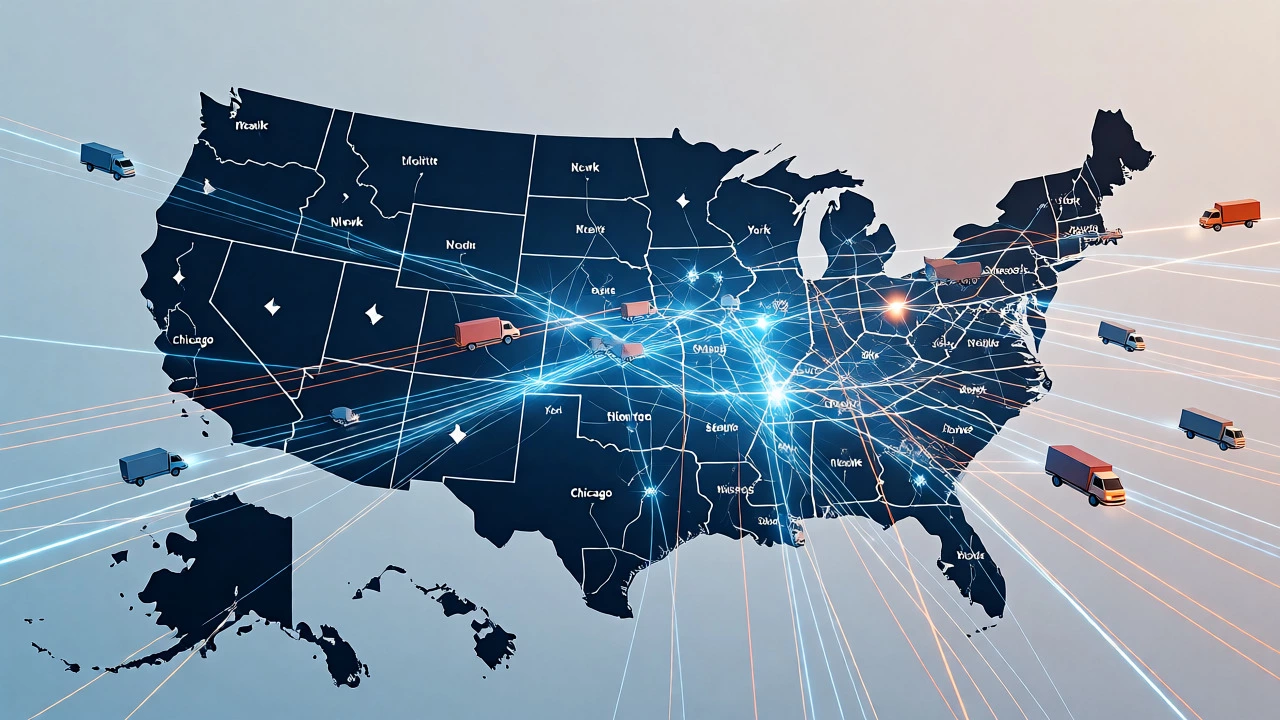
Why the huge variance? Because USPS calculates cost by zone. Zone 1 is local (same state). Zone 8 is coast-to-coast. A 2-pound package sent from New York to Florida (Zone 4) costs less than the same package sent to Seattle (Zone 8), even though both might arrive in 2-3 days.
UPS and FedEx: When Ground Beats Air
Many shippers mistakenly think they need "Next Day Air" to get something in two days. Often, UPS Ground or FedEx Home Delivery will deliver within two business days for distances under 600 miles, and it costs half as much.
| Service Type | Carrier | Est. Price | Delivery Time | Guarantee? |
|---|---|---|---|---|
| Ground | UPS/FedEx | $14.50 | 2 Business Days | No (but reliable) |
| Priority Mail | USPS | $11.20 | 2-3 Business Days | No |
| 2-Day Express | FedEx | $38.00 | 2 Business Days | Yes (Refund if late) |
| Next Day Air | UPS | $55.00+ | 1 Business Day | Yes |
Notice the gap? Paying $38 for a "guaranteed" two-day service versus $14.50 for a likely two-day service. Unless you are shipping a contract deadline or a medical device, the risk of a one-day delay usually isn't worth the extra $23.50.
Hidden Fees That Inflate Your Bill
The sticker price is rarely the final price. Carriers love surcharges. Here is what actually hits your credit card statement:
- Residential Delivery Surcharge: Shipping to a home instead of a business adds ~$5.00 per package for UPS and FedEx. USPS includes this in their base rate.
- Dimensional Weight (Dim Weight): If you ship a lightweight pillow in a giant box, you pay for the space it takes up, not its actual weight. Formula: (Length x Width x Height) / 139. If your box is 12x12x12, the dim weight is 12.4 lbs. You pay for 13 lbs, even if the pillow weighs 1 lb.
- Saturday Delivery: Want it Saturday? Add $15-$20.
- In-Pickup Fee: Asking them to come to your house to grab the box? That’s another $5-$8.
How to Calculate Your Exact Cost
Stop guessing. Use the official calculators, but know which one to trust.
- For USPS: Use the Postage Price Calculator on usps.com. Enter origin and destination ZIP codes. Check the "Retail" vs. "Commercial Base" rates. Commercial rates (available via Shippo, Pirate Ship, or eBay) are often 15-20% cheaper.
- For UPS/FedEx: Always compare "List Rates" vs. "Discounted Rates." If you don't have a business account, use third-party platforms like Pirate Ship to access commercial discounts without a monthly fee.
Pro Tip: If you are shipping a medium-sized box, always compare USPS Priority Mail Flat Rate against UPS Ground. For cross-country shipments over 2 lbs, USPS Flat Rate often wins on price and simplicity. For heavy items under 50 lbs going less than 500 miles, UPS Ground usually wins on speed and tracking reliability.
When Should You Pay More for Guaranteed Speed?
Not all packages are created equal. Here is a quick decision tree:
- Pay for Standard Priority/Ground ($10-$15): Clothing, books, non-perishable gifts, samples, routine B2B documents. Risk tolerance: Medium.
- Pay for Expedited/Guaranteed ($25-$40): Wedding dresses, legal contracts, replacement parts stopping production, perishable food (with ice packs), last-minute birthday gifts. Risk tolerance: Low.
- Pay for Next Day Air ($50+): Critical emergencies, same-week deadlines where a 1-day slip means failure.
International Context: What About NZ?
Since I’m writing from Auckland, it’s worth noting that if you are shipping internationally, "2-day" is almost impossible unless you pay for DHL Express or FedEx International Priority, which can start at $80-$120 USD. Standard international priority (like USPS First Class International) takes 6-10 days. Don’t expect domestic speeds abroad without paying a premium.
Is Priority Mail faster than UPS Ground?
Not necessarily. Priority Mail estimates 1-3 days, while UPS Ground estimates 1-5 days based on distance. For long-distance shipments (e.g., NY to LA), Priority Mail is often faster (2-3 days) than UPS Ground (4-5 days). For short distances, UPS Ground is often faster (1-2 days) and cheaper.
Does Priority Mail guarantee 2-day delivery?
No. USPS Priority Mail does not offer a money-back guarantee for speed. It provides an estimated delivery date. If it arrives late, you generally cannot claim a refund unless you purchased additional insurance or used a specialized service like Priority Mail Express.
How much does it cost to send a 5 lb package via Priority Mail?
Using a Medium Flat Rate Box, it costs approximately $18.05 regardless of weight (up to 20 lbs). Using a custom box, the price varies by zone, ranging from $12.50 (local) to $24.00 (cross-country) for a 5 lb package.
Can I track Priority Mail?
Yes, all Priority Mail services include free tracking. You receive a tracking number upon purchase, and updates appear on the USPS website and app. Note that tracking may not update immediately after drop-off.
Is it cheaper to use Flat Rate boxes?
It depends on density. If you are shipping heavy items (like books or tools) that fit in a Small or Medium Flat Rate Box, yes, it is significantly cheaper than calculating weight-based rates. If you are shipping light, bulky items (like pillows), custom boxes are usually cheaper.