Courier Capacity Estimator
Use this tool to estimate realistic delivery throughput for a standard 3-hour shift.
Estimated Packages per 3-Hour Block
Based on your inputs and industry averages.
Picture this: It’s 8:00 AM on a Tuesday. You’re standing at your depot door with a van that looks like it swallowed a warehouse whole. The driver is ready, the route is loaded into the GPS, and the clock is ticking. You have exactly three hours to get these parcels from point A to point B before the next shift starts or the customer promise breaks. But here is the question that keeps dispatch managers up at night: just how many packages can actually fit into that three-hour block?
The short answer is: it depends. But the long answer involves math, traffic patterns, building layouts, and human endurance. If you guess wrong, you either pay for idle time or miss Service Level Agreements (SLAs). Let’s break down the real numbers behind a standard three-hour courier block.
The Math Behind the Move
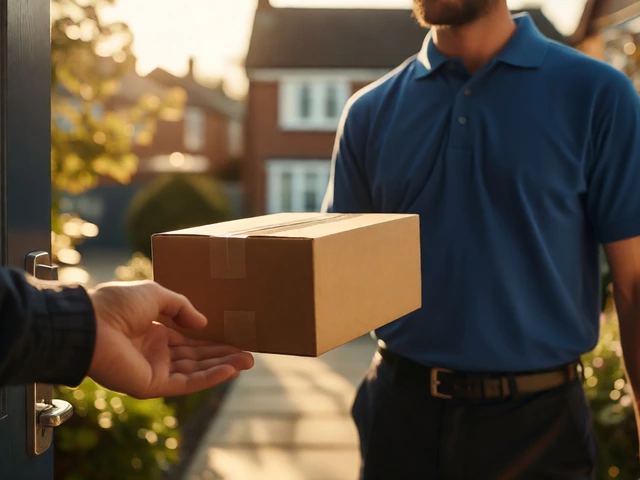
To figure out how many packages are handled during a specific time window in logistics operations fit in a block, we first need to look at the average time per stop. In the industry, we don’t just count "drops." We count "touches." A touch includes pulling over, parking, grabbing the parcel, walking to the door, scanning, handing off (or leaving), and getting back in the vehicle.
| Delivery Scenario | Average Time (Minutes) | Packages Per Hour |
|---|---|---|
| Easy Drop (Ground floor, open access) | 4 - 5 | 12 - 15 |
| Standard Residential | 6 - 8 | 7 - 10 |
| Apartment Complex / Elevator Wait | 10 - 12 | 5 - 6 |
| Business Park / Reception Handover | 3 - 4 | 15 - 20 |
| Failed Attempt / Redelivery | 15 + | < 4 |
If you assume a "standard" residential mix where most stops take about 7 minutes, a driver can handle roughly 8 to 9 packages per hour. Over a three-hour block, that equals approximately 24 to 27 packages. However, this is an ideal scenario. Real life adds friction.
The Hidden Time Thieves
Why do some drivers hit 30 drops in three hours while others struggle to clear 15? The difference usually lies in what we call "non-driving time." This isn't just sitting in traffic; it's the micro-delays that accumulate.
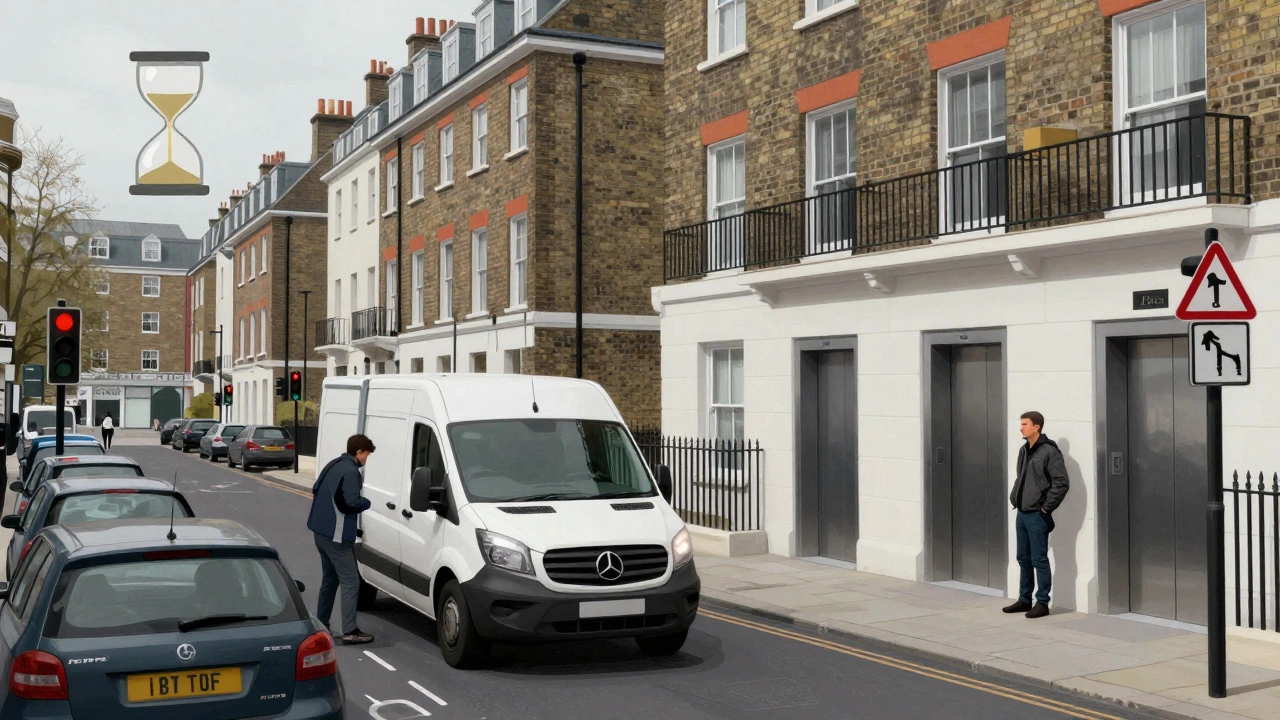
- Parking struggles: In dense urban areas like Auckland's CBD or London's West End, finding legal parking can add 2-4 minutes per stop. That cuts your hourly capacity by nearly 30%.
- Navigation errors: Wrong addresses or poor GPS data lead to dead ends. Every minute spent circling a block is a minute lost from your package count.
- Customer interaction: Signing for a package takes longer than dropping it. If your service requires proof of delivery signatures, expect your throughput to drop by 15-20% compared to contactless drops.
- Vehicle constraints: A small van might hold 50 packages, but if they are bulky boxes rather than flat envelopes, you can only load 20. Physical volume limits often beat time limits.
When you factor in these variables, a realistic safe bet for a mixed residential route is closer to 18-22 packages per three-hour block. This buffer accounts for the inevitable delays without risking missed deliveries.
Route Density Matters More Than Distance
Here is a secret many new logistics managers miss: distance doesn't matter as much as density. A route with 20 packages spread across 50 kilometers will kill your efficiency. A route with 20 packages clustered within 5 kilometers will fly.
We measure this using route density the concentration of delivery points within a specific geographic area. High-density routes allow drivers to move quickly between stops because the travel time between them is minimal-often just one or two minutes. Low-density routes force the driver to spend half their time driving and only half delivering.
In a high-density urban environment, a driver might achieve 10-12 stops per hour because the walk from the car to the door is short, and the drive to the next stop is negligible. In suburban or rural areas, even if the houses are close together, wider roads and larger properties increase walking time, dropping the rate to 6-8 stops per hour.
Vehicle Type and Loading Efficiency
Your choice of vehicle directly impacts how many packages you can physically attempt in a three-hour block. You cannot deliver what you cannot carry.
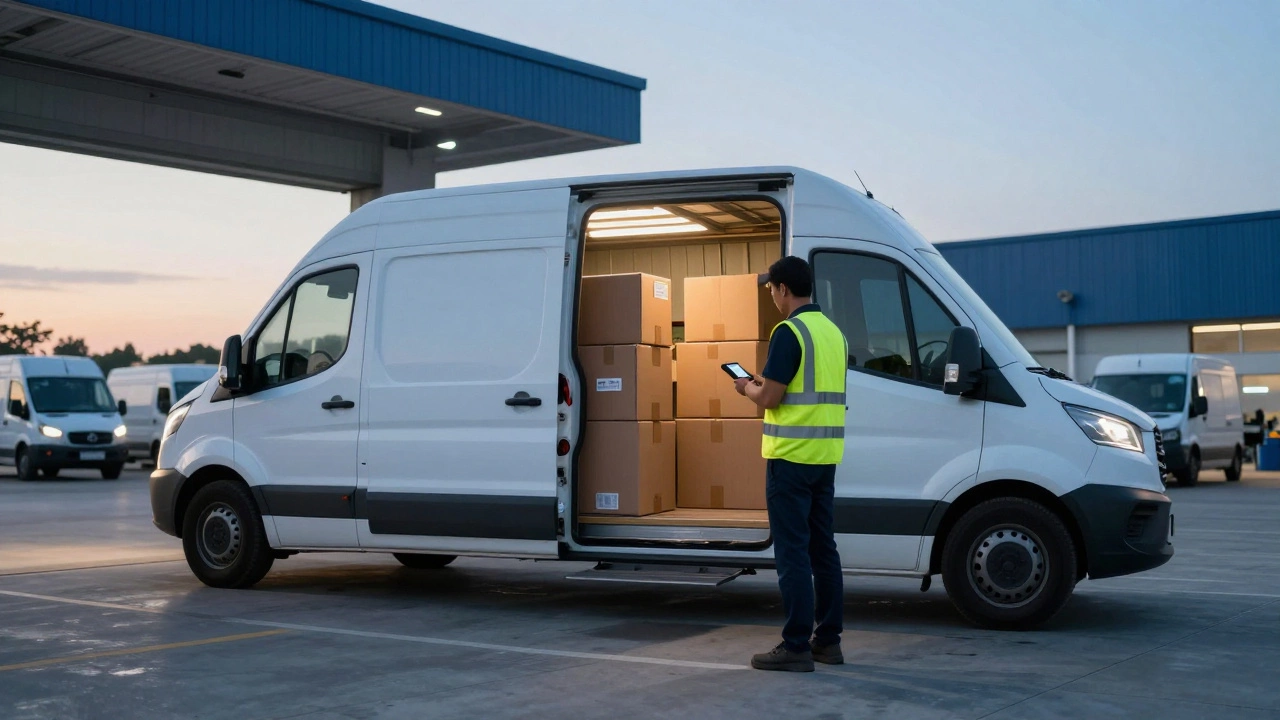
A standard small van a compact commercial vehicle used for last-mile delivery typically holds between 40-60 cubic feet of cargo. If you are shipping e-commerce boxes averaging 1 cubic foot each, you are capped at 40-60 packages regardless of time. However, if you are shipping large furniture or appliances, that same van might only hold 4-6 items.
For a three-hour block, most couriers use smaller vehicles like electric vans or even bicycles in city centers. These smaller vehicles encourage tighter, denser routes. Because the vehicle has less space, the planner is forced to group stops closely together, which ironically increases the speed of delivery. You aren't trying to fill the van; you're trying to empty it quickly.
Seasonal Variations and Peak Loads
Let’s be honest: the numbers change drastically depending on when you are reading this. During peak seasons-like the weeks leading up to Christmas or Black Friday-the dynamics shift.
During peaks, package volume spikes, but individual delivery times often increase. Why? Because customers are busier, homes are more cluttered, and traffic is heavier. Additionally, failed delivery attempts rise. A failed attempt consumes the same amount of time as a successful one, plus the administrative overhead of scheduling a redelivery. This drags down the effective capacity of the three-hour block.
In normal conditions, a 3-hour block might comfortably handle 25 packages. During peak season, that number might drop to 18-20 due to increased friction at every step. Smart logistics companies adjust their staffing levels during these periods, adding more drivers rather than expecting existing ones to magically speed up.

Optimizing Your Three-Hour Block
So, how do you maximize the number of packages in that fixed timeframe? It comes down to planning and technology.
- Use Route Optimization Software: Tools like Onfleet or Routific calculate the fastest path between stops. They account for traffic, road closures, and delivery windows. This software can shave 10-15% off total route time, allowing more packages to be squeezed into the block.
- Pre-sort by Zip Code: Ensure your loading sequence matches the delivery sequence. If the driver has to dig through the back of the van to find the right package, you lose seconds. Those seconds add up to minutes over a shift.
- Implement Contactless Delivery: Where possible, allow customers to opt-in for contactless drops. Eliminating the signature process saves 1-2 minutes per stop. Over 20 stops, that’s 20-40 minutes saved-enough time for 3-5 extra deliveries.
- Balance the Load: Don’t overload the front or back of the van. Weight distribution affects handling and safety, but also ease of access. Keep frequently accessed packages near the rear doors.
The Human Factor
Finally, remember that drivers are humans, not robots. A three-hour block sounds manageable, but doing 25 physical deliveries in three hours is intense. It involves constant bending, lifting, walking, and navigating. Fatigue sets in faster than you think, especially in hot weather or during winter storms.
Pushing too hard for maximum capacity leads to burnout, higher turnover, and more mistakes. Mistakes mean redeliveries, which cost more money than the initial delivery ever did. The goal isn't to squeeze the absolute maximum number of packages into a block; it's to find the sustainable sweet spot where efficiency meets reliability.
For most standard courier operations, aiming for 20-24 packages per three-hour block is a healthy target. It allows for unexpected delays, provides a buffer for difficult customers, and keeps the driver motivated and safe. Anything beyond that requires exceptional route density and perfect conditions-which rarely exist in the real world.
How many packages can a driver deliver in one hour?
On average, a driver can deliver between 8 and 12 packages per hour in a residential area. This varies based on traffic, parking availability, and whether signatures are required. In high-density business parks, this number can rise to 15-20 per hour.
What factors reduce the number of packages delivered in a block?
Key factors include heavy traffic, difficulty finding parking, complex building access (elevators, security gates), incorrect addresses, and customer interactions requiring signatures. Weather conditions also significantly slow down delivery speeds.
Is it better to have fewer packages per block or more?
It depends on your priority. Fewer packages allow for higher service quality and lower driver stress. More packages increase revenue potential but risk missing deadlines and causing driver burnout. A balanced approach of 20-24 packages per 3-hour block is generally optimal for sustainability.
How does route density affect delivery speed?
Higher route density means stops are closer together, reducing travel time between deliveries. This allows drivers to complete more stops in the same amount of time. Low-density routes require more driving and less delivering, lowering overall throughput.
Can technology help increase packages per block?
Yes, route optimization software can improve efficiency by 10-15%. These tools plan the fastest paths, avoid traffic, and ensure logical stop sequences. Mobile scanning apps also reduce administrative time, allowing drivers to focus on delivery.